NHC Key Laboratory of Drug Addiction Medicine, Kunming Medical University, Kunming, 650032, China.
Narcotics Control Bureau of the Ministry of Public Security of Yunnan Province, Kunming, 650032, China.
BMC Med Genomics. 2022 Jun 28;15(1):144. doi: 10.1186/s12920-022-01295-9.
Methamphetamine (METH) abuse causes serious health problems, including injury to the immune system, leading to increased incidence of infections and even making withdrawal more difficult. Of course, immune cells, an important part of the immune system, are also injured in methamphetamine abuse. However, due to different research models and the lack of bioinformatics, the mechanism of METH injury to immune cells has not been clarified.
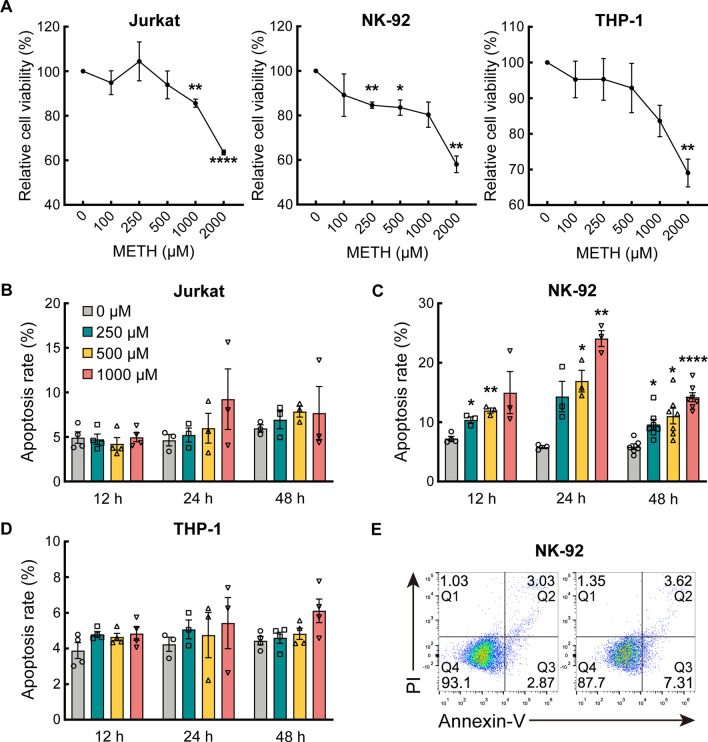
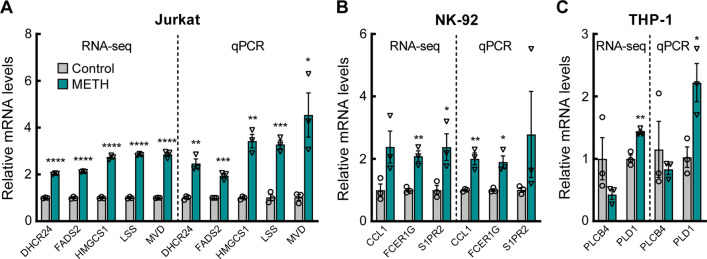
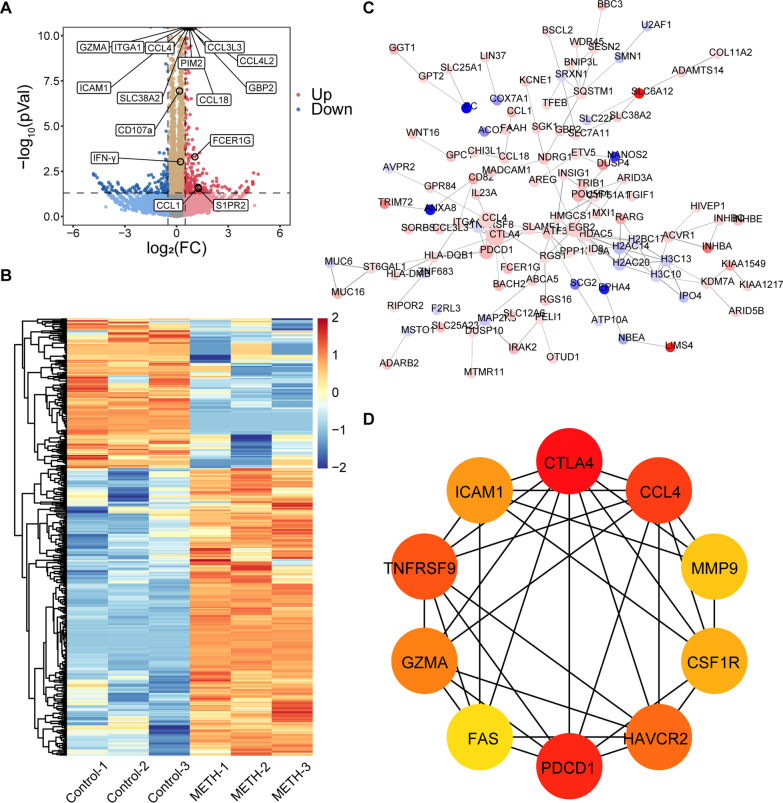
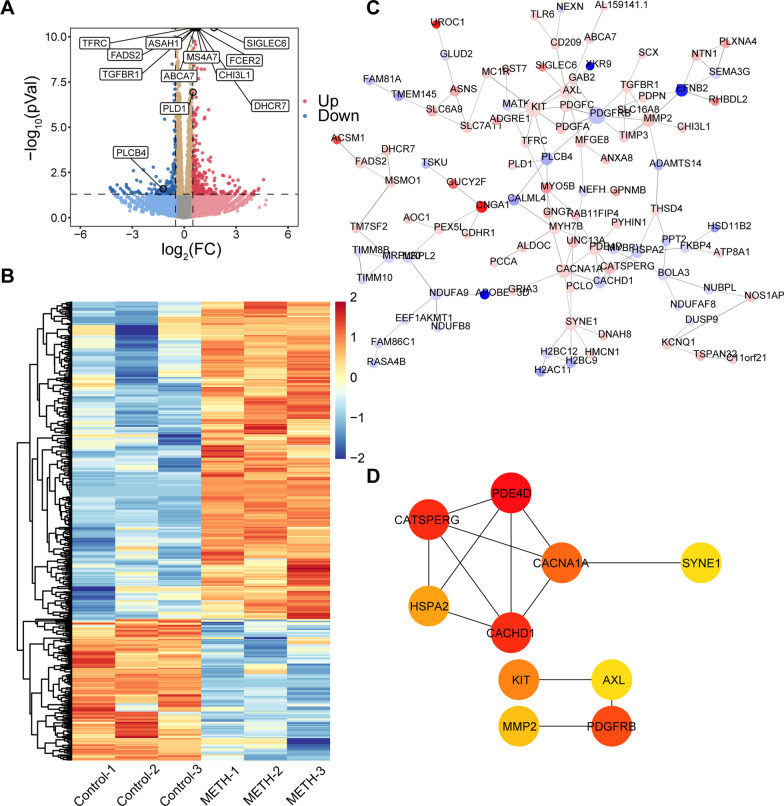
We examined the response of three common immune cell lines, namely Jurkat, NK-92 and THP-1 cell lines, to methamphetamine by cell viability and apoptosis assay in vitro, and examined their response patterns at the mRNA level by RNA-sequencing. Differential expression analysis of two conditions (control and METH treatment) in three types of immune cells was performed using the DESeq2 R package (1.20.0). And some of the differentially expressed genes were verified by qPCR. We performed Gene Ontology and Kyoto Encyclopedia of Genes and Genomes analysis of differentially expressed genes by the clusterProfiler R package (3.14.3). And gene enrichment analysis was also performed using MetaScape ( www.metascape.org ).
The viability of the three immune cells was differentially affected by methamphetamine, and the rate of NK-cell apoptosis was significantly increased. At the mRNA level, we found disorders of cholesterol metabolism in Jurkat cells, activation of ERK1 and ERK2 cascade in NK-92 cells, and disruption of calcium transport channels in THP-1 cells. In addition, all three cells showed changes in the phospholipid metabolic process.
The results suggest that both innate and adaptive immune cells are affected by METH abuse, and there may be commonalities between different immune cells at the transcriptome level. These results provide new insights into the potential effects by which METH injures the immune cells.
甲基苯丙胺(METH)滥用会导致严重的健康问题,包括免疫系统受损,导致感染发生率增加,甚至使戒断更加困难。当然,免疫细胞作为免疫系统的重要组成部分,也会在 METH 滥用中受到损伤。然而,由于不同的研究模型和缺乏生物信息学,METH 损伤免疫细胞的机制尚未阐明。
我们通过体外细胞活力和细胞凋亡测定法检查了三种常见的免疫细胞系,即 Jurkat、NK-92 和 THP-1 细胞系,对 METH 的反应,并通过 RNA-seq 检查了它们在 mRNA 水平的反应模式。使用 DESeq2 R 包(1.20.0)对两种条件(对照和 METH 处理)在三种免疫细胞中的差异表达进行分析。通过 qPCR 验证了一些差异表达基因。我们使用 clusterProfiler R 包(3.14.3)对差异表达基因进行了基因本体论和京都基因与基因组百科全书分析。并使用 MetaScape(www.metascape.org)进行了基因富集分析。
三种免疫细胞的活力受到 METH 的不同影响,NK 细胞的凋亡率显著增加。在 mRNA 水平,我们发现 Jurkat 细胞中的胆固醇代谢紊乱,NK-92 细胞中的 ERK1 和 ERK2 级联激活,以及 THP-1 细胞中的钙转运通道中断。此外,所有三种细胞的磷脂代谢过程都发生了变化。
这些结果表明,先天和适应性免疫细胞都受到 METH 滥用的影响,不同免疫细胞在转录组水平可能存在共性。这些结果为 METH 损伤免疫细胞的潜在影响提供了新的见解。