Center for Reproductive Medicine, The Second Hospital, Cheeloo College of Medicine, Shandong University, Jinan, 250012, Shandong, China.
Key laboratory of Reproductive Endocrinology of Ministry of Education, Shandong University, Jinan, 250012, Shandong, China.
Reprod Biol Endocrinol. 2022 Jun 28;20(1):93. doi: 10.1186/s12958-022-00965-8.
Hypertensive disorders of pregnancy (HDP) are an important cause of maternal and fetal mortality, and its potential risk factors are still being explored. Endometrial thickness (EMT), as one of the important monitoring indicators of endometrial receptivity, has been confirmed to be related to the incidence of HDP in fresh embryo transfer. Our study was designed to investigate whether endometrial thickness is associated with the risk of hypertensive disorders of pregnancy in frozen-thawed embryo transfer (FET).
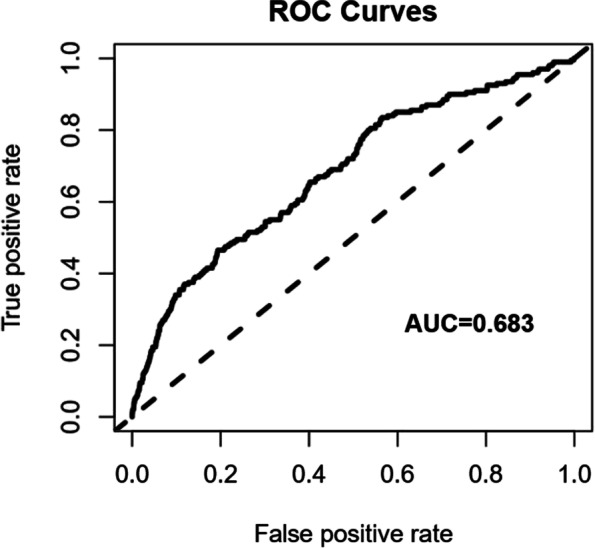
This respective cohort study enrolled 13,458 women who received vitrified embryo transfer and had a singleton delivery in the Reproductive Hospital affiliated to Shandong University from January 2015 to December 2019. We set strict screening criteria and obtained the information from the hospital electronic medical system. Statistical methods including logistic regression analysis, receiver operating characteristic curve and restricted cubic spline were used to evaluate the relationship between endometrial thickness and the incidence of pregnancy-induced hypertension.
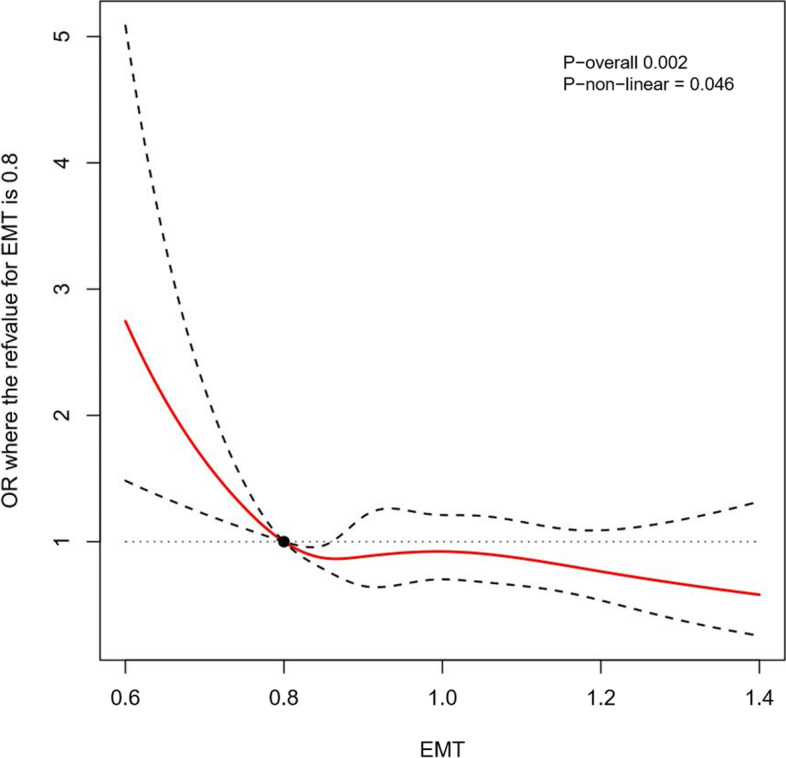
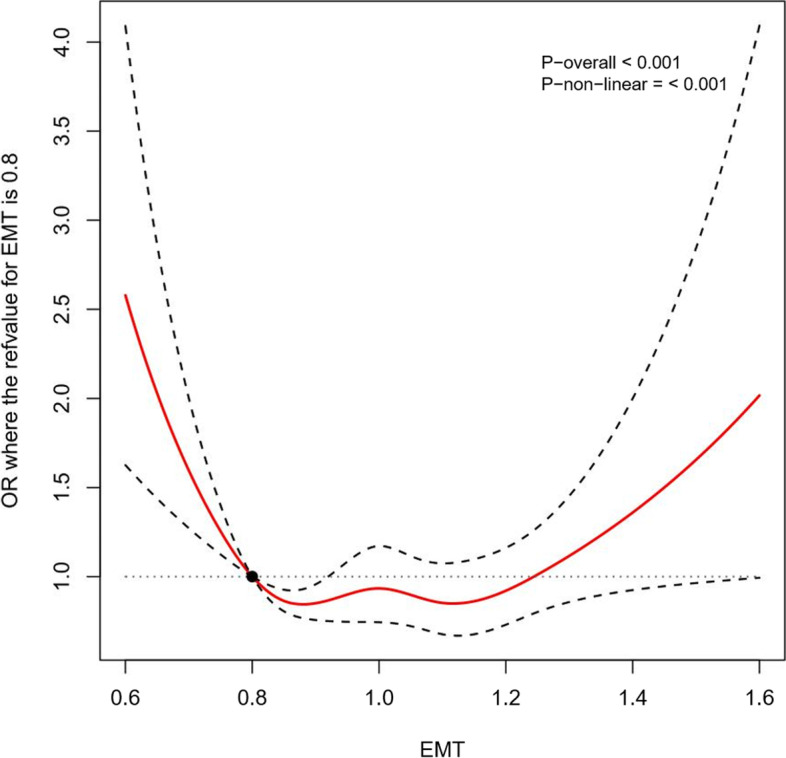
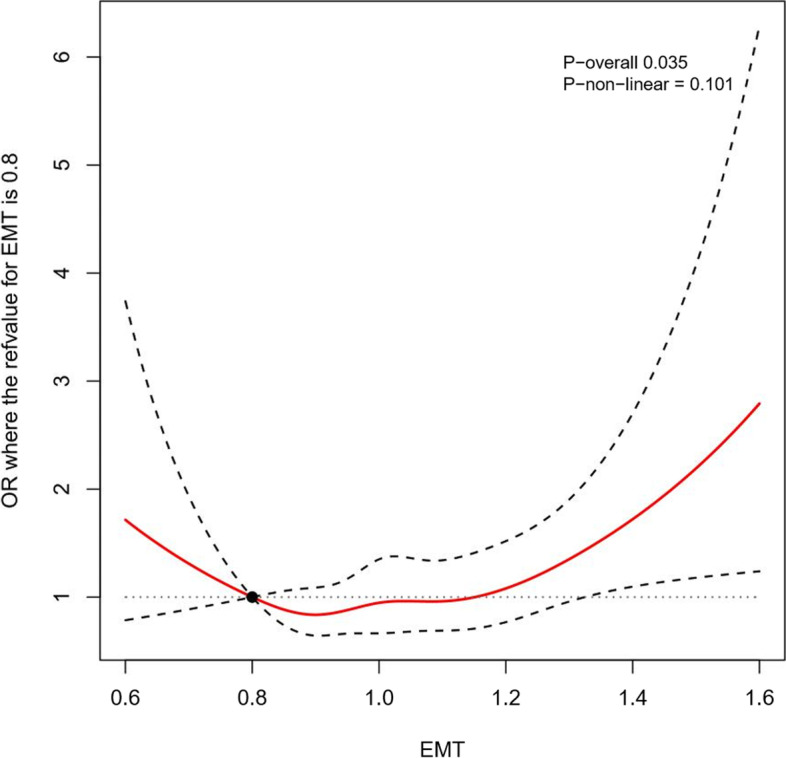
The incidences of HDP in a thin endometrial thickness group (< 0.8 cm) and a thick endometrial thickness group (> 1.2 cm) were significantly greater than in a reference group (0.8 cm-1.2 cm) (7.98 and 5.24% vs 4.59%, P < 0.001). A nonlinear relationship between endometrial thickness and risk of hypertensive disorders of pregnancy was examined by restricted cubic spline (P < 0.001). The thin endometrial thickness and thick endometrial thickness groups were significantly associated with the risk of HDP after adjusting for confounding variables by stepwise logistic regression analysis. Subsequently, subgroup logistic regression analysis based on endometrial preparation regimens showed that thin endometria were still significantly associated with a higher morbidity rate in the artificial cycle group, while in the natural cycle group, thick endometria were closely associated with increased morbidity.
Our study manifested that both the thin and thick endometria were associated with an increased risk of hypertensive disorders of pregnancy in frozen embryo transfer cycles. Reproductive clinicians should focus on adjusting endometrial thickness in different preparation regimens; and obstetricians should be mindful of the risk of hypertension during pregnancy, when women with thin (< 0.8 cm) or excessively thicker (> 1.2 cm) endometrial thickness achieve pregnancy through frozen-thawed embryo transfer.
妊娠高血压疾病(HDP)是孕产妇和围产儿死亡的重要原因,其潜在的危险因素仍在探索中。子宫内膜厚度(EMT)作为子宫内膜容受性的重要监测指标之一,已被证实与新鲜胚胎移植中 HDP 的发生率有关。本研究旨在探讨子宫内膜厚度与冻融胚胎移植(FET)中妊娠高血压疾病风险的关系。
本回顾性队列研究纳入了 2015 年 1 月至 2019 年 12 月在山东大学附属生殖医院接受玻璃化胚胎移植并分娩单胎的 13458 名妇女。我们设定了严格的筛选标准,并从医院电子病历系统中获取信息。采用逻辑回归分析、受试者工作特征曲线和限制性立方样条等统计方法评估子宫内膜厚度与妊娠高血压发生率的关系。
薄子宫内膜厚度组(<0.8cm)和厚子宫内膜厚度组(>1.2cm)的 HDP 发生率明显高于参考组(0.8cm-1.2cm)(7.98%和 5.24%比 4.59%,P<0.001)。限制性立方样条检验显示子宫内膜厚度与妊娠高血压风险之间存在非线性关系(P<0.001)。经逐步逻辑回归分析调整混杂因素后,薄子宫内膜厚度组和厚子宫内膜厚度组与 HDP 风险显著相关。随后,基于子宫内膜准备方案的亚组逻辑回归分析显示,在人工周期组中,薄子宫内膜仍与较高的发病率显著相关,而在自然周期组中,厚子宫内膜与发病率增加密切相关。
本研究表明,在冻融胚胎移植周期中,薄和厚的子宫内膜均与妊娠高血压疾病的风险增加相关。生殖临床医生应关注在不同准备方案中调整子宫内膜厚度;当通过冻融胚胎移植受孕的妇女子宫内膜厚度过薄(<0.8cm)或过厚(>1.2cm)时,产科医生应注意妊娠期间高血压的风险。