Cancer Center, Union Hospital, Tongji Medical College, Huazhong University of Science and Technology, Wuhan, China.
Department of Pathology, Union Hospital, Tongji Medical College, Huazhong University of Science and Technology, Wuhan, China.
Clin Cancer Res. 2022 Aug 2;28(15):3268-3276. doi: 10.1158/1078-0432.CCR-22-0666.
This study aimed to assess the antitumor activity and safety of neoadjuvant chemotherapy combined with PD-1 inhibitor camrelizumab in patients with locally advanced head and neck squamous cell carcinoma (HNSCC).
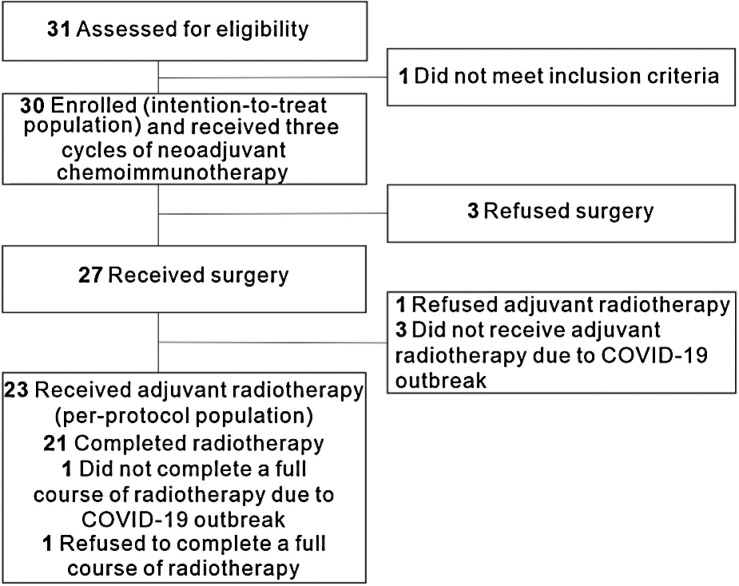
In this single-center, single-arm, phase 2 trial, patients with resectable stage III-IVB HNSCC received chemotherapy [albumin-bound paclitaxel 260 mg/m2 (or docetaxel 75 mg/m2) plus cisplatin 75 mg/m2] and camrelizumab 200 mg on day 1 of each 21-day cycle for three cycles, followed by surgery, and adjuvant radiotherapy. Co-primary end points were pathological complete response (pCR) rate and safety.
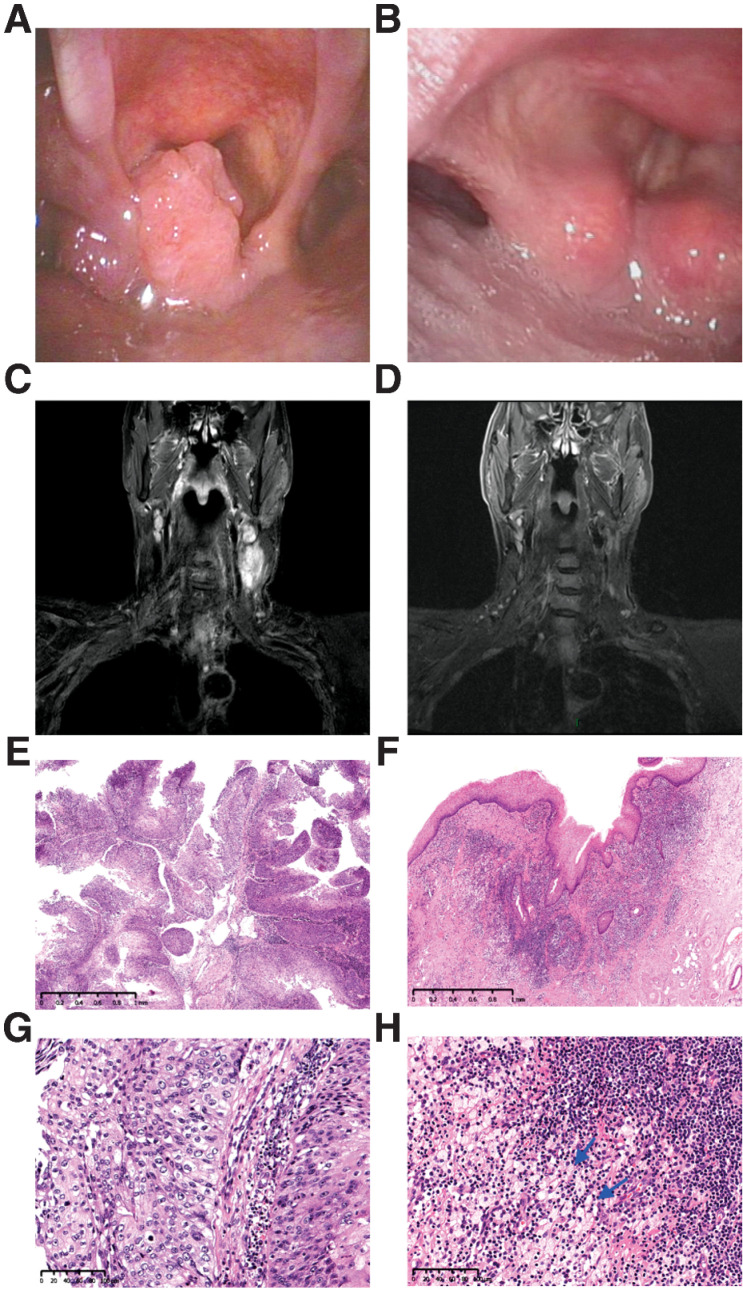
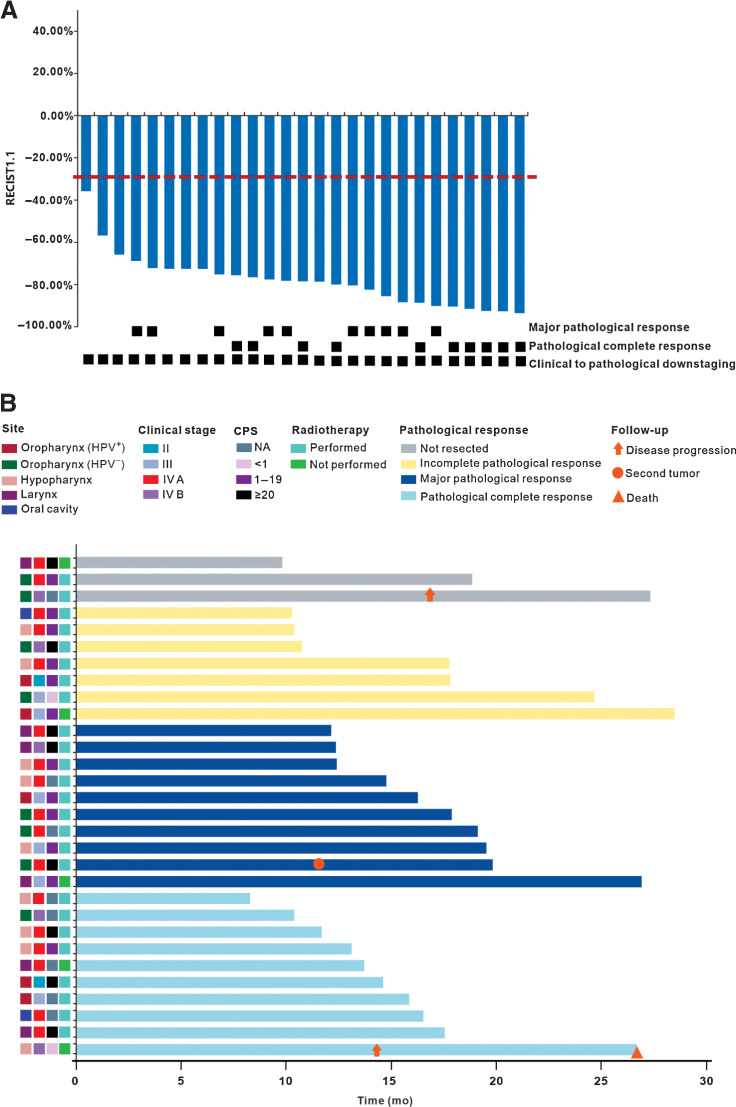
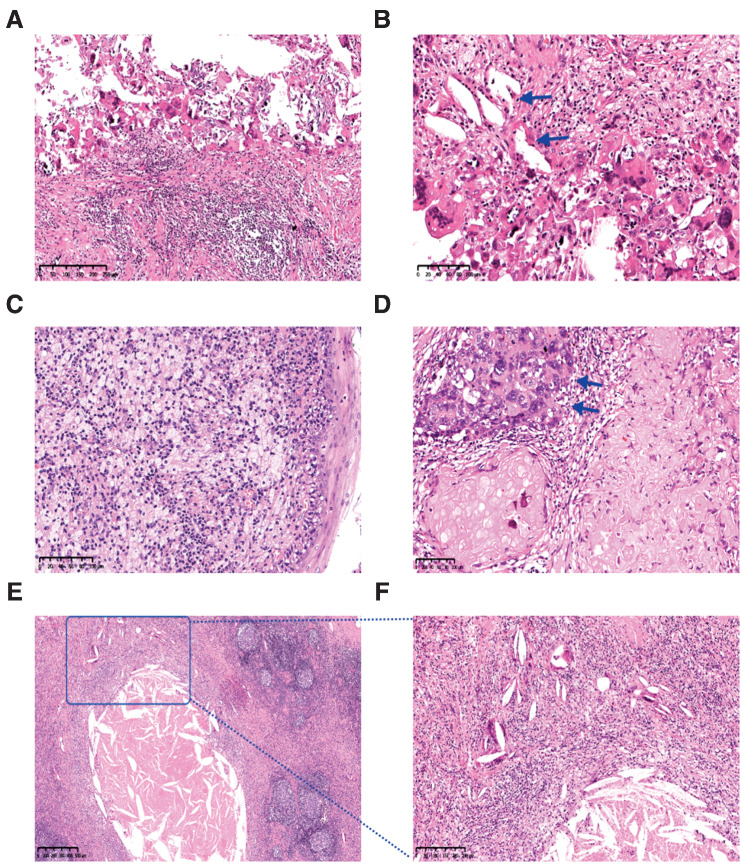
Thirty patients were enrolled and completed the neoadjuvant therapy, with an objective response rate (ORR) of 96.7% (29/30). Twenty-seven patients underwent surgery without delay, with an R0 resection rate of 92.6% (25/27). The clinical to pathological downstaging rate was 100% (27/27). The pCR rate was 37.0% [95% confidence interval (CI), 19.4%-57.6%], and the major pathological response (MPR) rate was 74.1% (95% CI, 53.7%-88.9%). The median follow-up duration was 16.1 months (range, 8.3-28.5), and the disease-free survival rate at 12 months was 95.8% (95% CI, 73.9%-99.4%). Grade 3 neoadjuvant therapy-related adverse events included rash (1; 3.3%), pruritis (1; 3.3%), and thrombocytopenia (1; 3.3%), and no grade 4 or 5 treatment-related events occurred. The most common surgical complication was delayed wound healing (5; 18.5%).
Neoadjuvant chemotherapy plus camrelizumab for locally advanced HNSCC showed high ORR, pCR, and MPR rates, with an acceptable safety profile. These data support further evaluation of neoadjuvant chemoimmunotherapy for the treatment of locally advanced HNSCC.
本研究旨在评估新辅助化疗联合 PD-1 抑制剂卡瑞利珠单抗治疗局部晚期头颈部鳞状细胞癌(HNSCC)患者的抗肿瘤活性和安全性。
在这项单中心、单臂、Ⅱ期临床试验中,可切除的 III-IVB 期 HNSCC 患者接受化疗[白蛋白结合紫杉醇 260mg/m2(或多西他赛 75mg/m2)+顺铂 75mg/m2]和卡瑞利珠单抗 200mg,每 21 天为一个周期,共三个周期,然后进行手术和辅助放疗。主要终点为病理完全缓解(pCR)率和安全性。
30 例患者接受了新辅助治疗,客观缓解率(ORR)为 96.7%(29/30)。27 例患者无延迟手术,R0 切除率为 92.6%(25/27)。临床病理降期率为 100%(27/27)。pCR 率为 37.0%[95%置信区间(CI):19.4%-57.6%],主要病理缓解(MPR)率为 74.1%(95%CI:53.7%-88.9%)。中位随访时间为 16.1 个月(范围:8.3-28.5),12 个月无病生存率为 95.8%(95%CI:73.9%-99.4%)。3 级新辅助治疗相关不良事件包括皮疹(1 例;3.3%)、瘙痒(1 例;3.3%)和血小板减少症(1 例;3.3%),无 4 级或 5 级治疗相关事件。最常见的手术并发症是延迟伤口愈合(5 例;18.5%)。
新辅助化疗联合卡瑞利珠单抗治疗局部晚期 HNSCC 显示出较高的 ORR、pCR 和 MPR 率,安全性可接受。这些数据支持进一步评估新辅助化疗免疫治疗局部晚期 HNSCC 的疗效。