Alekseenko Alisa, Wang Jingwen, Barrett Donal, Pelechano Vicent
SciLifeLab, Department of Microbiology, Tumor and Cell Biology, Karolinska Institutet, Tomtebodavägen 23A, 17165, Solna, Sweden.
NAR Genom Bioinform. 2022 Jun 27;4(2):lqac048. doi: 10.1093/nargab/lqac048. eCollection 2022 Jun.
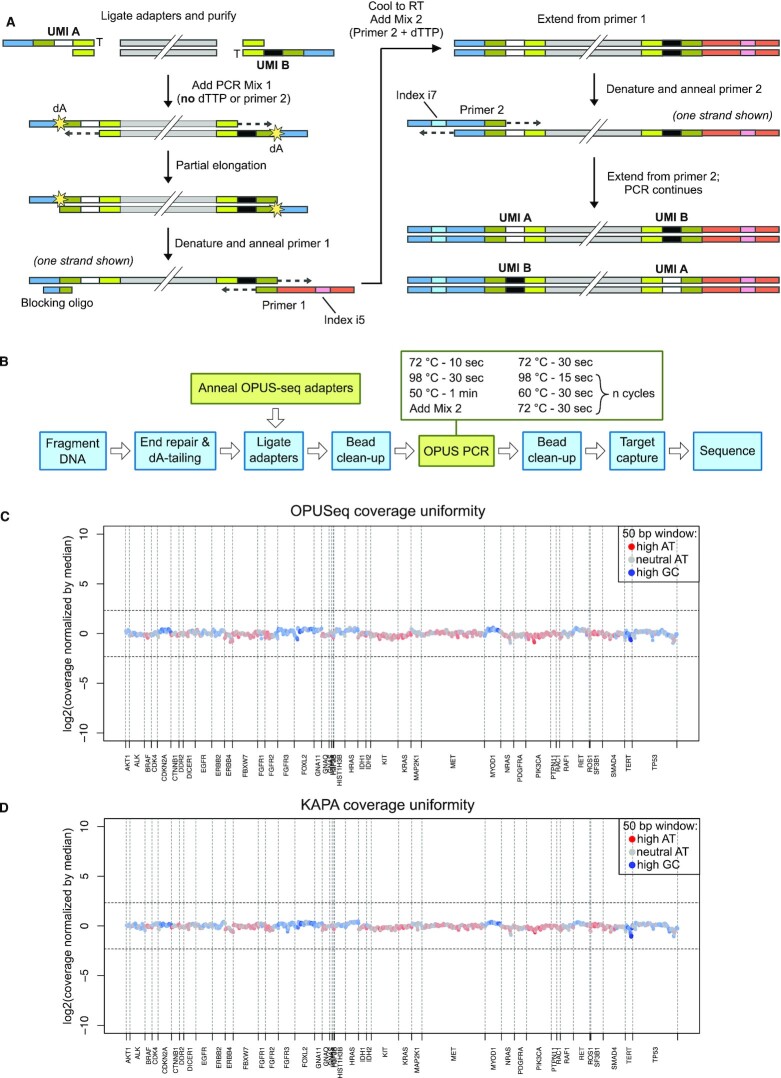
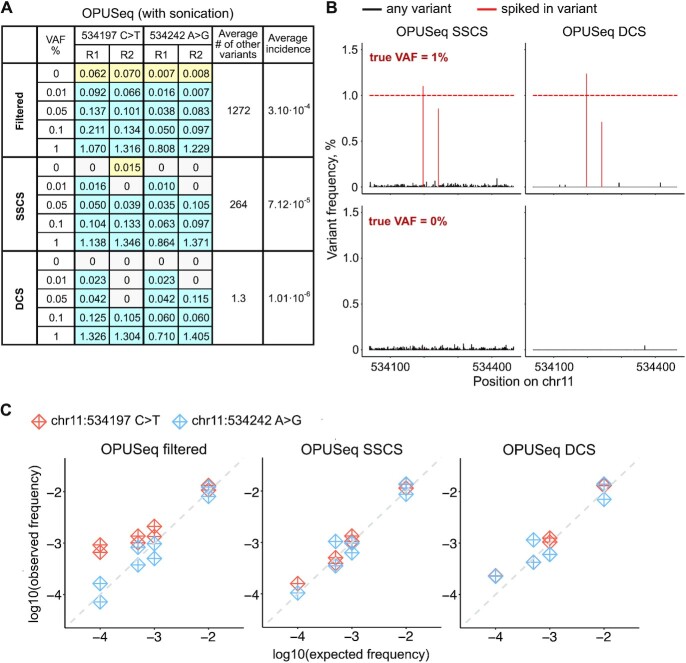
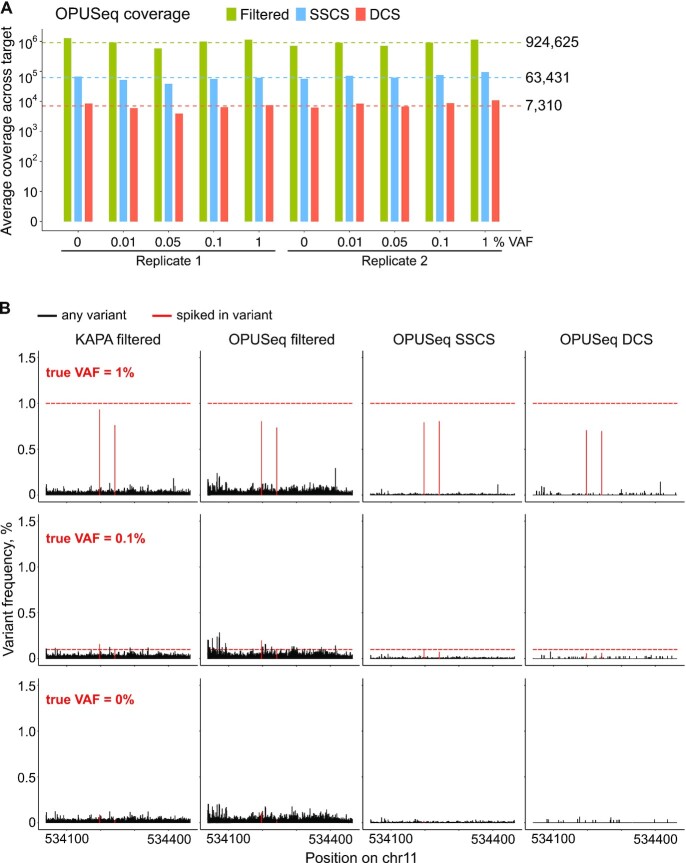
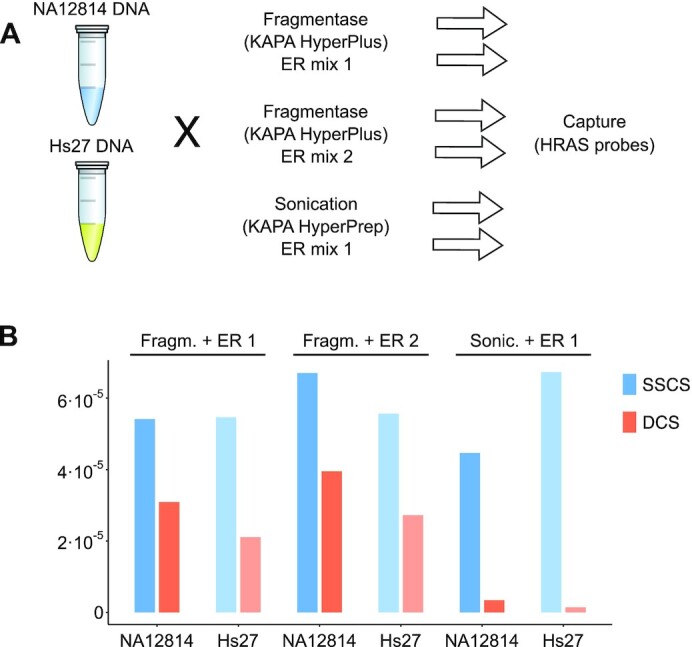
Detection of low-frequency DNA variants (below 1%) is becoming increasingly important in biomedical research and clinical practice, but is challenging to do with standard sequencing approaches due to high error rates. The use of double-stranded unique molecular identifiers (dsUMIs) allows correction of errors by comparing reads arising from the same original DNA duplex. However, the implementation of such approaches is still challenging. Here, we present a novel method, one-pot dsUMI sequencing (OPUSeq), which allows incorporation of dsUMIs in the same reaction as the library PCR. This obviates the need for adapter pre-synthesis or additional enzymatic steps. OPUSeq can be incorporated into standard DNA library preparation approaches and coupled with hybridization target capture. We demonstrate successful error correction and detection of variants down to allele frequency of 0.01%. Using OPUSeq, we also show that the use of enzymatic fragmentation can lead to the appearance of spurious double-stranded variants, interfering with detection of variant fractions below 0.1%.
在生物医学研究和临床实践中,检测低频DNA变异(低于1%)变得越来越重要,但由于错误率高,使用标准测序方法进行检测具有挑战性。使用双链独特分子标识符(dsUMIs)可以通过比较来自同一原始DNA双链的读数来校正错误。然而,实施此类方法仍然具有挑战性。在此,我们提出了一种新方法——一锅式dsUMI测序(OPUSeq),该方法允许在与文库PCR相同的反应中掺入dsUMIs。这消除了对适配器预合成或额外酶促步骤的需求。OPUSeq可以纳入标准DNA文库制备方法,并与杂交靶向捕获相结合。我们展示了成功的错误校正以及检测低至0.01%等位基因频率的变异。使用OPUSeq,我们还表明,酶切片段化的使用可能导致假双链变异的出现,干扰低于0.1%的变异分数的检测。