Chhajer Raina, Shukla Sunil Dutt
Humanities and Social Science Area, Indian Institute of Management Indore, Madhya Pradesh, India.
Department of Zoology, Government Meera Girls College, Udaipur, Rajasthan, India.
Neurosci Insights. 2022 Jun 23;17:26331055221109174. doi: 10.1177/26331055221109174. eCollection 2022.
The second wave of the Covid-19 pandemic in India was widespread and caused psychological distress among the citizens. Hospitals were running at a premium, increasing deaths and trepidation stories were on air by media, this generated sleep disturbances for many. This study aimed to examine the sleep quality of Covid-19 recovered patients in India during the second wave of the pandemic.
Patients who had recently recovered from Covid-19 were invited to participate in this cross-sectional study using various social media platforms. An online survey questionnaire, including socio-demographics, health-related information, Covid-19 related information, and the Pittsburgh Sleep Quality Index (PSQI), was administered in June 2021. Descriptive statistics were used to compare the scores among the mild, moderate, and severe groups. ANOVA was used to find the difference between the groups for global PSQI scores.
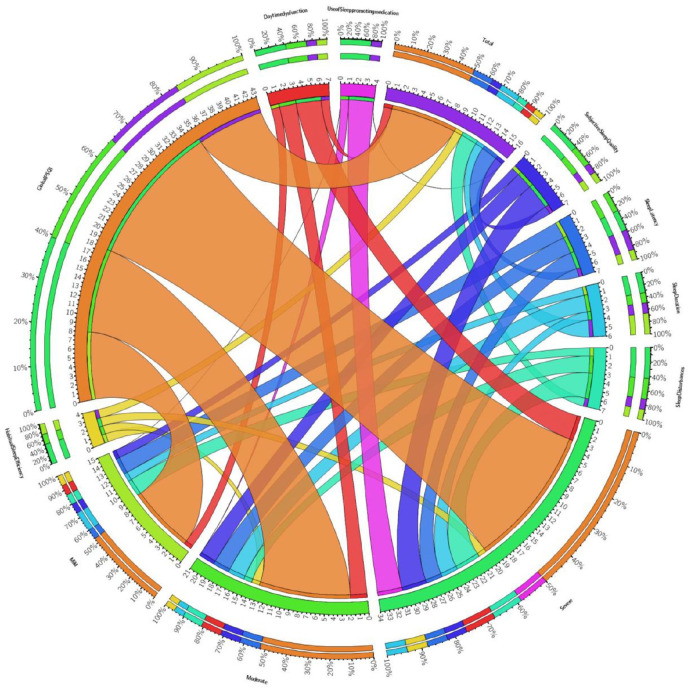
A total of 311 participants (261 mild, 45 moderate, and 5 severe) provided usable responses. The Global PSQI score for the overall study sample was 8.22 ± 3.79. In the severe group, scores were higher 16.8 ± 2.59, and statistically significant from mild or moderate groups. Sleep quality of Covid-19 recovered patients was found to be statistically significantly different based on their gender ( < .001), annual income ( < .001), employment status ( < .001), and marital status ( < .001).
Females, employment in the private sector, annual income below rupees 11 lakh, and unmarried Covid-19 recovered patients reported poor sleep quality. As our findings indicate poor sleep quality among the Covid-19 recovered patients during the second wave in India, designing psychological interventions is recommended to support their wellbeing post-recovery.
印度第二波新冠疫情大流行范围广泛,给民众造成了心理困扰。医院人满为患,死亡人数不断增加,媒体也不断报道令人恐惧的故事,这让许多人出现了睡眠障碍。本研究旨在调查疫情第二波期间印度新冠康复患者的睡眠质量。
通过各种社交媒体平台邀请近期从新冠中康复的患者参与这项横断面研究。2021年6月进行了一项在线调查问卷,内容包括社会人口统计学、健康相关信息、新冠相关信息以及匹兹堡睡眠质量指数(PSQI)。使用描述性统计来比较轻度、中度和重度组之间的得分。使用方差分析来找出各组全球PSQI得分之间的差异。
共有311名参与者(261名轻度、45名中度和5名重度)提供了可用回复。整个研究样本的全球PSQI得分为8.22±3.79。在重度组中,得分更高,为16.8±2.59,与轻度或中度组相比具有统计学显著性差异。发现新冠康复患者的睡眠质量在性别(<0.001)、年收入(<0.001)、就业状况(<0.001)和婚姻状况(<0.001)方面存在统计学显著差异。
女性、在私营部门工作、年收入低于110万卢比以及未婚的新冠康复患者报告睡眠质量较差。由于我们的研究结果表明印度第二波疫情期间新冠康复患者睡眠质量较差,建议设计心理干预措施以支持他们康复后的健康。