Department of Oncology, Hematology and Bone Marrow Transplantation with Section Pneumology, University Cancer Center Hamburg, University Medical Center Hamburg-Eppendorf, Martinistraße 52, 20246 Hamburg.
The I. Department of Internal Medicine, Division of Infectious Diseases, University Medical Center Hamburg-Eppendorf, Martinistraße 52, 20246 Hamburg.
Haematologica. 2022 Dec 1;107(12):2870-2883. doi: 10.3324/haematol.2022.280853.
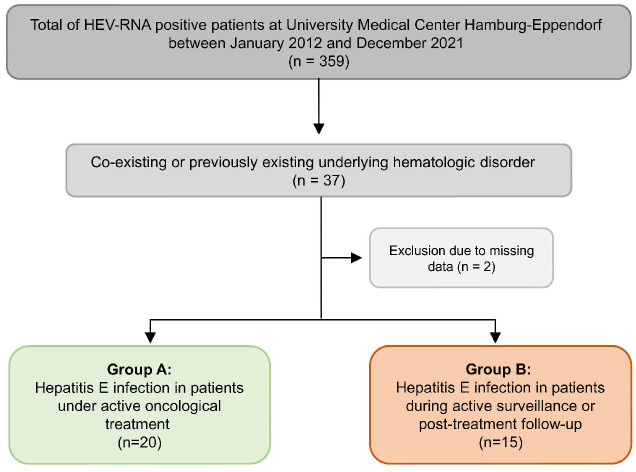
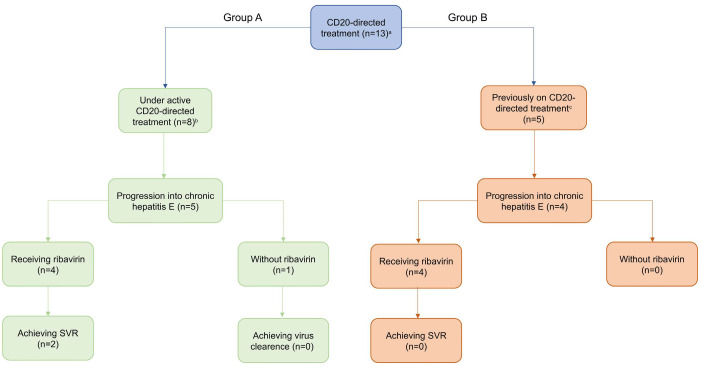
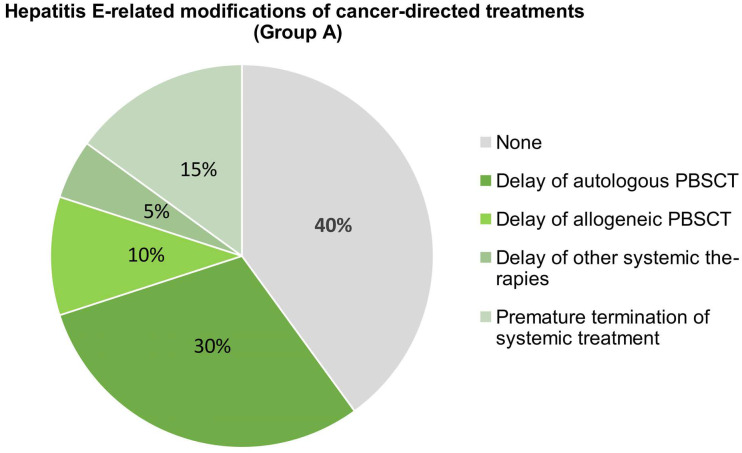
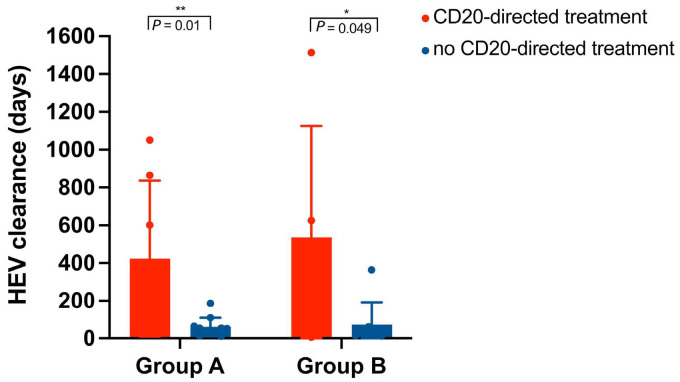
Hepatitis E virus is increasingly being reported to cause chronic infection in immunocompromised patients. However, less is known about patients with an underlying hematologic disease. In particular, the impact of hepatitis E infection on oncological therapy has been poorly described. In this retrospective single-center study, we analyzed 35 hematologic patients with hepatitis E, including 20 patients under active oncological treatment and 15 patients who were in the posttreatment follow-up or under active surveillance. The primary aim was to describe the clinical courses with particular focus on any hepatitis E-related therapy modifications of cancer-directed therapy. In the majority (60%) of patients who were under active oncological treatment, hepatitis E-related therapy modifications were made, and 25% of deaths were due to progression of the hematologic disease. In patients receiving concomitant oncological treatment, no hepatitis Erelated deaths occurred. In contrast, two patients in the follow-up group died from hepatitis E-associated acute-onchronic liver failure. Chronic hepatitis E was observed in 34% of all cases and 43% received ribavirin therapy; of those, 27% achieved a sustained virological response. CD20-directed therapy was the only independent risk factor for developing chronic hepatitis E. We conclude that CD20-directed treatment at any time point is a risk factor for developing chronic hepatitis E. Nevertheless, since mortality from the progression of hematologic disease was higher than hepatitis E-related mortality, we suggest careful case-by-case decisions on modifications of cancer treatment. Patients in the posttreatment follow-up phase may also suffer from severe courses and hepatitis E chronicity occurs as frequently as in patients undergoing active therapy.
戊型肝炎病毒(Hepatitis E virus)在免疫功能低下的患者中逐渐被报道可导致慢性感染。然而,人们对潜在血液系统疾病患者的了解较少。特别是,戊型肝炎感染对肿瘤治疗的影响尚未得到充分描述。在这项回顾性单中心研究中,我们分析了 35 例患有戊型肝炎的血液系统疾病患者,其中包括 20 例正在接受积极的肿瘤治疗和 15 例处于治疗后随访或积极监测中的患者。主要目的是描述临床过程,特别关注癌症定向治疗的任何与戊型肝炎相关的治疗改变。在大多数(60%)正在接受积极肿瘤治疗的患者中,进行了与戊型肝炎相关的治疗改变,并且 25%的死亡归因于血液系统疾病的进展。在接受联合肿瘤治疗的患者中,未发生与戊型肝炎相关的死亡。相比之下,随访组中有两名患者死于与戊型肝炎相关的急性肝衰竭。在所有病例中,34%观察到慢性戊型肝炎,43%接受了利巴韦林治疗;其中,27%获得了持续病毒学应答。CD20 靶向治疗是发展为慢性戊型肝炎的唯一独立危险因素。我们得出结论,任何时间点的 CD20 靶向治疗都是发展为慢性戊型肝炎的危险因素。尽管如此,由于血液系统疾病进展导致的死亡率高于戊型肝炎相关的死亡率,因此我们建议对癌症治疗的修改进行谨慎的个体化决策。治疗后随访阶段的患者也可能经历严重的病程,并且慢性戊型肝炎的发生频率与正在接受积极治疗的患者一样高。