Department of Endocrinology, Singapore General Hospital, Singapore.
Medicine (Baltimore). 2022 Jul 1;101(26):e29731. doi: 10.1097/MD.0000000000029731.
Symptomatic hypocalcaemia is uncommon, occurring in <2% of patients with malignancy. Osteoblastic bone metastasis as a cause of hypocalcaemia is rare and not reported in bladder cancer.
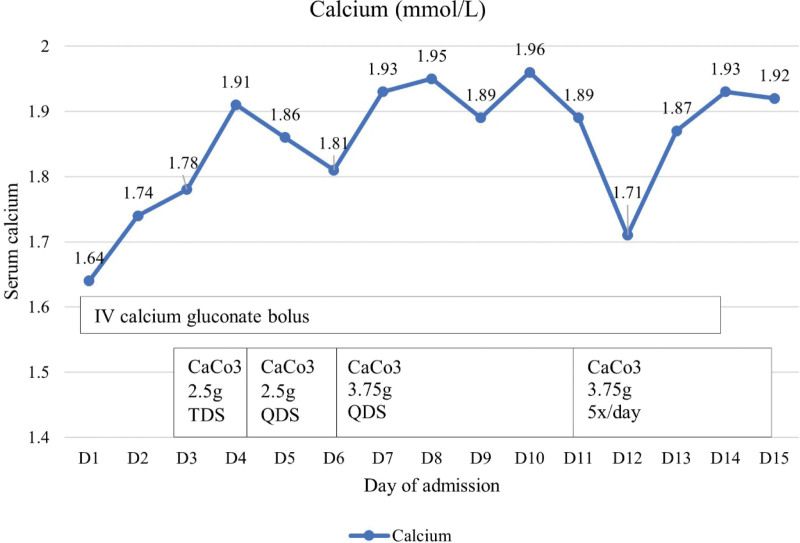
We report a case of refractory hypocalcaemia in a patient with bladder cancer with extensive osteoblastic bone metastases. A 64-year-old male with a history of signet ring bladder carcinoma with osteoblastic bone metastases presented with severe hypocalcaemia with corrected calcium of 1.64 (2.09-2.46) mmol/L as well as hypomagnesemia and hypophosphatemia. He was previously treated with chemotherapy and immunotherapy. Denosumab was also initiated for the prevention of skeletal-related events.
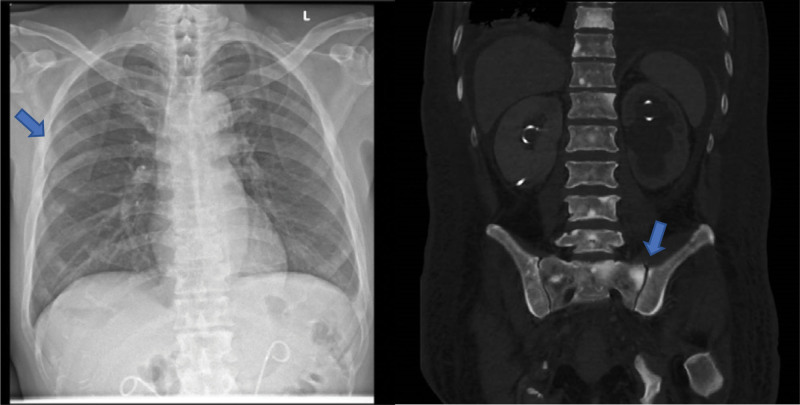
Additional investigations showed significantly elevated bone formation markers N-terminal propeptide of type I procollagen and alkaline phosphatase. Chest radiography and computed tomography scan also demonstrated extensive areas of sclerotic bone lesions suggestive of osteoblastic bone metastases. He was diagnosed with severe hypocalcaemia secondary to osteoblastic bone metastases and partly to denosumab, vitamin D deficiency, and hypomagnesemia.
He was treated aggressively with calcium and vitamin D replacement.
Despite prolonged intravenous calcium replacement and high doses of oral calcium, cholecalciferol, and calcitriol replacement, he had persistent hypocalcaemia with calcium levels ranging from 1.8 to 1.9 mmol/L. He died 4 months after his admission.
Osteoblastic bone metastases lead to an increased influx of calcium and phosphate into the bone leading to hypocalcaemia and should be considered as a differential in severe and refractory hypocalcaemia. It is rare and has not been described in bladder cancer. Precaution should be taken upon the initiation of antiresorptive in patients with osteoblastic bone metastases.
有症状的低钙血症并不常见,<2%的恶性肿瘤患者会发生这种情况。成骨性骨转移作为低钙血症的病因很少见,在膀胱癌中也没有报道过。
我们报告了一例膀胱癌广泛成骨性骨转移患者难治性低钙血症的病例。一名 64 岁男性,有骨转移的印戒细胞膀胱癌病史,表现为严重低钙血症,校正钙为 1.64(2.09-2.46)mmol/L,同时伴有低镁血症和低磷血症。他之前接受过化疗和免疫治疗。还为预防骨骼相关事件而开始使用地舒单抗。
进一步检查显示,Ⅰ型前胶原 N 端前肽和碱性磷酸酶等骨形成标志物明显升高。胸部 X 线和 CT 扫描还显示广泛的硬化性骨病变区域,提示成骨性骨转移。他被诊断为严重的低钙血症,继发于成骨性骨转移,部分原因是地舒单抗、维生素 D 缺乏和低镁血症。
他接受了积极的钙和维生素 D 替代治疗。
尽管长时间静脉补钙和大剂量口服钙、胆钙化醇和骨化三醇替代治疗,但他的血钙持续低钙血症,钙水平在 1.8 至 1.9mmol/L 之间。他在入院后 4 个月死亡。
成骨性骨转移导致钙和磷酸盐大量流入骨骼,导致低钙血症,应作为严重和难治性低钙血症的鉴别诊断。这种情况很少见,在膀胱癌中也没有描述过。在成骨性骨转移患者开始使用抗吸收药物时应谨慎。