Department of Pediatrics, University Medical Center Groningen, University of Groningen, 9713 AV, Groningen, the Netherlands.
Institute for Cardiovascular Prevention (IPEK), Ludwig-Maximilians-Universität, 80336, Munich, Germany.
Nat Commun. 2022 Jul 1;13(1):3799. doi: 10.1038/s41467-022-31135-4.
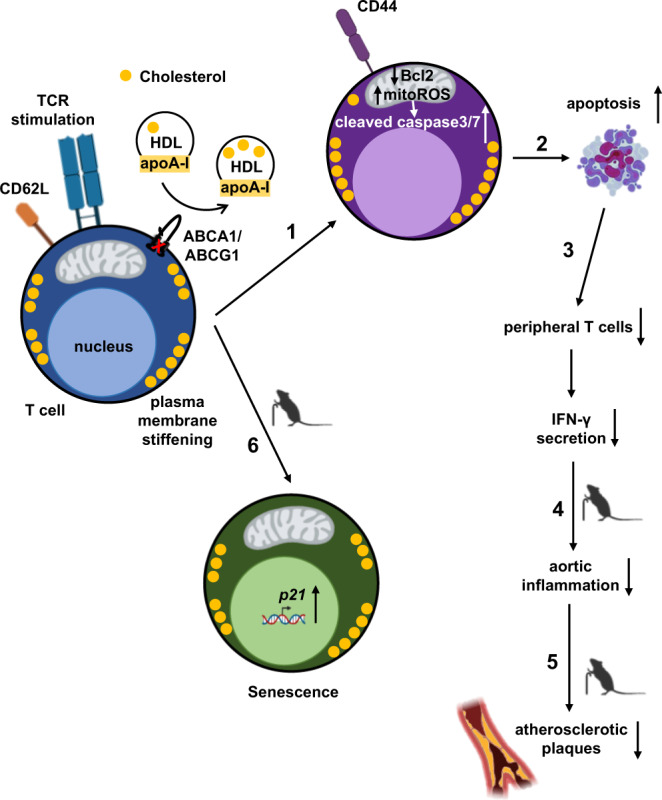
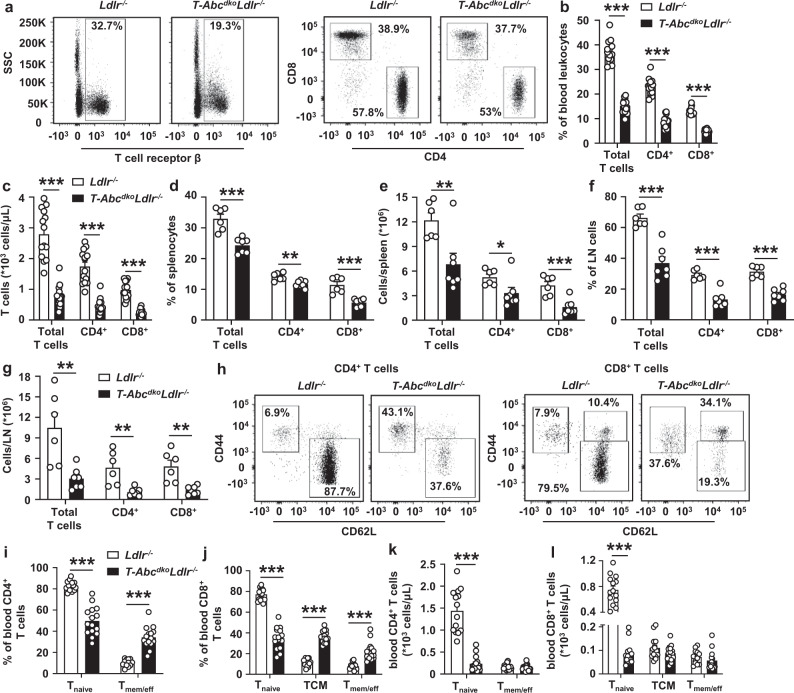
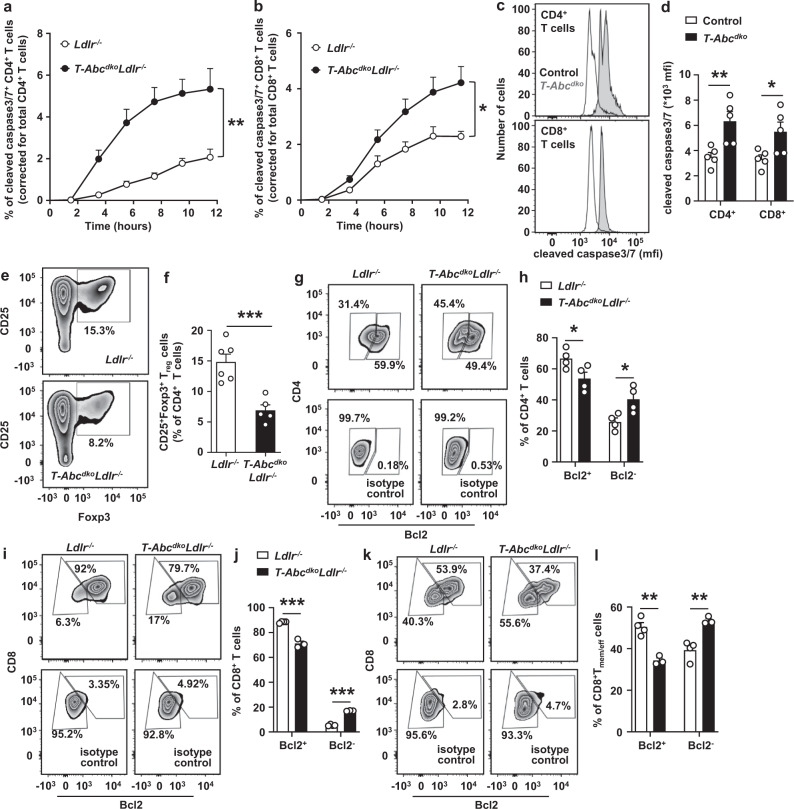
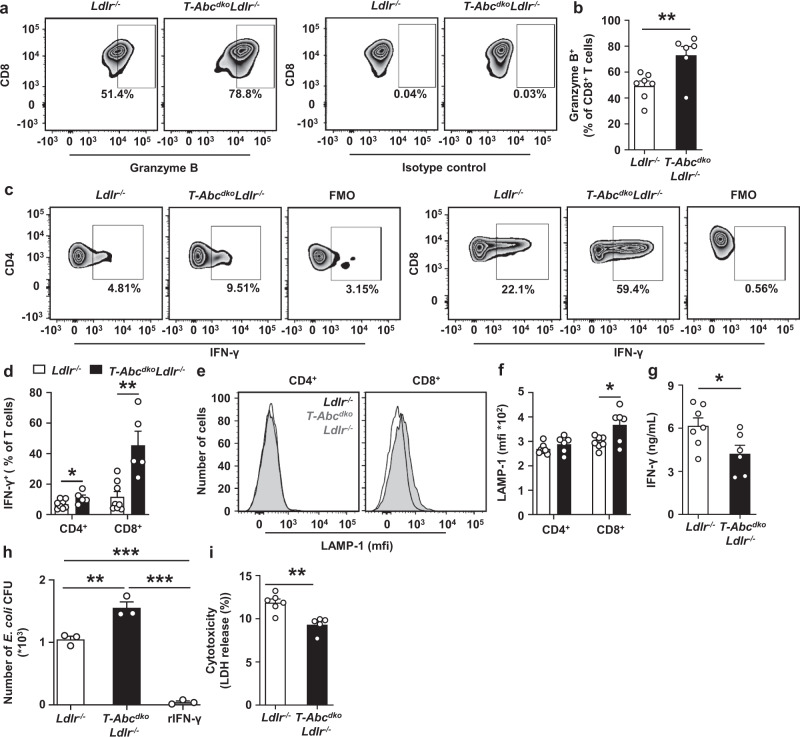
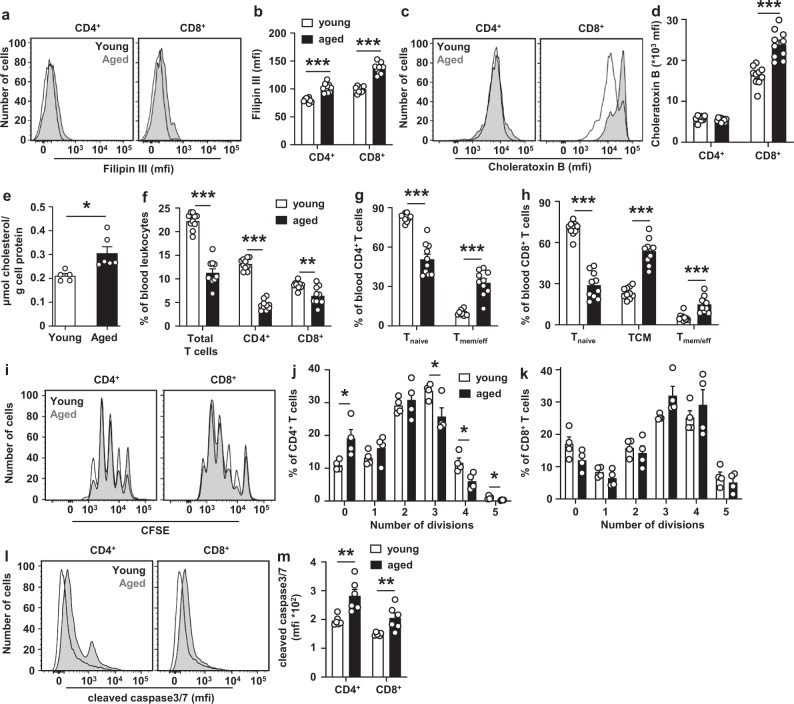
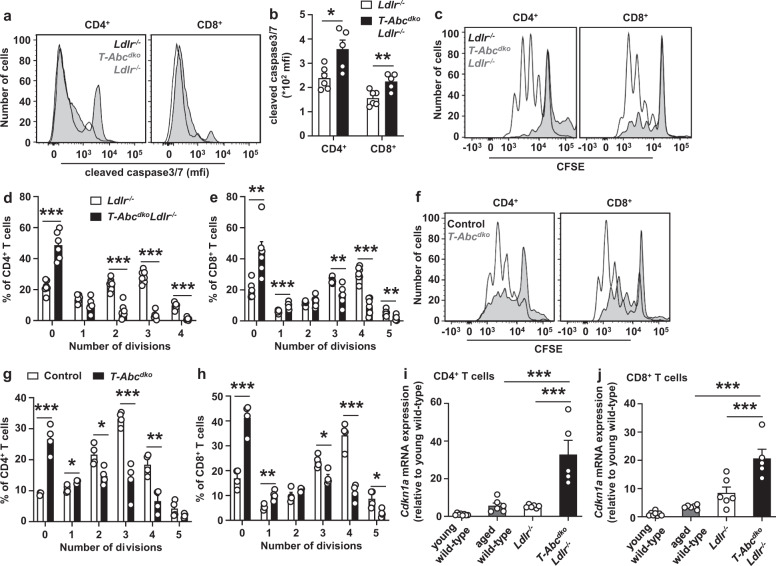
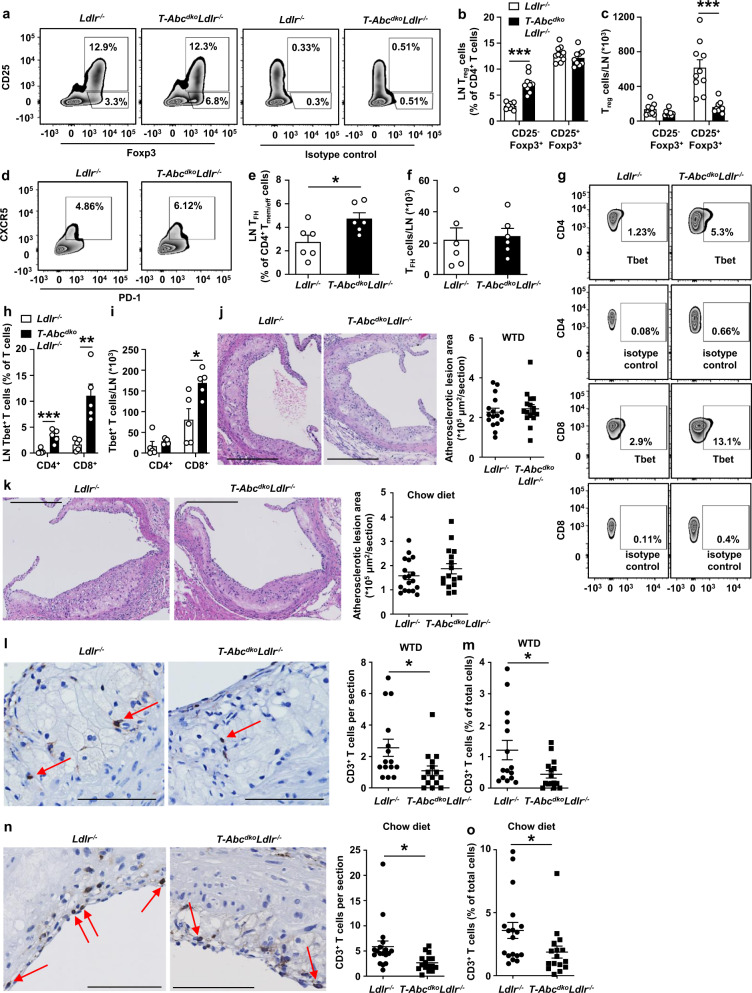
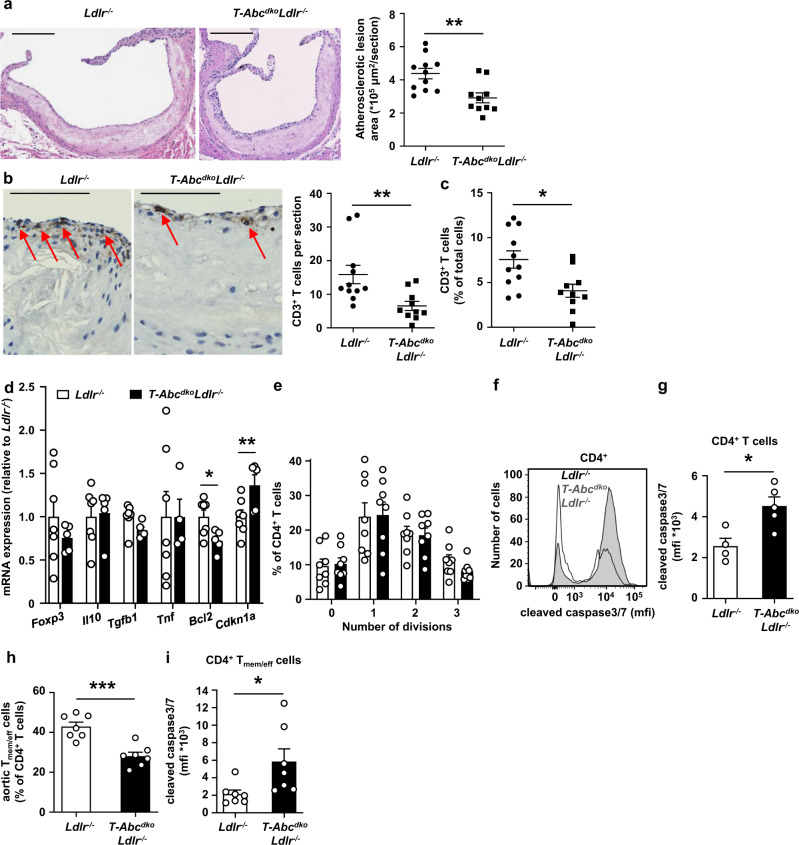
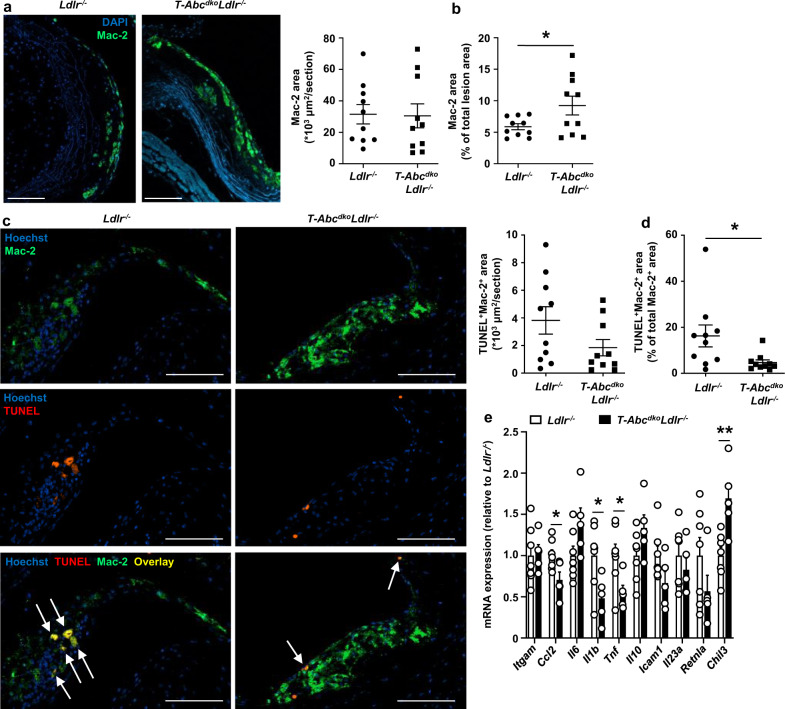
Atherosclerosis is a chronic inflammatory disease driven by hypercholesterolemia. During aging, T cells accumulate cholesterol, potentially affecting inflammation. However, the effect of cholesterol efflux pathways mediated by ATP-binding cassette A1 and G1 (ABCA1/ABCG1) on T cell-dependent age-related inflammation and atherosclerosis remains poorly understood. In this study, we generate mice with T cell-specific Abca1/Abcg1-deficiency on the low-density-lipoprotein-receptor deficient (Ldlr) background. T cell Abca1/Abcg1-deficiency decreases blood, lymph node, and splenic T cells, and increases T cell activation and apoptosis. T cell Abca1/Abcg1-deficiency induces a premature T cell aging phenotype in middle-aged (12-13 months) Ldlr mice, reflected by upregulation of senescence markers. Despite T cell senescence and enhanced T cell activation, T cell Abca1/Abcg1-deficiency decreases atherosclerosis and aortic inflammation in middle-aged Ldlr mice, accompanied by decreased T cells in atherosclerotic plaques. We attribute these effects to T cell apoptosis downstream of T cell activation, compromising T cell functionality. Collectively, we show that T cell cholesterol efflux pathways suppress T cell apoptosis and senescence, and induce atherosclerosis in middle-aged Ldlr mice.
动脉粥样硬化是一种由高血脂驱动的慢性炎症性疾病。在衰老过程中,T 细胞会积累胆固醇,这可能会影响炎症。然而,ATP 结合盒转运蛋白 A1 和 G1(ABCA1/ABCG1)介导的胆固醇外排途径对 T 细胞依赖性年龄相关性炎症和动脉粥样硬化的影响仍知之甚少。在这项研究中,我们在低密度脂蛋白受体缺陷(Ldlr)背景下生成了 T 细胞特异性 Abca1/Abcg1 缺陷的小鼠。T 细胞 Abca1/Abcg1 缺陷会减少血液、淋巴结和脾脏中的 T 细胞,并增加 T 细胞的激活和凋亡。T 细胞 Abca1/Abcg1 缺陷会诱导中年(12-13 个月)Ldlr 小鼠中出现 T 细胞过早衰老表型,这反映在衰老标志物的上调上。尽管 T 细胞衰老和 T 细胞激活增强,但 T 细胞 Abca1/Abcg1 缺陷会减少中年 Ldlr 小鼠的动脉粥样硬化和主动脉炎症,同时斑块中的 T 细胞减少。我们将这些影响归因于 T 细胞激活下游的 T 细胞凋亡,从而损害 T 细胞功能。总之,我们表明 T 细胞胆固醇外排途径可抑制 T 细胞凋亡和衰老,并在中年 Ldlr 小鼠中诱导动脉粥样硬化。