Africa Health Research Institute (AHRI), Nelson R. Mandela School of Medicine, University of KwaZulu-Natal, Durban, South Africa.
HIV Pathogenesis Programme, Doris Duke Medical Research Institute, Nelson R. Mandela School of Medicine, University of KwaZulu-Natal, Durban, South Africa.
BMC Immunol. 2022 Jul 1;23(1):34. doi: 10.1186/s12865-022-00508-1.
HIV eradication efforts have been unsuccessful partly due to virus persistence in immune sanctuary sites such as germinal centres within lymph node (LN) tissues. Recent evidence suggests that LNs harbour a novel subset of regulatory T cells, termed follicular regulatory T cells (TFRs), but their role in HIV pathogenesis is not fully elucidated.
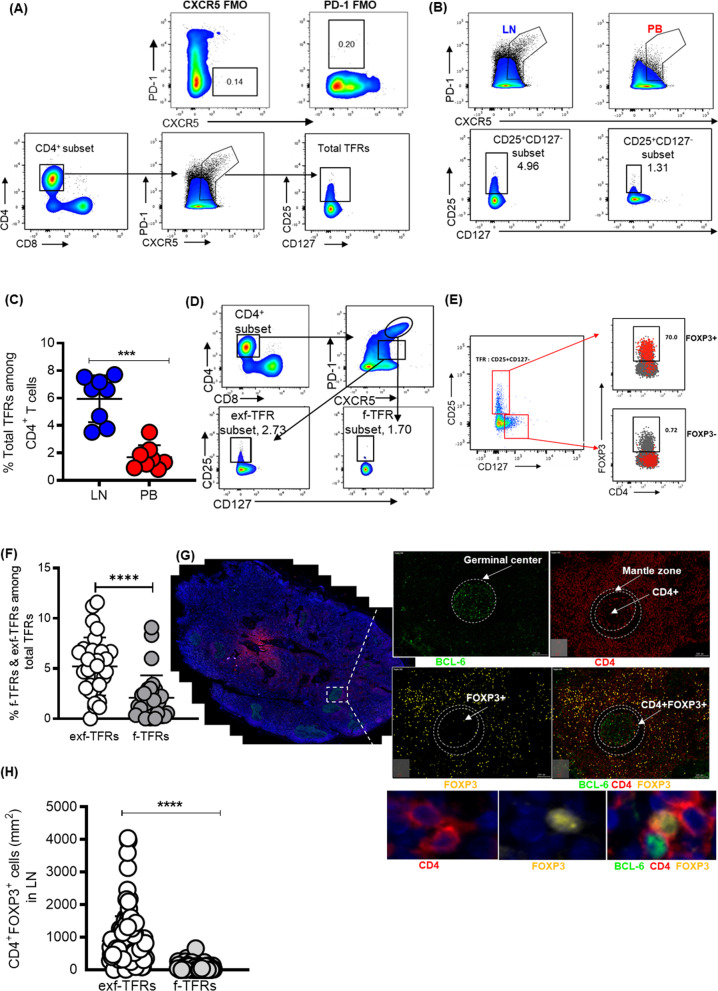
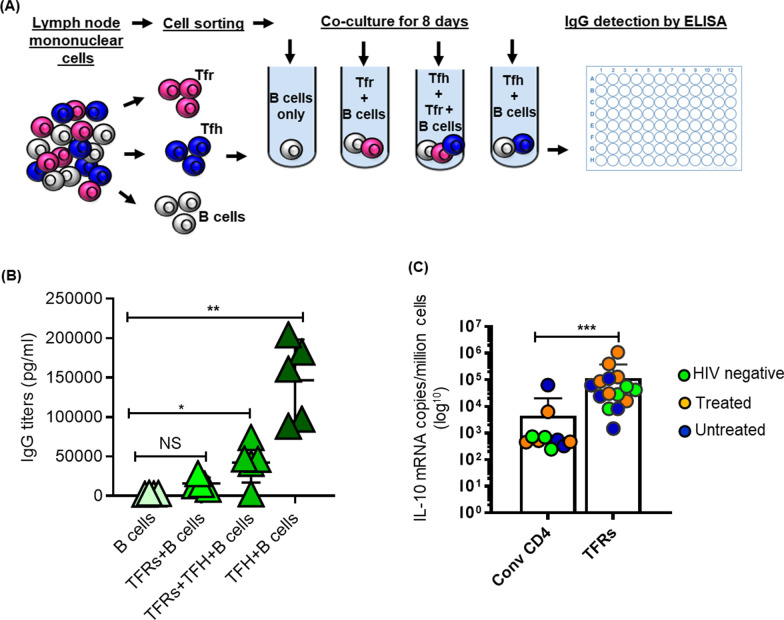
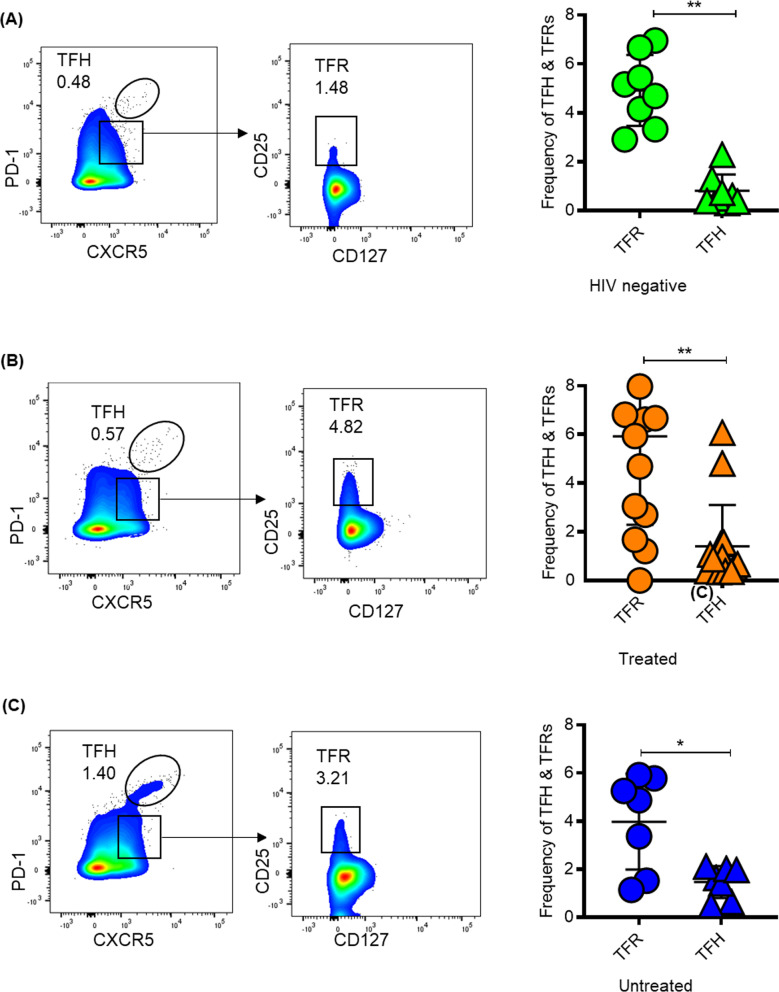
Paired excisional LN and peripheral blood samples obtained from 20 HIV-uninfected and 31 HIV-infected treated and 7 chronic untreated, were used to determine if and how HIV infection modulate frequencies, function and spatial localization of TFRs within LN tissues. Imaging studies showed that most TFRs are localized in extra-follicular regions. Co-culture assays showed TFRs suppression of TFH help to B cells. Importantly, epigenetic and transcriptional studies identified DPP4 and FCRL3 as novel phenotypic markers that define four functionally distinct TFR subpopulations in human LNs regardless of HIV status. Imaging studies confirmed the regulatory phenotype of DPP4TFRs.
Together these studies describe TFRs dynamic changes during HIV infection and reveal previously underappreciated TFR heterogeneity within human LNs.
HIV 根除工作的不成功部分归因于病毒在免疫避难所部位(如淋巴结(LN)组织中的生发中心)的持续存在。最近的证据表明,LN 中存在一种新型调节性 T 细胞亚群,称为滤泡调节性 T 细胞(TFRs),但其在 HIV 发病机制中的作用尚未完全阐明。
从 20 名未感染 HIV 的人和 31 名接受治疗的 HIV 感染者以及 7 名慢性未接受治疗的患者中获得配对的切除性 LN 和外周血样本,用于确定 HIV 感染是否以及如何调节 LN 组织中 TFRs 的频率、功能和空间定位。成像研究表明,大多数 TFRs 定位于滤泡外区域。共培养实验表明,TFRs 抑制 TFH 有助于 B 细胞。重要的是,表观遗传学和转录组学研究鉴定出 DPP4 和 FCRL3 作为新的表型标志物,无论 HIV 状态如何,均可在人类 LN 中定义四个具有不同功能的 TFR 亚群。成像研究证实了 DPP4TFRs 的调节表型。
这些研究共同描述了 HIV 感染期间 TFRs 的动态变化,并揭示了人类 LN 中以前未被充分认识的 TFR 异质性。