
神经刺激作为犬类耐药性癫痫的一种治疗方法和预防措施:现状与未来展望
Neurostimulation as a Method of Treatment and a Preventive Measure in Canine Drug-Resistant Epilepsy: Current State and Future Prospects.
作者信息
Nowakowska Marta, Üçal Muammer, Charalambous Marios, Bhatti Sofie F M, Denison Timothy, Meller Sebastian, Worrell Gregory A, Potschka Heidrun, Volk Holger A
机构信息
Research Unit of Experimental Neurotraumatology, Department of Neurosurgery, Medical University of Graz, Graz, Austria.
Department of Small Animal Medicine and Surgery, University of Veterinary Medicine Hannover, Hanover, Germany.
出版信息
Front Vet Sci. 2022 Jun 16;9:889561. doi: 10.3389/fvets.2022.889561. eCollection 2022.
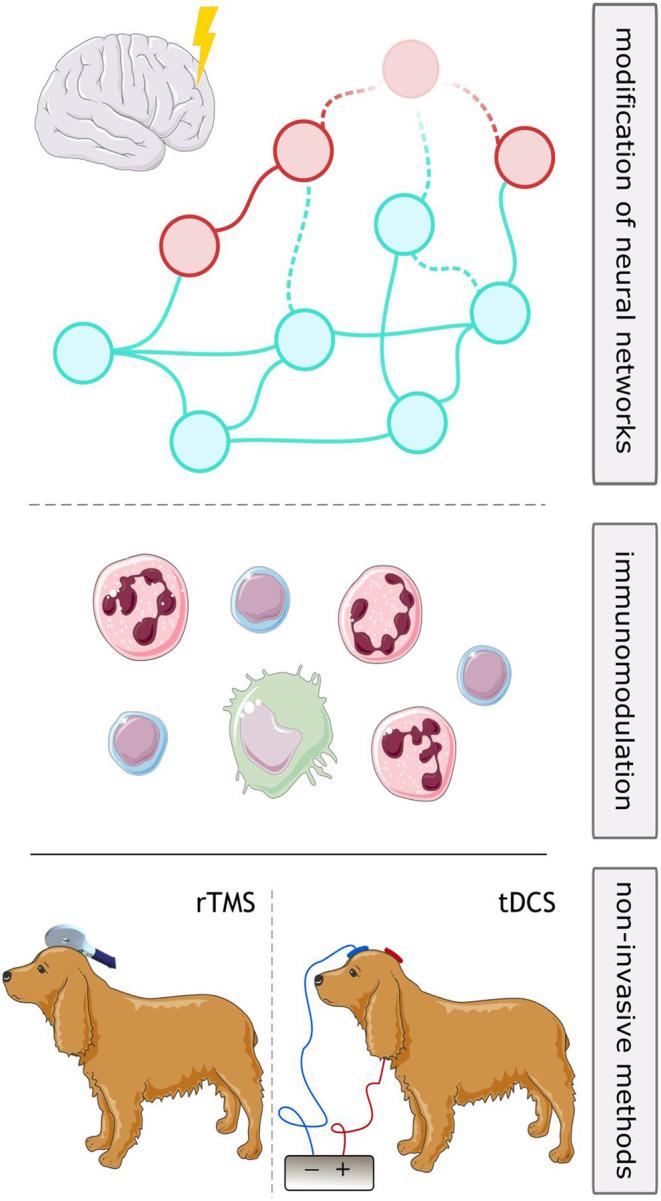
Modulation of neuronal activity for seizure control using various methods of neurostimulation is a rapidly developing field in epileptology, especially in treatment of refractory epilepsy. Promising results in human clinical practice, such as diminished seizure burden, reduced incidence of sudden unexplained death in epilepsy, and improved quality of life has brought neurostimulation into the focus of veterinary medicine as a therapeutic option. This article provides a comprehensive review of available neurostimulation methods for seizure management in drug-resistant epilepsy in canine patients. Recent progress in non-invasive modalities, such as repetitive transcranial magnetic stimulation and transcutaneous vagus nerve stimulation is highlighted. We further discuss potential future advances and their plausible application as means for preventing epileptogenesis in dogs.
利用各种神经刺激方法调节神经元活动以控制癫痫发作是癫痫学中一个快速发展的领域,尤其是在难治性癫痫的治疗方面。在人类临床实践中取得的令人鼓舞的结果,如癫痫发作负担减轻、癫痫猝死发生率降低以及生活质量改善,使神经刺激作为一种治疗选择成为兽医学的焦点。本文全面综述了犬类患者耐药性癫痫发作管理中可用的神经刺激方法。重点介绍了非侵入性方式的最新进展,如重复经颅磁刺激和经皮迷走神经刺激。我们还进一步讨论了未来可能的进展及其作为预防犬癫痫发生手段的合理应用。

 Zotero 插件