Zou Kun, Islam Sadequl, Sun Yang, Gao Yuan, Nakamura Tomohisa, Komano Hiroto, Tomita Taisuke, Michikawa Makoto
Department of Biochemistry, Graduate School of Medical Sciences, Nagoya City University, Nagoya, Japan.
Advanced Prevention and Research Laboratory for Dementia, Faculty of Pharmaceutical Sciences, Hokkaido University, Sapporo, Japan.
Front Aging Neurosci. 2022 Jun 16;14:902525. doi: 10.3389/fnagi.2022.902525. eCollection 2022.
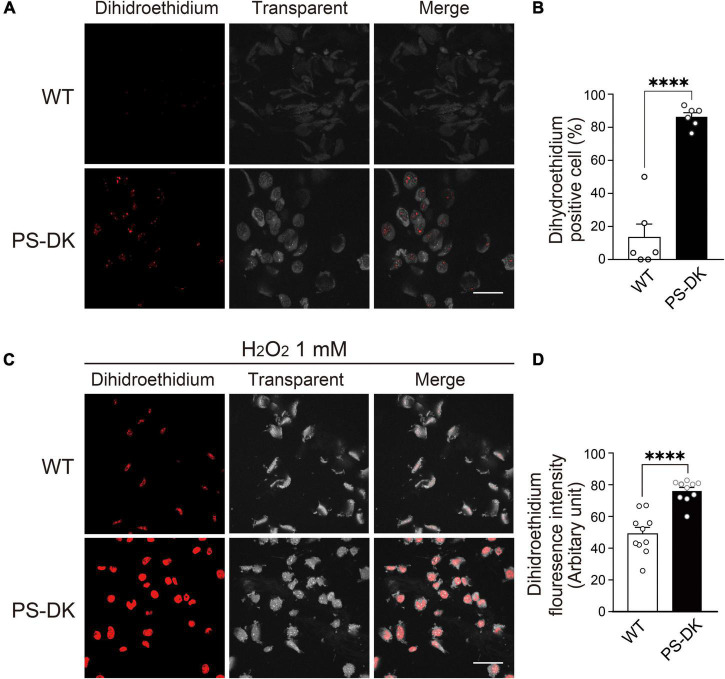
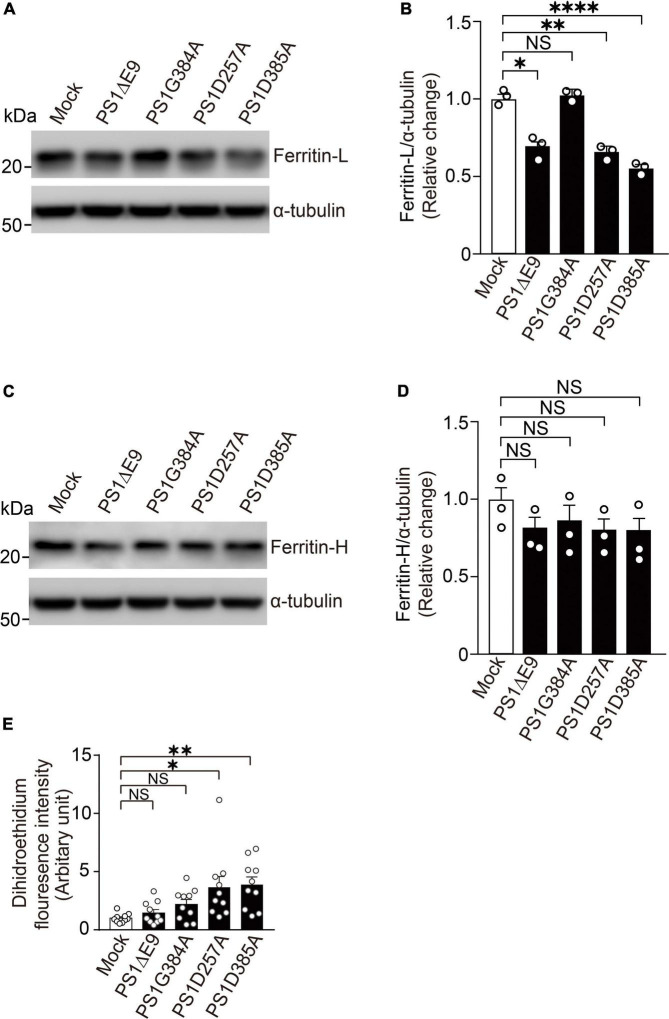
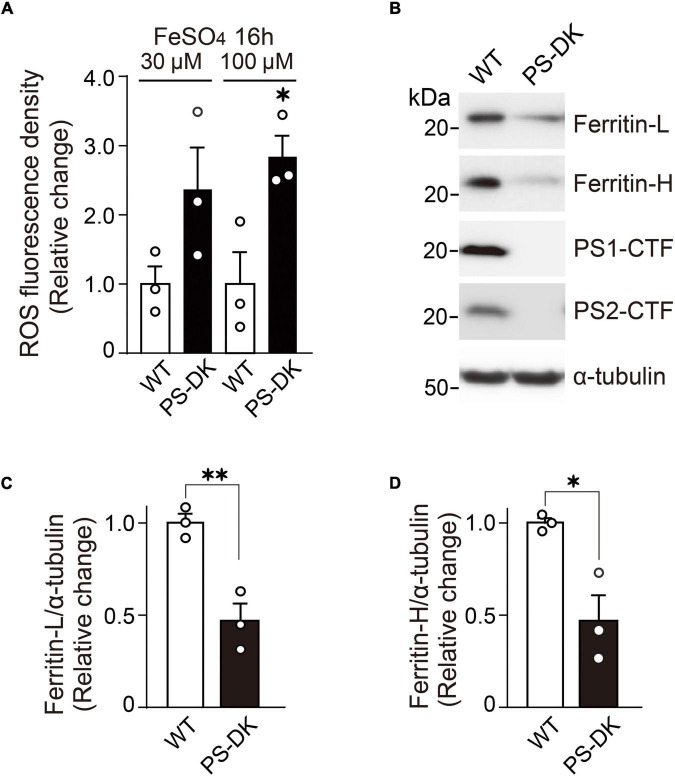
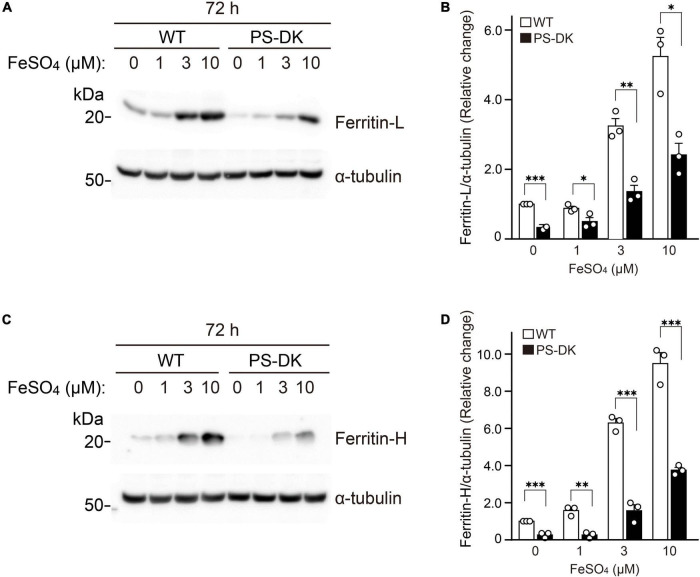
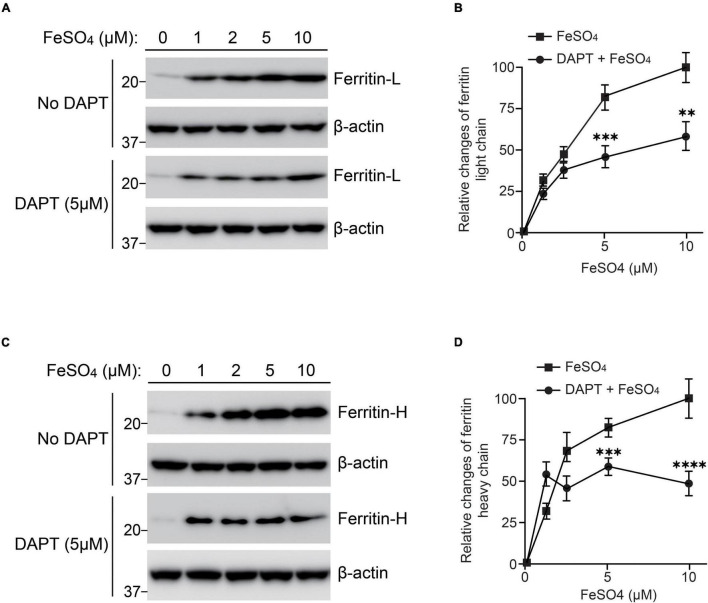
Alzheimer's disease (AD) is a genetic and sporadic neurodegenerative disease characterized by extracellular amyloid-β-protein (Aβ) aggregates as amyloid plaques and neuronal loss in the brain parenchyma of patients. Familial AD (FAD) is found to be genetically linked to missense mutations either in presenilin (PS) or amyloid precursor protein (APP). Most of PS mutations increase Aβ42/Aβ40 ratio, which is thought to result in early amyloid deposition in brain. However, PS deficiency in the fore brain of adult mouse leads to neuronal loss in an Aβ independent manner and the underlying mechanism is largely unknown. In this study, we found that reactive oxygen species (ROS) are increased in PS deficient fibroblasts and that HO and ferrous sulfate treatment produced more ROS in PS deficient fibroblasts than in wild-type fibroblasts. PS deficient fibroblasts showed significantly decreased cellular ferritin levels compared with wild-type fibroblasts, suggesting reduced iron sequestrating capability in PS deficient cells. Blockade of γ-secretase activity by a γ-secretase inhibitor, DAPT, decreased ferritin levels, indicating that γ-secretase activity is important for maintaining its levels. Moreover, overexpression PS1 mutants in wild-type fibroblasts decreased ferritin light chain levels and enhanced intracellular ROS levels. Our results suggest that dysfunction of PS may reduce intracellular ferritin levels and is involved in AD pathogenesis through increasing susceptibility to oxidative damage.
阿尔茨海默病(AD)是一种遗传性和散发性神经退行性疾病,其特征是细胞外淀粉样β蛋白(Aβ)聚集成淀粉样斑块,且患者脑实质中存在神经元丢失。家族性AD(FAD)被发现与早老素(PS)或淀粉样前体蛋白(APP)中的错义突变存在遗传联系。大多数PS突变会增加Aβ42/Aβ40的比例,这被认为会导致大脑中早期淀粉样蛋白沉积。然而,成年小鼠前脑PS缺乏会以Aβ非依赖的方式导致神经元丢失,其潜在机制在很大程度上尚不清楚。在本研究中,我们发现PS缺陷的成纤维细胞中活性氧(ROS)增加,并且过氧化氢(HO)和硫酸亚铁处理在PS缺陷的成纤维细胞中产生的ROS比在野生型成纤维细胞中更多。与野生型成纤维细胞相比,PS缺陷的成纤维细胞显示细胞铁蛋白水平显著降低,这表明PS缺陷细胞中铁螯合能力降低。γ-分泌酶抑制剂DAPT阻断γ-分泌酶活性会降低铁蛋白水平,表明γ-分泌酶活性对于维持其水平很重要。此外,在野生型成纤维细胞中过表达PS1突变体可降低铁蛋白轻链水平并提高细胞内ROS水平。我们的结果表明,PS功能障碍可能会降低细胞内铁蛋白水平,并通过增加对氧化损伤的易感性参与AD发病机制。