Department of Community Health, Faculty of Medicine, Mbarara University of Science & Technology, P.O. BOX 1410, Mbarara, Uganda.
School of Public Health, College of Health Sciences, Makerere University, P.O. BOX 7072, Kampala, Uganda.
BMC Infect Dis. 2022 Jul 4;22(1):589. doi: 10.1186/s12879-022-07579-w.
Despite the availability of a highly effective vaccine, measles remains a substantial public health problem in many countries including Uganda. In this study, conducted between June-August 2020 following a local outbreak, we sought to explore the factors that could affect measles vaccination coverage in rural western Uganda.
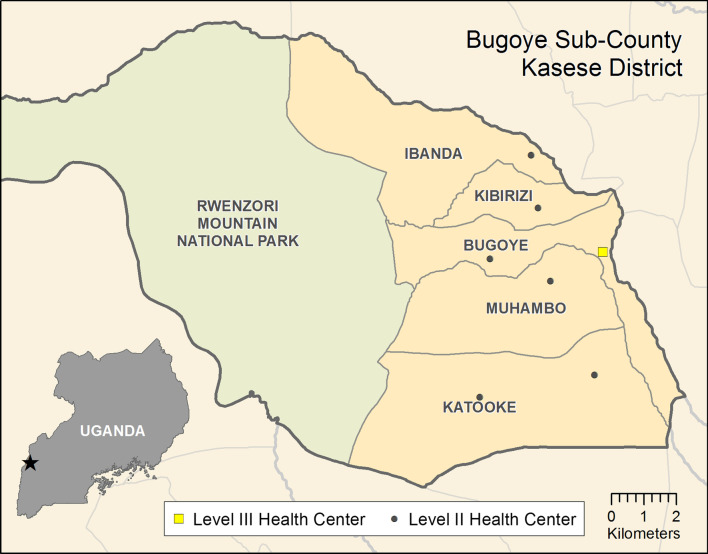
We conducted a descriptive study using qualitative data collection approaches in the Kasese district. The research team utilized purposive sampling to identify and select participants from the public health sector and district government. We conducted key informant interviews (KII) and one focus group discussion (FGD). Responses were recorded using portable electronic devices with the FGD and KII guide installed. Interviews were conducted at the health centre and district headquarters. Data was coded and analysed using ATLAS.ti version 8 software through deductive thematic analysis to identify key themes.
Barriers to measles vaccination identified in this study were premised around six themes including: (i) availability of supplies and stock management, (ii) health worker attitudes and workload, (iii) financing of vaccination outreach activities, (iv) effectiveness of duty rosters (i.e., health workers' working schedules), (v) community beliefs, and (vi) accessibility of healthcare facilities. Respondents reported frequent vaccine supply disruptions, lack of resources to facilitate transportation of health workers to communities for outreach events, and health centre staffing that did not adequately support supplemental vaccination activities. Furthermore, community dependence on traditional medicine as a substitute for vaccines and long distances traveled by caregivers to reach a health facility were mentioned as barriers to vaccination uptake.
Health system barriers limiting vaccination uptake were primarily logistical in nature and reflect inadequate resourcing of immunization efforts. At the same time, local beliefs favouring traditional medicine remain a persistent cultural barrier. These findings suggest an urgent need for more efficient supply management practices and resourcing of immunization outreaches in order to achieve the Uganda Ministry of Health's targets for childhood immunization and the prevention of disease outbreaks.
尽管有高效疫苗可用,但麻疹在包括乌干达在内的许多国家仍然是一个严重的公共卫生问题。在本次研究中,我们于 2020 年 6 月至 8 月在当地爆发疫情后进行了调查,旨在探讨影响乌干达西部农村麻疹疫苗接种覆盖率的因素。
我们在卡塞塞区进行了一项描述性研究,采用定性数据收集方法。研究团队利用目的抽样,从公共卫生部门和区政府中确定并选择参与者。我们进行了关键知情人访谈(KII)和一次焦点小组讨论(FGD)。使用装有 FGD 和 KII 指南的便携式电子设备记录受访者的回答。访谈在卫生中心和区总部进行。使用 ATLAS.ti 版本 8 软件对数据进行编码和分析,通过演绎主题分析识别关键主题。
本研究确定的麻疹疫苗接种障碍基于以下六个主题:(i)供应品的可得性和库存管理,(ii)卫生工作者的态度和工作量,(iii)疫苗接种外展活动的资金,(iv)值班表的有效性(即卫生工作者的工作时间表),(v)社区信念,和(vi)医疗设施的可及性。受访者报告称疫苗供应经常中断,缺乏资源来促进卫生工作者前往社区进行外展活动,以及卫生中心的人员配备不足以支持补充疫苗接种活动。此外,社区依赖传统医学作为疫苗的替代品,以及照顾者为到达医疗机构而长途跋涉,这些都被认为是疫苗接种率低的障碍。
限制疫苗接种的卫生系统障碍主要是后勤性质的,反映了免疫工作资源不足。与此同时,支持传统医学的当地信仰仍然是一个持久的文化障碍。这些发现表明,迫切需要更有效的供应管理实践和免疫外展资源,以实现乌干达卫生部对儿童免疫和预防疾病爆发的目标。