Kim Daehoon, Yang Pil-Sung, Joung Boyoung
Division of Cardiology, Department of Internal Medicine, Severance Cardiovascular Hospital, Yonsei University College of Medicine, Seoul, Korea.
Department of Cardiology, CHA Bundang Medical Center, CHA University, Seongnam, Korea.
Korean Circ J. 2022 Jul;52(7):496-512. doi: 10.4070/kcj.2022.0078.
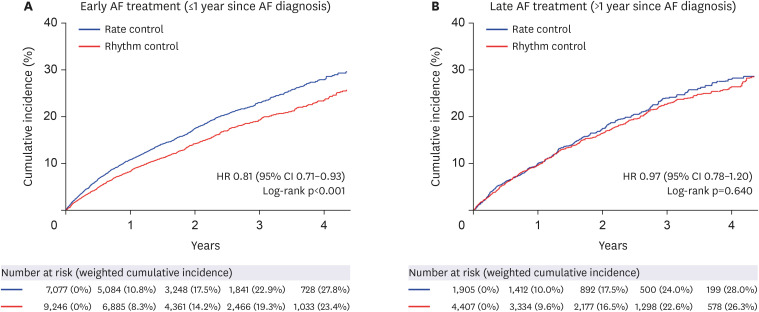
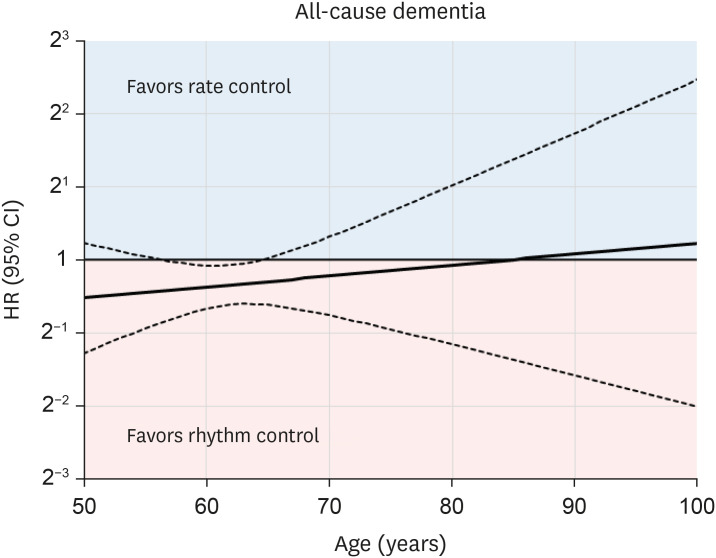
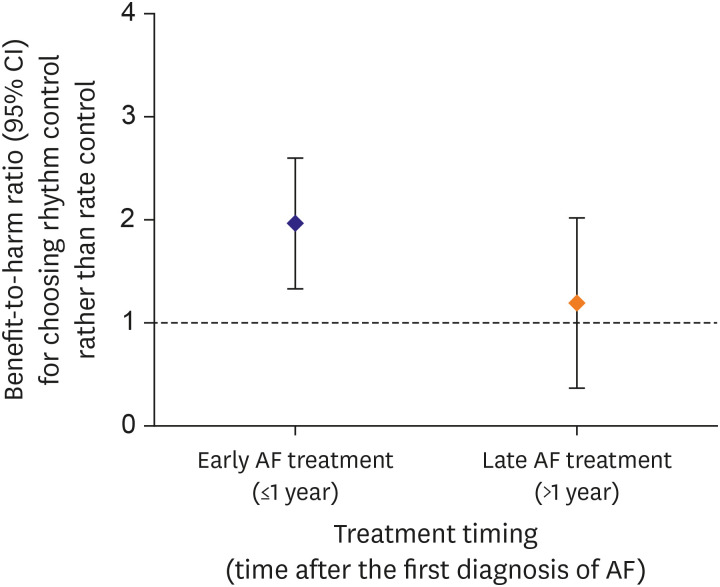
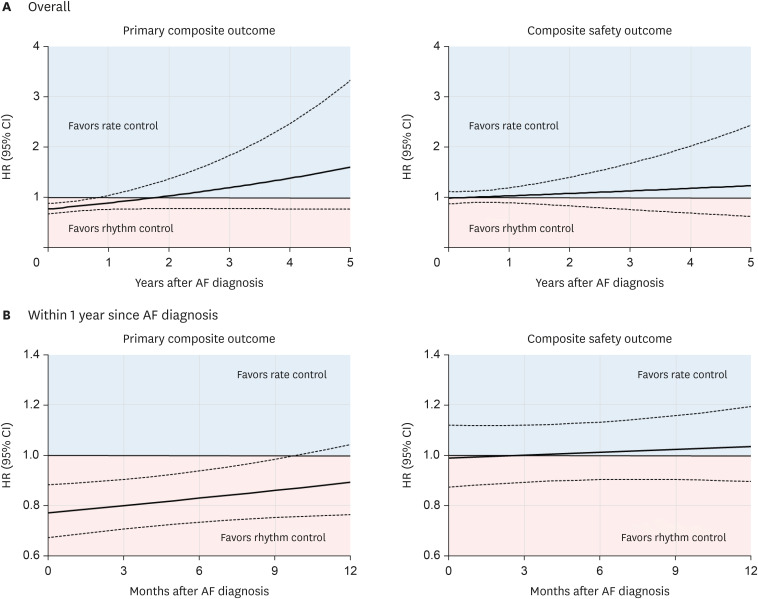
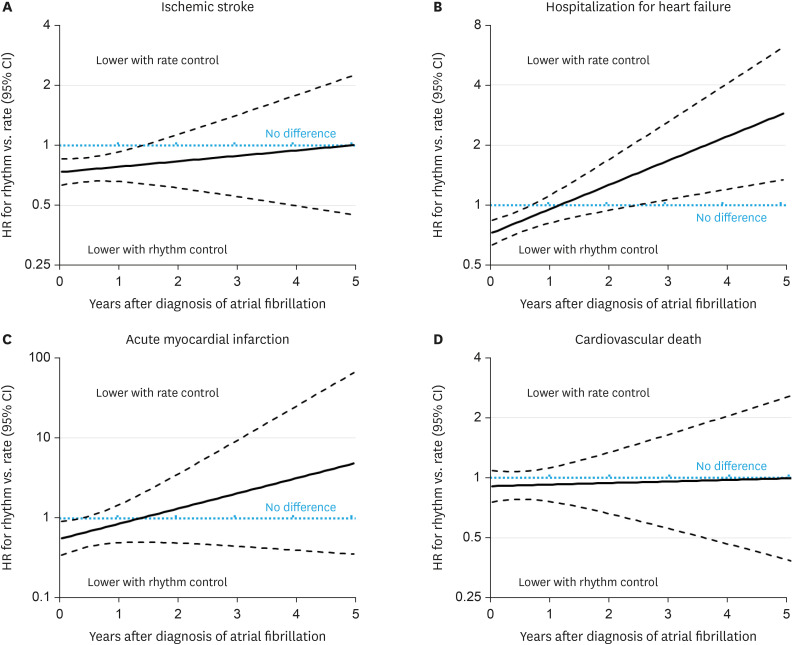
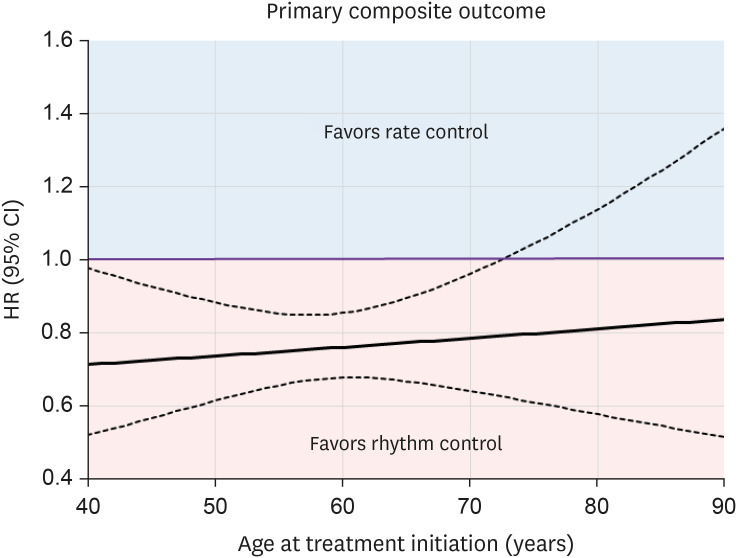
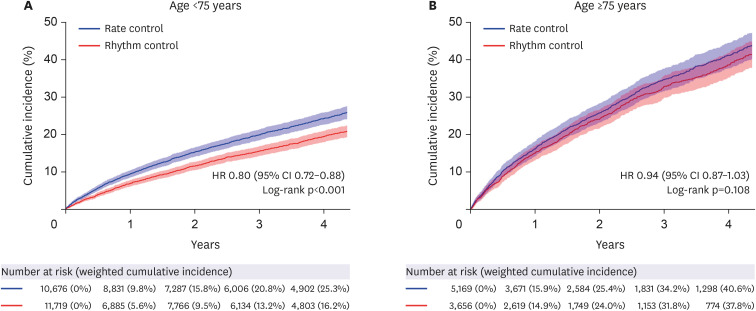
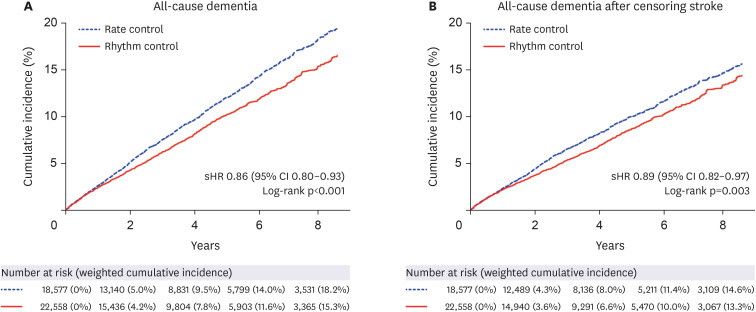
For almost 20 years, data regarding the effect of rhythm control therapy for atrial fibrillation (AF) on cardiovascular prognosis in comparison with rate control therapy has not been conclusive. The safety of rhythm control and anticoagulation therapy has generally improved. Recently, it was revealed that a rhythm-control strategy reduced the risk of adverse cardiovascular events than usual rate control in patients with recent AF (diagnosed within 1 year). Within 1 year after the AF diagnosis, early initiation of rhythm control led to more favorable cardiovascular outcomes than rate control. Early rhythm control reduced the risks of stroke and heart failure-related admission than rate control. Moreover, rhythm control was associated with lower dementia risk than rate control. Finally, early rhythm control treatment was also effective in patients with asymptomatic AF but less effective in older adults. Therefore, in patients with AF, rhythm control should be considered at earlier stages, regardless of symptom.
近20年来,与心率控制疗法相比,节律控制疗法对心房颤动(AF)心血管预后影响的数据一直尚无定论。节律控制和抗凝治疗的安全性总体上有所改善。最近有研究表明,在近期房颤(诊断时间在1年内)患者中,节律控制策略比常规心率控制降低了不良心血管事件的风险。在房颤诊断后的1年内,早期启动节律控制比心率控制带来更有利的心血管结局。与心率控制相比,早期节律控制降低了中风和心力衰竭相关住院的风险。此外,与心率控制相比,节律控制与较低的痴呆风险相关。最后,早期节律控制治疗对无症状房颤患者也有效,但对老年人效果较差。因此,对于房颤患者,无论有无症状,都应在更早阶段考虑节律控制。