Centre of Precision Rehabilitation for Spinal Pain, School of Sport, Exercise and Rehabilitation Sciences, University of Birmingham, B15 2TT, Edgbaston, Birmingham, UK.
Research Centre, University College of Osteopathy, London, UK.
Med Health Care Philos. 2022 Sep;25(3):509-521. doi: 10.1007/s11019-022-10096-x. Epub 2022 Jul 6.
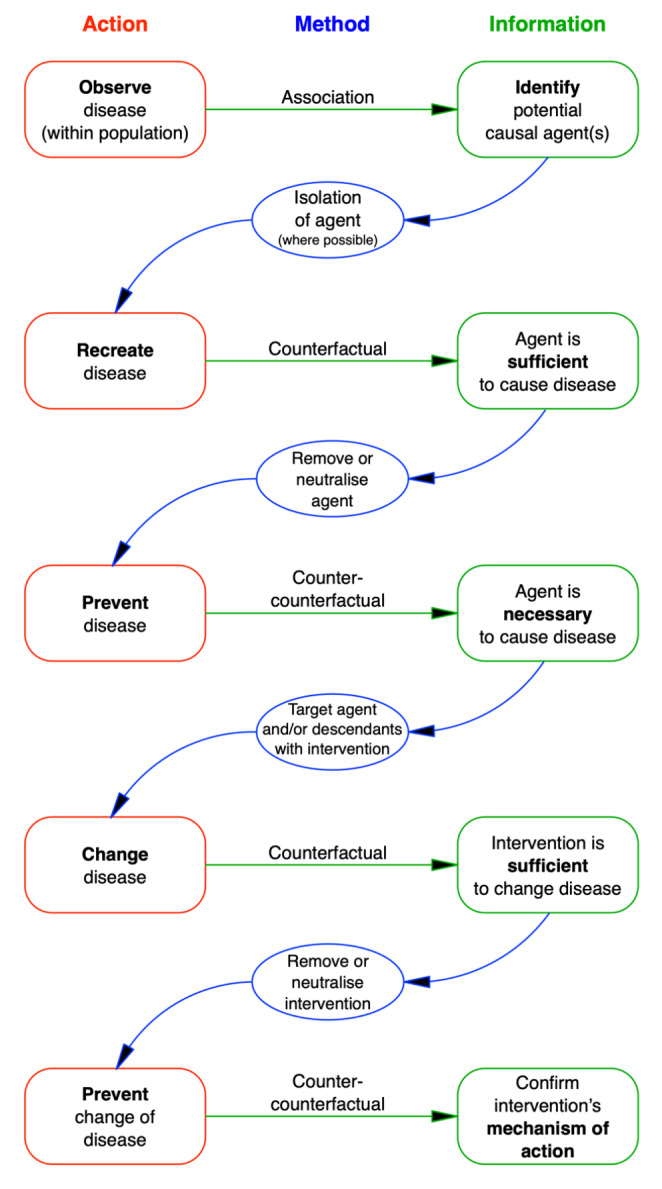
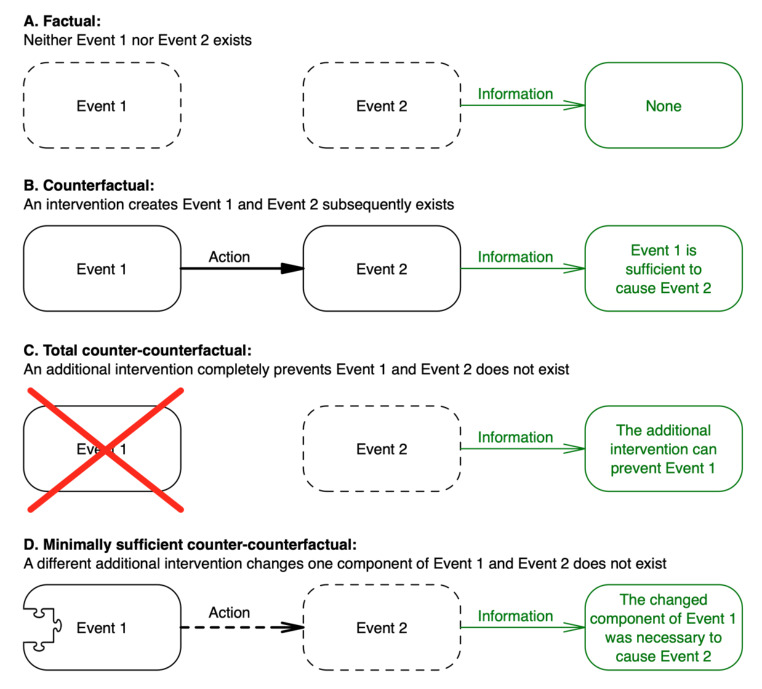
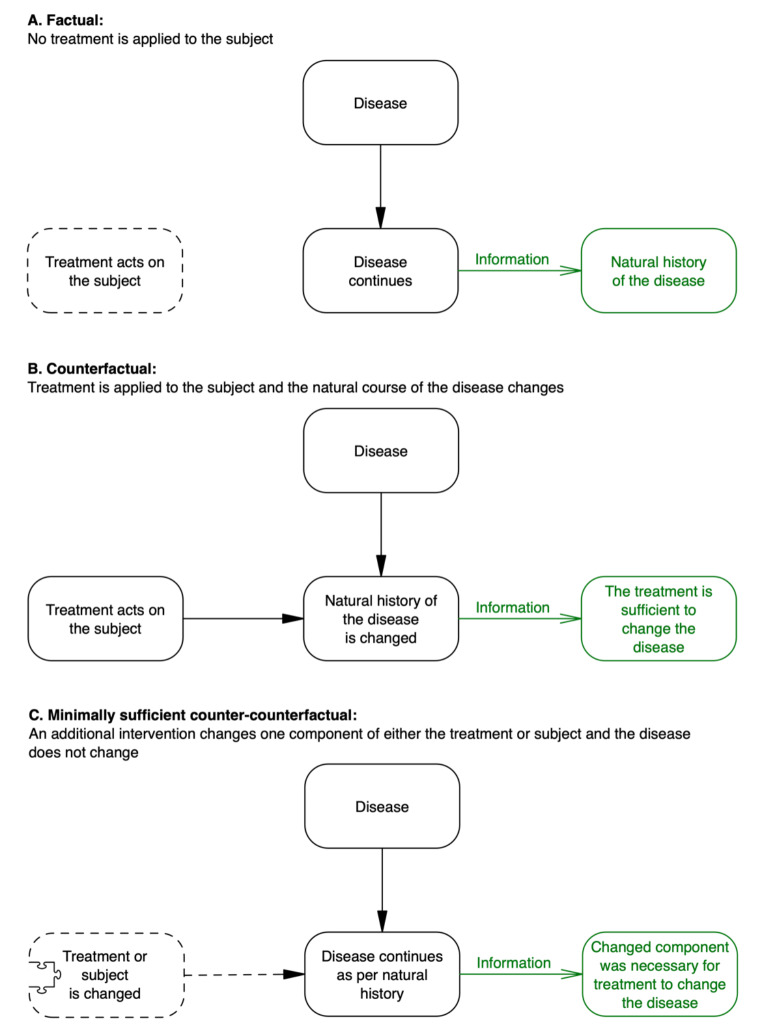
Researchers, clinicians, and patients have good reasons for wanting answers to causal questions of disease and therapeutic intervention. This paper uses microbiologist Robert Koch's pioneering work and famous postulates to extrapolate a logical sequence of evidence for confirming the causes of disease: association between individuals with and without a disease; isolation of causal agents; and the creation of a counterfactual (demonstrating that an agent is sufficient to reproduce the disease anew). This paper formally introduces counter-counterfactuals, which appear to have been used, perhaps intuitively, since the time of Koch and possibly earlier. An argument is presented that counter-counterfactuals (disease-preventers) are a useful tool for identifying necessary causes of disease, and sometimes must be used in place of isolation which is not always possible. In addition, a logical sequence of causal evidence for a therapeutic intervention is presented: creating a counterfactual (demonstrating that the intervention is sufficient to change the natural course of a disease), comparisons between subjects in receipt of treatment versus those who are not (typically within a randomised controlled trial, which can quantify effects of intervention), and counter-counterfactuals (treatment-preventers, which can identify the intervention's mechanisms of action).
研究人员、临床医生和患者都有充分的理由希望回答有关疾病和治疗干预的因果问题。本文利用微生物学家罗伯特·科赫的开创性工作和著名假设,推断出确认疾病病因的逻辑证据序列:疾病个体与非疾病个体之间的关联;因果因子的分离;以及反事实的创建(证明一种因子足以重新产生疾病)。本文正式引入了反反事实(预防疾病的因子),它们似乎自科赫时代以来就被直观地使用了,甚至更早。本文提出了一个论点,即反反事实(预防疾病的因子)是识别疾病必要病因的有用工具,有时必须替代并非总是可行的分离。此外,本文还提出了治疗干预因果证据的逻辑序列:创建反事实(证明干预足以改变疾病的自然进程),接受治疗的受试者与未接受治疗的受试者之间的比较(通常在随机对照试验中,可以量化干预效果),以及反反事实(治疗预防因子,可以确定干预的作用机制)。