Department of Life Sciences, National Chung Hsing University, Taichung, Taiwan.
The iEGG and Animal Biotechnology Center, National Chung Hsing University, Taichung, Taiwan.
PLoS One. 2022 Jul 6;17(7):e0271029. doi: 10.1371/journal.pone.0271029. eCollection 2022.
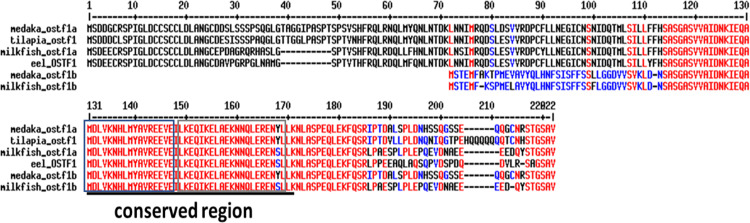
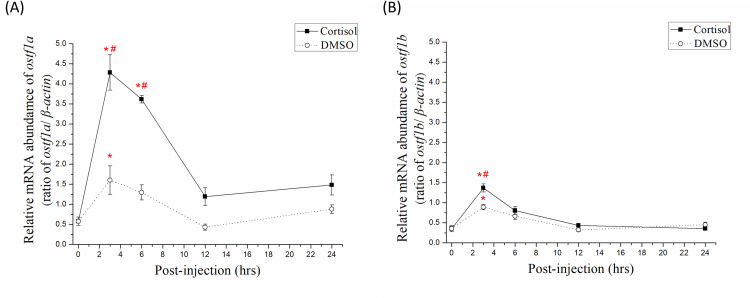
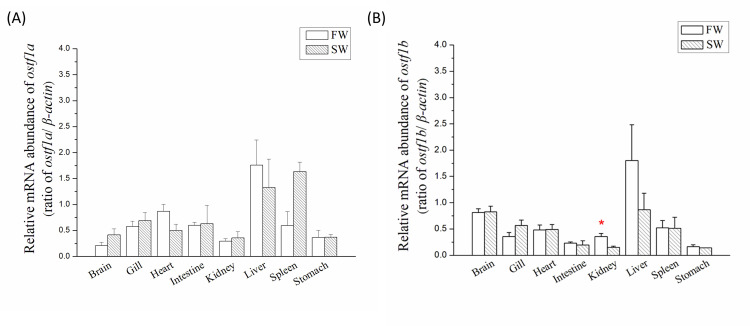
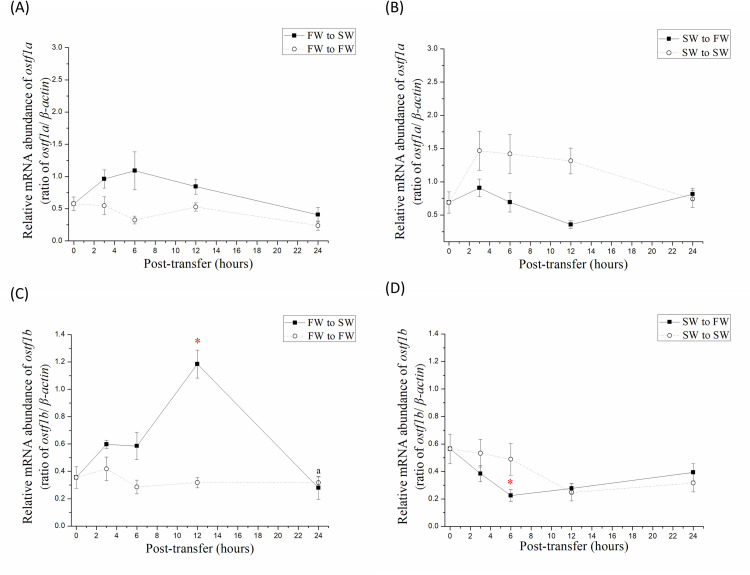
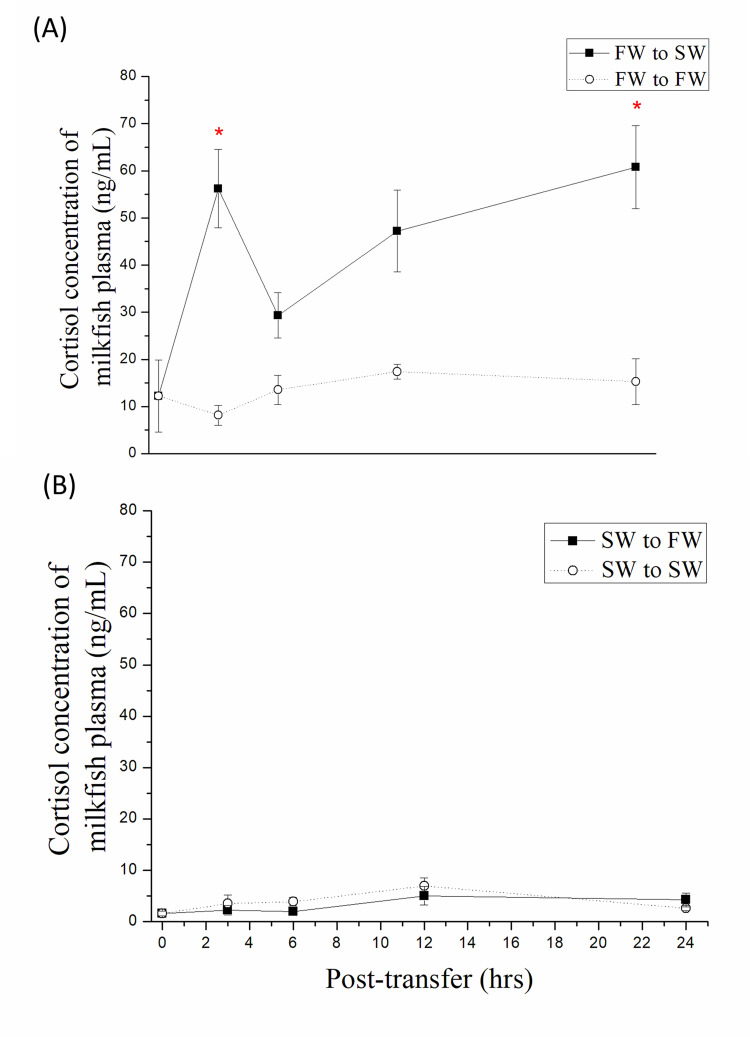
Euryhaline teleosts can survive in environments with different salinities. Cortisol is an important hormone for acclimation to seawater (SW) of euryhaline teleosts. Osmotic stress transcription factor 1 (OSTF1), also called the transforming growth factor-beta stimulated clone 22 domain 3 (tsc22d3), was first reported in tilapia as an acute response gene and protein under hyperosmotic stress, and it is regulated by cortisol. To date, most studies on OSTF1 have focused on freshwater inhabitants, such as tilapia, medaka, and catadromous eel. The expression of OSTF1 and the correlation between OSTF1 and cortisol in marine inhabitant euryhaline teleosts, to our knowledge, remain unclear. This study reveals the changes in the expression levels of branchial OSTF1, plasma cortisol levels, and their correlation in the marine inhabitant milkfish with ambient salinities. The two sequences of milkfish TSC22D3 transcripts were classified as OSTF1a and OSTF1b. Both genes were expressed universally in all detected organs and tissues but were the most abundant in the liver. Similar gene expression levels of ostf1a and ostf1b were found in SW- and fresh water (FW)-acclimated milkfish gills, an important osmoregulatory organ. Within 12 hours of being transferred from FW to SW, the gene expression level of ostf1b increased significantly (4 folds) within 12 h, whereas the expression level of ostf1a remained constant. Moreover, cortisol levels increased rapidly after being transferred to a hyperosmotic environment. After an intraperitoneal injection of cortisol, the gene expression levels of ostf1a and ostf1b were elevated. However, under hyperosmotic stress, ostf1a gene expression remained stable. Overall, the results revealed that ostf1b was the primary gene in milkfish responding to hypertonic stress, and cortisol concentration increased after the transfer of milkfish from FW to SW. Furthermore, cortisol injection increased the expression of ostf1a and ostf1b. As a result, factors other than cortisol may activate ostf1b in milkfish gills in response to an environmental salinity challenge.
广盐性鱼类可以在不同盐度的环境中生存。皮质醇是广盐性鱼类适应海水(SW)的重要激素。渗透胁迫转录因子 1(OSTF1),也称为转化生长因子-β刺激克隆 22 域 3(tsc22d3),最初在罗非鱼中被报道为一种在高渗胁迫下的急性反应基因和蛋白,它受皮质醇调节。迄今为止,大多数关于 OSTF1 的研究都集中在淡水生物上,如罗非鱼、斑马鱼和洄游性鳗鲡。海洋生物广盐性鱼类鳃部 OSTF1 的表达及其与皮质醇的相关性,据我们所知,尚不清楚。本研究揭示了海洋生物洄游性鳗鲡在环境盐度下鳃部 OSTF1 表达水平的变化、血浆皮质醇水平及其相关性。两种鲻鱼 TSC22D3 转录本被归类为 OSTF1a 和 OSTF1b。这两个基因在所有检测到的器官和组织中普遍表达,但在肝脏中最为丰富。在 SW 和 FW 驯化的鲻鱼鳃中,ostf1a 和 ostf1b 的基因表达水平相似,鳃是重要的渗透压调节器官。在从 FW 转移到 SW 的 12 小时内,ostf1b 的基因表达水平在 12 小时内显著增加(4 倍),而 ostf1a 的表达水平保持不变。此外,在转移到高渗环境后,皮质醇水平迅速升高。在腹腔注射皮质醇后,ostf1a 和 ostf1b 的基因表达水平升高。然而,在高渗胁迫下,ostf1a 基因表达保持稳定。总体而言,结果表明,ostf1b 是鲻鱼应对高渗胁迫的主要基因,在从 FW 转移到 SW 后,皮质醇浓度增加。此外,皮质醇注射增加了 ostf1a 和 ostf1b 的表达。因此,除皮质醇以外的因素可能会激活鲻鱼鳃中的 ostf1b,以应对环境盐度挑战。