Pontoriero Antonella D, Charlton Peter H, Alastruey Jordi
Department of Biomedical Engineering, School of Biomedical Engineering and Imaging Sciences, King's College London, King's Health Partners, St Thomas' Hospital, London SE1 7EH, UK.
Proceedings (MDPI). 2018 Nov 14;4(1):8. doi: 10.3390/ecsa-5-05742.
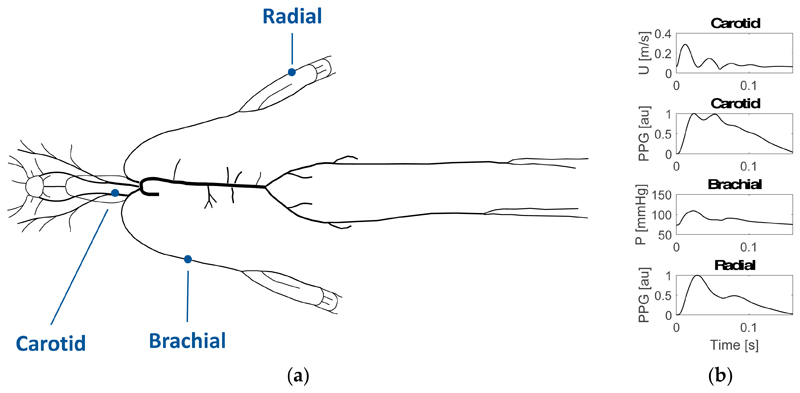
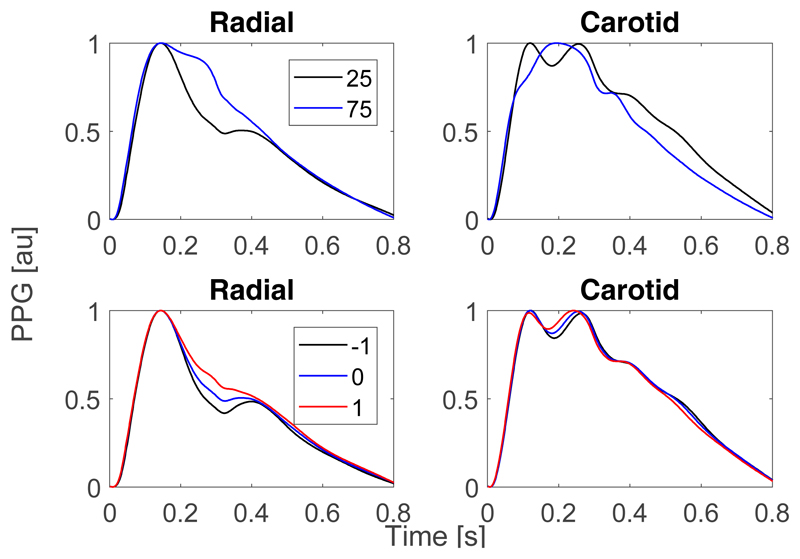
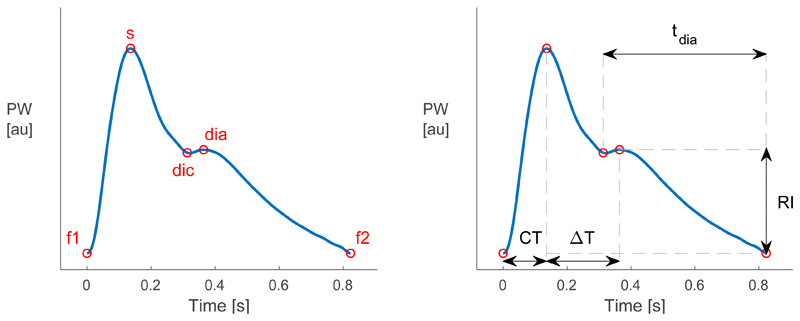
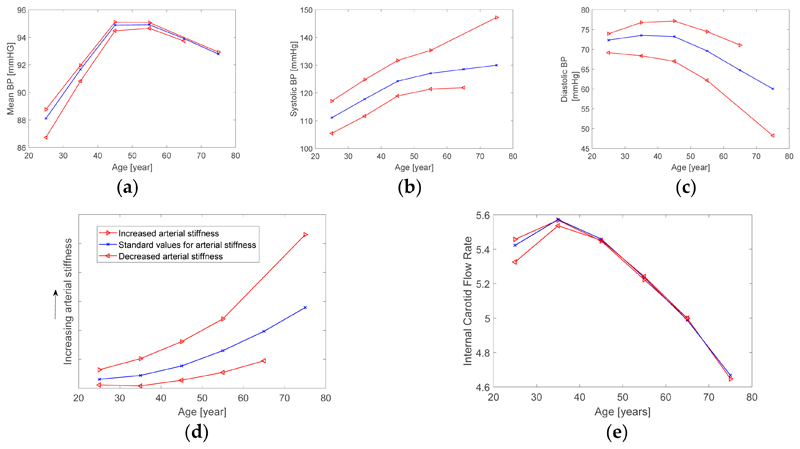
Alzheimer's disease (AD) is the most common cause of dementia. Several haemodynamic risk factors for AD have been identified, including ageing, increased arterial stiffness, high systolic blood pressure (BP) and brain hypoperfusion. We propose a novel approach for assessing haemodynamic risk factors by analysing arterial pulse waves (PWs). The aim of this feasibility study was to determine whether features extracted from PWs measured by wearable sensors might have utility for stratifying patients at risk of AD. A numerical model of PW propagation was used to simulate PWs for virtual subjects of each age decade from 25 to 75 years (16 subjects in total), with subjects at each age exhibiting normal variation in arterial stiffness. Several PW features were extracted, and their relationships with AD risk factors were investigated. PWs at the wrist were found to exhibit changes with age and arterial stiffness, indicating that it may be possible to identify changes in risk factors from smart wearables. Several candidate PW features were identified which changed significantly with age for future testing. This study demonstrates the potential feasibility of assessing haemodynamic risk factors for AD from non-invasive PWs. These factors could be assessed from the PPG PW, which can be acquired by smart watches and phones. If the findings are replicated in clinical studies, then this may provide opportunities for patients to assess their own risk and make lifestyle changes accordingly.
阿尔茨海默病(AD)是痴呆最常见的病因。已确定了几种AD的血流动力学危险因素,包括衰老、动脉僵硬度增加、收缩压升高和脑灌注不足。我们提出了一种通过分析动脉脉搏波(PW)来评估血流动力学危险因素的新方法。这项可行性研究的目的是确定从可穿戴传感器测量的PW中提取的特征是否可用于对AD风险患者进行分层。使用PW传播的数值模型为25至75岁每个年龄十年的虚拟受试者模拟PW(总共16名受试者),每个年龄的受试者动脉僵硬度呈现正常变化。提取了几个PW特征,并研究了它们与AD危险因素的关系。发现手腕处的PW随年龄和动脉僵硬度而变化,这表明有可能从智能可穿戴设备中识别危险因素的变化。确定了几个随年龄显著变化的候选PW特征以供未来测试。这项研究证明了从无创PW评估AD血流动力学危险因素的潜在可行性。这些因素可从PPG PW中评估,PPG PW可由智能手表和手机获取。如果这些发现在临床研究中得到重复,那么这可能为患者提供评估自身风险并相应改变生活方式的机会。