Barrier Immunity Section, Lab of Viral Diseases, Division of Intramural Research, NIAID, NIH, Bethesda, Maryland, United States of America.
Human Immunology Section, Vaccine Research Center, NIAID, NIH, Bethesda, Maryland, United States of America.
PLoS Pathog. 2022 Jul 7;18(7):e1010611. doi: 10.1371/journal.ppat.1010611. eCollection 2022 Jul.
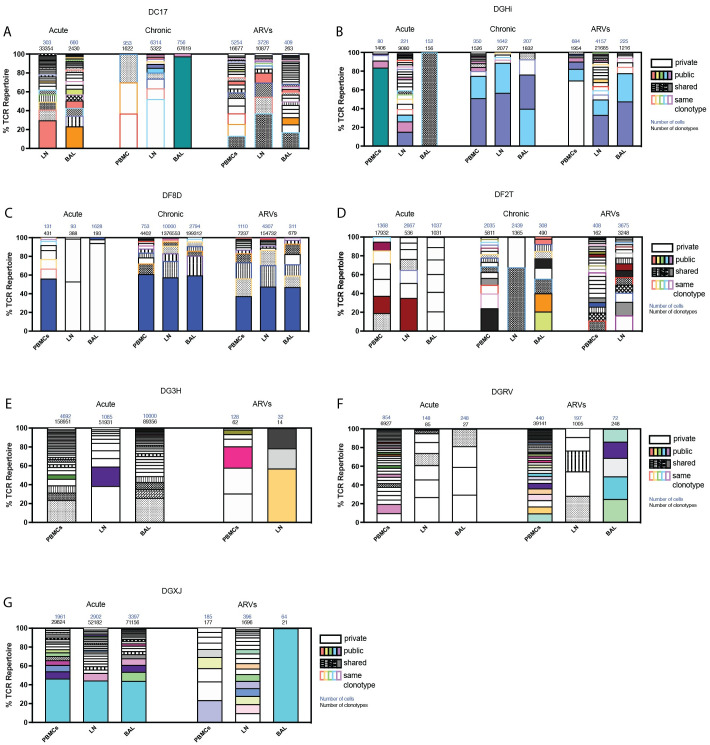
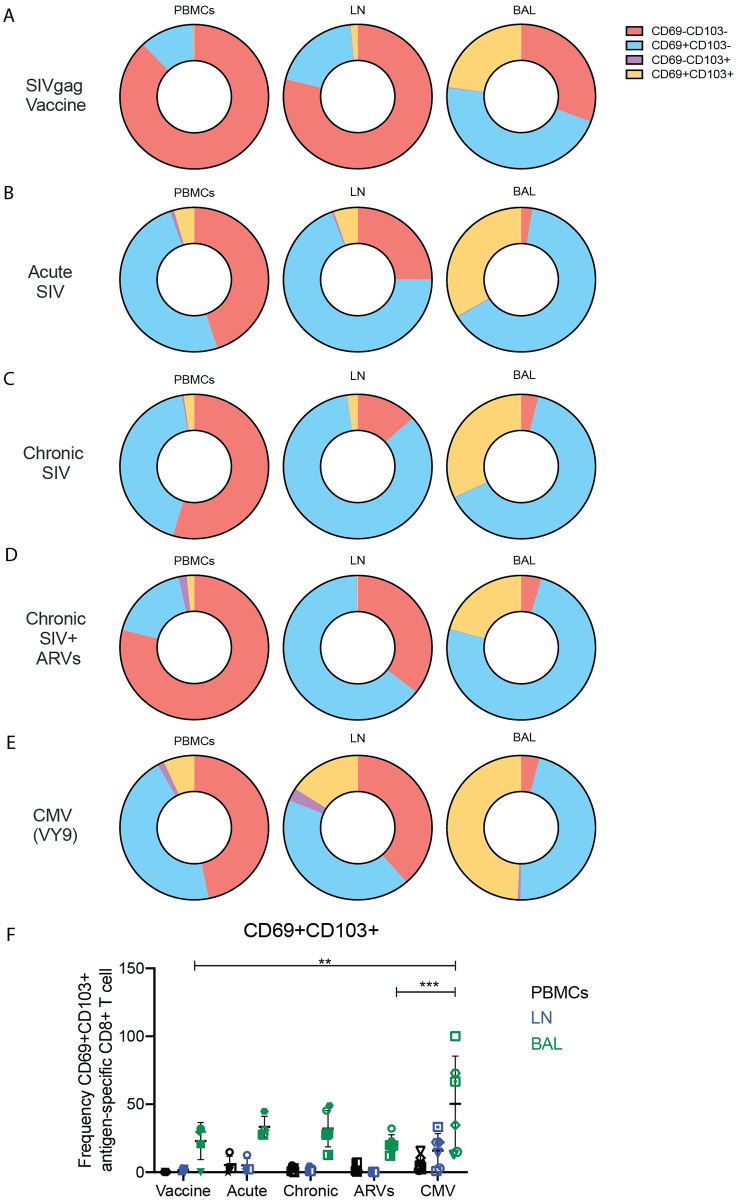
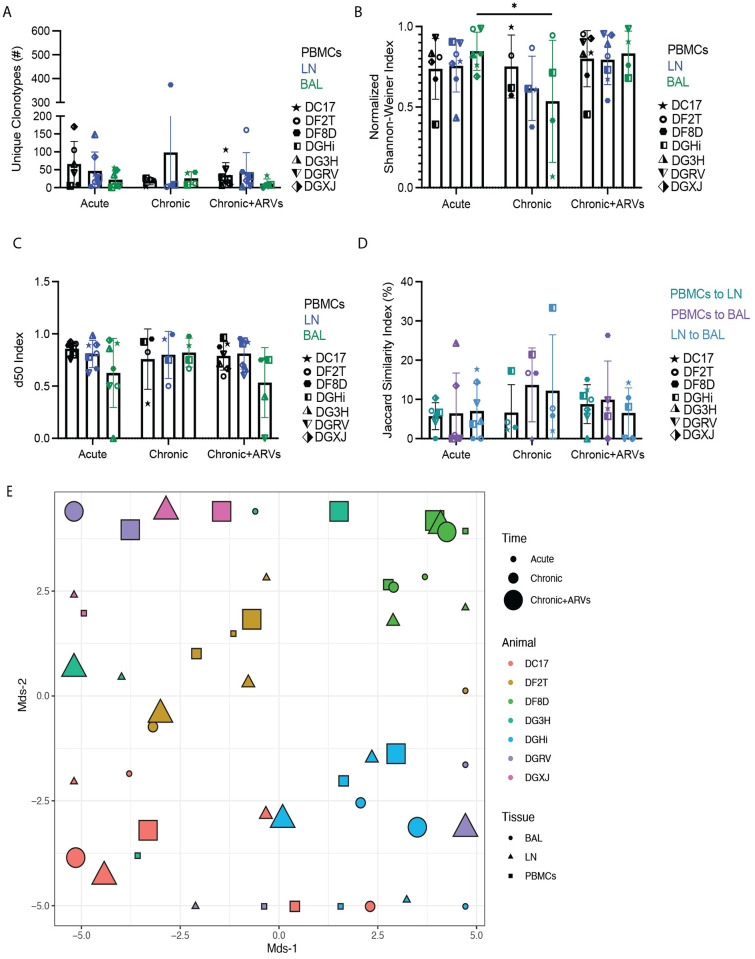
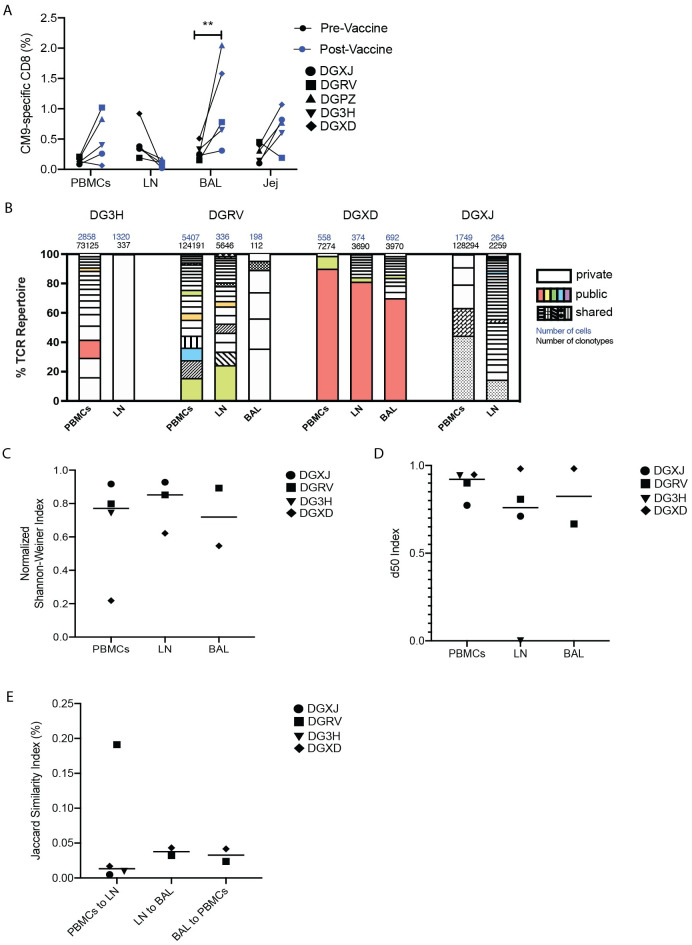
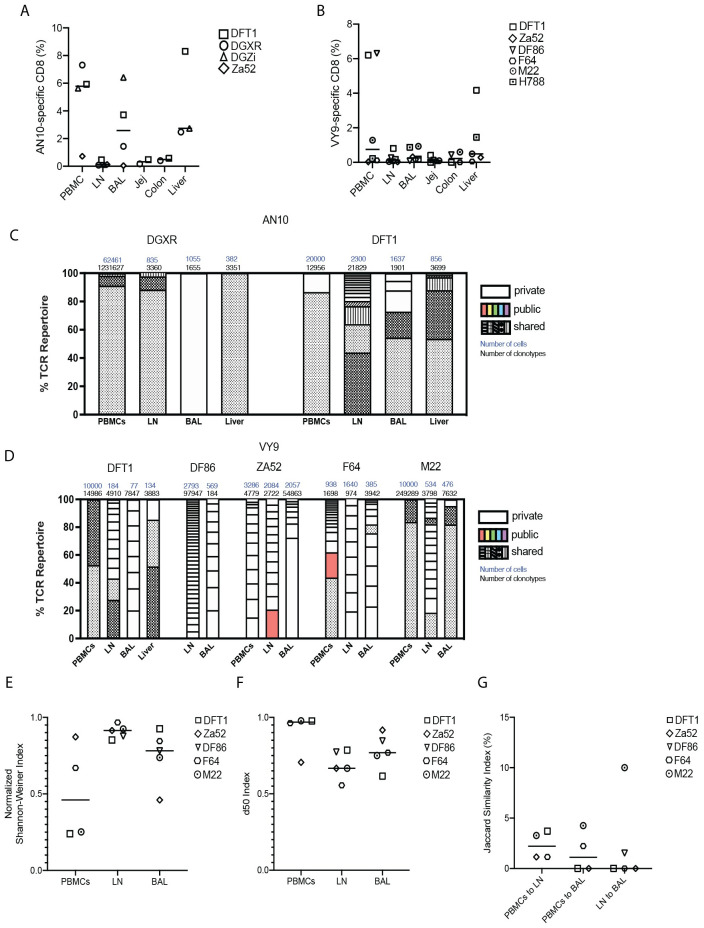
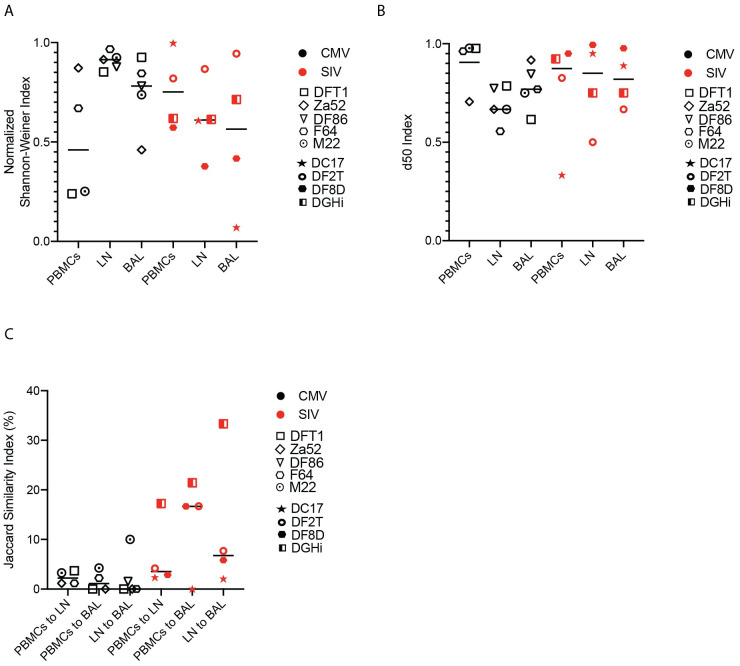
Antigen-specific CD8+ T cells play a key role in the host's antiviral response. T cells recognize viral epitopes via the T cell receptor (TCR), which contains the complementarity-determining region-3 (CDR3), comprising the variable, diversity and joining regions of the TCRβ gene. During chronic simian immunodeficiency virus (SIV) infection of Asian macaque nonhuman primates, tissue-specific clonotypes are identifiable among SIV-specific CD8+ T cells. Here, we sought to determine level of antigen exposure responsible for the tissue-specific clonotypic structure. We examined whether the priming event and/or chronic antigen exposure is response for tissue-specific TCR repertoires. We evaluated the TCR repertoire of SIV-specific CD8+ T cells after acute antigen exposure following inoculation with a SIV DNA vaccine, longitudinally during the acute and chronic phases of SIV, and after administration of antiretrovirals (ARVs). Finally, we assessed the TCR repertoire of cytomegalovirus (CMV)-specific CD8+ T cells to establish if TCR tissue-specificity is shared among viruses that chronically replicate. TCR sequences unique to anatomical sites were identified after acute antigen exposure via vaccination and upon acute SIV infection. Tissue-specific clones also persisted into chronic infection and the clonotypic structure continued to evolve after ARV administration. Finally, tissue-specific clones were also observed in CMV-specific CD8+ T cells. Together, these data suggest that acute antigen priming is sufficient to induce tissue-specific clones and that this clonal hierarchy can persist when antigen loads are naturally or therapeutically reduced, providing mechanistic insight into tissue-residency.
抗原特异性 CD8+ T 细胞在宿主抗病毒反应中发挥关键作用。T 细胞通过 T 细胞受体 (TCR) 识别病毒表位,TCR 包含互补决定区 3(CDR3),由 TCRβ 基因的可变区、多样性区和连接区组成。在慢性猴免疫缺陷病毒 (SIV) 感染亚洲猕猴非人类灵长类动物中,可在 SIV 特异性 CD8+ T 细胞中识别组织特异性克隆型。在这里,我们试图确定导致组织特异性克隆结构的抗原暴露水平。我们研究了启动事件和/或慢性抗原暴露是否是组织特异性 TCR 库形成的原因。我们评估了接种 SIV DNA 疫苗后急性抗原暴露后 SIV 特异性 CD8+ T 细胞的 TCR 库,在 SIV 的急性和慢性阶段以及在给予抗逆转录病毒药物(ARV)后进行了评估。最后,我们评估了巨细胞病毒 (CMV)-特异性 CD8+ T 细胞的 TCR 库,以确定慢性复制的病毒之间是否存在 TCR 组织特异性。通过接种疫苗和急性 SIV 感染后急性抗原暴露,可识别到针对解剖部位的 TCR 序列。组织特异性克隆也持续存在于慢性感染中,并且在 ARV 给药后克隆型结构继续进化。最后,在 CMV 特异性 CD8+ T 细胞中也观察到了组织特异性克隆。总之,这些数据表明,急性抗原引发足以诱导组织特异性克隆,并且当抗原负荷自然或治疗性降低时,这种克隆层次结构可以持续存在,为组织驻留提供了机制见解。