• 文献检索
  • 文档翻译
  • 深度研究
  • 学术资讯
  • Suppr Zotero 插件Zotero 插件
  • 邀请有礼
  • 套餐&价格
  • 历史记录
应用&插件
Suppr Zotero 插件Zotero 插件浏览器插件Mac 客户端Windows 客户端微信小程序
定价
高级版会员购买积分包购买API积分包
服务
文献检索文档翻译深度研究API 文档MCP 服务
关于我们
关于 Suppr公司介绍联系我们用户协议隐私条款
关注我们

Suppr 超能文献

核心技术专利:CN118964589B侵权必究
粤ICP备2023148730 号-1Suppr @ 2026

文献检索

告别复杂PubMed语法,用中文像聊天一样搜索,搜遍4000万医学文献。AI智能推荐,让科研检索更轻松。

立即免费搜索

文件翻译

保留排版,准确专业,支持PDF/Word/PPT等文件格式,支持 12+语言互译。

免费翻译文档

深度研究

AI帮你快速写综述,25分钟生成高质量综述,智能提取关键信息,辅助科研写作。

立即免费体验

基于深度学习的在线社交网络信息泄露追踪算法研究。

Research on Online Social Network Information Leakage-Tracking Algorithm Based on Deep Learning.

机构信息

School of Intelligent Manufacturing and Information, Jiangsu Shipping College, Nantong, Jiangsu 226010, China.

出版信息

Comput Intell Neurosci. 2022 Jun 28;2022:1926794. doi: 10.1155/2022/1926794. eCollection 2022.

DOI:10.1155/2022/1926794
PMID:35800694
原文链接:https://pmc.ncbi.nlm.nih.gov/articles/PMC9256347/
Abstract

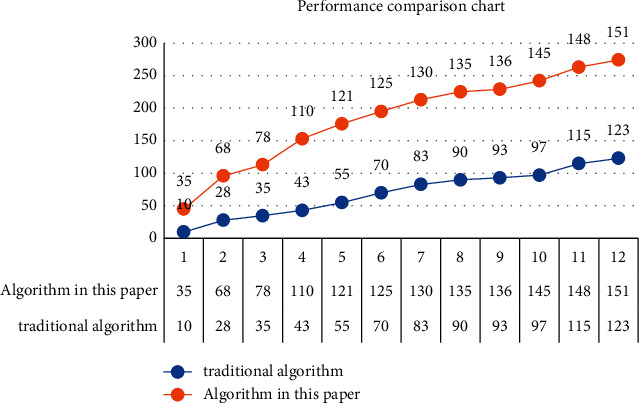
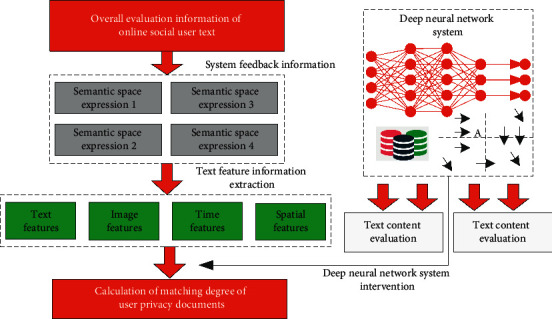
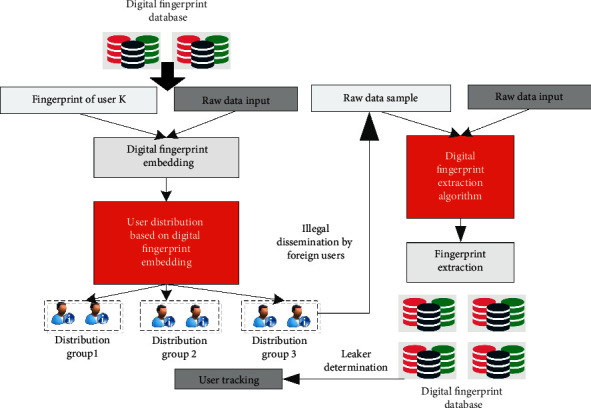
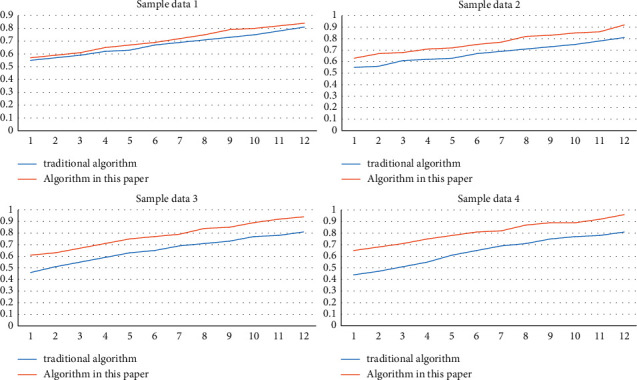
The rapid iteration of information technology makes the development of online social networks increasingly rapid, and its corresponding network scale is also increasingly large and complex. The corresponding algorithms to deal with social networks and their corresponding related problems are also increasing. The corresponding privacy protection algorithms such as encryption algorithm, access control strategy algorithm, and differential privacy protection algorithm have been studied and analyzed, but these algorithms do not completely solve the problem of privacy disclosure. Based on this, this article first searches and accurately filters the relevant information and content of online social networks based on the deep convolution neural network algorithm, so as to realize the perception and protection of users' safe content. For the corresponding graphics and data, this article introduces the compressed sensing technology to randomly disturb the corresponding graphics and data. At the level of tracking network information leakage algorithm, this article proposes a network information leakage-tracking algorithm based on digital fingerprint, which mainly uses relevant plug-ins to realize the unique identification processing of users, uses the uniqueness of digital fingerprint to realize the tracking processing of leakers, and formulates the corresponding coding scheme based on the social network topology, and at the same time, the network information leakage-tracking algorithm proposed in this article also has high efficiency in the corresponding digital coding efficiency and scalability. In order to verify the advantages of the online social network information leakage-tracking algorithm based on deep learning, this article compares it with the traditional algorithm. In the experimental part, this article mainly compares the accuracy index, recall index, and performance index. At the corresponding accuracy index level, it can be seen that the maximum improvement of the algorithm proposed in this article is about 10% compared with the traditional algorithm. At the corresponding recall index level, the proposed algorithm is about 5-8% higher than the traditional algorithm. Corresponding to the overall performance index, it improves the performance by about 50% compared with the traditional algorithm. The comparison results show that the proposed algorithm has higher accuracy and the corresponding source tracking is more accurate.

摘要

信息技术的快速迭代使得在线社交网络的发展越来越迅速,其相应的网络规模也越来越大、越来越复杂。相应的用于处理社交网络及其相关问题的算法也在不断增加。相应的隐私保护算法,如加密算法、访问控制策略算法和差分隐私保护算法等都已经被研究和分析,但这些算法并没有完全解决隐私泄露的问题。基于此,本文首先基于深度卷积神经网络算法对在线社交网络的相关信息和内容进行搜索和准确过滤,从而实现对用户安全内容的感知和保护。对于相应的图形和数据,本文引入压缩感知技术对相应的图形和数据进行随机干扰。在跟踪网络信息泄露算法的层面上,本文提出了一种基于数字指纹的网络信息泄露跟踪算法,主要利用相关插件实现用户的唯一识别处理,利用数字指纹的唯一性实现对泄露者的跟踪处理,并根据社交网络拓扑结构制定相应的编码方案,同时,本文提出的网络信息泄露跟踪算法在相应的数字编码效率和可扩展性方面也具有高效率。为了验证基于深度学习的在线社交网络信息泄露跟踪算法的优势,本文将其与传统算法进行了比较。在实验部分,本文主要比较了准确率指标、召回率指标和性能指标。在相应的准确率指标水平上,可以看出本文提出的算法与传统算法相比最大提高了约 10%。在相应的召回率指标水平上,提出的算法比传统算法高出约 5-8%。对应于整体性能指标,与传统算法相比,它的性能提高了约 50%。比较结果表明,提出的算法具有更高的准确性,相应的源跟踪更准确。
https://cdn.ncbi.nlm.nih.gov/pmc/blobs/40e9/9256347/2f1ad2586616/CIN2022-1926794.009.jpg
https://cdn.ncbi.nlm.nih.gov/pmc/blobs/40e9/9256347/6218f934c56d/CIN2022-1926794.001.jpg
https://cdn.ncbi.nlm.nih.gov/pmc/blobs/40e9/9256347/c6cdefcd0124/CIN2022-1926794.002.jpg
https://cdn.ncbi.nlm.nih.gov/pmc/blobs/40e9/9256347/04df9e5628fa/CIN2022-1926794.003.jpg
https://cdn.ncbi.nlm.nih.gov/pmc/blobs/40e9/9256347/5201d6fe66af/CIN2022-1926794.004.jpg
https://cdn.ncbi.nlm.nih.gov/pmc/blobs/40e9/9256347/aa7064584673/CIN2022-1926794.005.jpg
https://cdn.ncbi.nlm.nih.gov/pmc/blobs/40e9/9256347/c72d24dce4d4/CIN2022-1926794.006.jpg
https://cdn.ncbi.nlm.nih.gov/pmc/blobs/40e9/9256347/818290b30b13/CIN2022-1926794.007.jpg
https://cdn.ncbi.nlm.nih.gov/pmc/blobs/40e9/9256347/ce68afb70220/CIN2022-1926794.008.jpg
https://cdn.ncbi.nlm.nih.gov/pmc/blobs/40e9/9256347/2f1ad2586616/CIN2022-1926794.009.jpg
https://cdn.ncbi.nlm.nih.gov/pmc/blobs/40e9/9256347/6218f934c56d/CIN2022-1926794.001.jpg
https://cdn.ncbi.nlm.nih.gov/pmc/blobs/40e9/9256347/c6cdefcd0124/CIN2022-1926794.002.jpg
https://cdn.ncbi.nlm.nih.gov/pmc/blobs/40e9/9256347/04df9e5628fa/CIN2022-1926794.003.jpg
https://cdn.ncbi.nlm.nih.gov/pmc/blobs/40e9/9256347/5201d6fe66af/CIN2022-1926794.004.jpg
https://cdn.ncbi.nlm.nih.gov/pmc/blobs/40e9/9256347/aa7064584673/CIN2022-1926794.005.jpg
https://cdn.ncbi.nlm.nih.gov/pmc/blobs/40e9/9256347/c72d24dce4d4/CIN2022-1926794.006.jpg
https://cdn.ncbi.nlm.nih.gov/pmc/blobs/40e9/9256347/818290b30b13/CIN2022-1926794.007.jpg
https://cdn.ncbi.nlm.nih.gov/pmc/blobs/40e9/9256347/ce68afb70220/CIN2022-1926794.008.jpg
https://cdn.ncbi.nlm.nih.gov/pmc/blobs/40e9/9256347/2f1ad2586616/CIN2022-1926794.009.jpg

相似文献

1
Research on Online Social Network Information Leakage-Tracking Algorithm Based on Deep Learning.基于深度学习的在线社交网络信息泄露追踪算法研究。
Comput Intell Neurosci. 2022 Jun 28;2022:1926794. doi: 10.1155/2022/1926794. eCollection 2022.
2
Research on Information Leakage Tracking Algorithms in Online Social Networks.在线社交网络中的信息泄露追踪算法研究。
Comput Intell Neurosci. 2022 Oct 4;2022:5634385. doi: 10.1155/2022/5634385. eCollection 2022.
3
Privacy Protection and Intrusion Detection System of Wireless Sensor Network Based on Artificial Neural Network.基于人工神经网络的无线传感器网络隐私保护与入侵检测系统。
Comput Intell Neurosci. 2022 Jun 22;2022:1795454. doi: 10.1155/2022/1795454. eCollection 2022.
4
Optimization of a Deep Learning Algorithm for Security Protection of Big Data from Video Images.深度学习算法在视频图像大数据安全防护中的优化。
Comput Intell Neurosci. 2022 Mar 8;2022:3394475. doi: 10.1155/2022/3394475. eCollection 2022.
5
Novel Privacy Preserving Non-Invasive Sensing-Based Diagnoses of Pneumonia Disease Leveraging Deep Network Model.新型隐私保护的基于非侵入性传感的肺炎疾病诊断利用深度网络模型。
Sensors (Basel). 2022 Jan 8;22(2):461. doi: 10.3390/s22020461.
6
A privacy preservation framework for feedforward-designed convolutional neural networks.前馈式卷积神经网络的隐私保护框架。
Neural Netw. 2022 Nov;155:14-27. doi: 10.1016/j.neunet.2022.08.005. Epub 2022 Aug 10.
7
Anomaly detection over differential preserved privacy in online social networks.在线社交网络中差分隐私保护下的异常检测。
PLoS One. 2019 Apr 25;14(4):e0215856. doi: 10.1371/journal.pone.0215856. eCollection 2019.
8
[Review of research on detection and tracking of minimally invasive surgical tools based on deep learning].[基于深度学习的微创外科手术工具检测与跟踪研究综述]
Sheng Wu Yi Xue Gong Cheng Xue Za Zhi. 2019 Oct 25;36(5):870-878. doi: 10.7507/1001-5515.201904061.
9
A clustering-based differential privacy protection algorithm for weighted social networks.一种用于加权社交网络的基于聚类的差分隐私保护算法。
Math Biosci Eng. 2024 Feb 18;21(3):3755-3773. doi: 10.3934/mbe.2024166.
10
A sparse deep learning model for privacy attack on remote sensing images.一种用于对遥感图像进行隐私攻击的稀疏深度学习模型。
Math Biosci Eng. 2019 Feb 20;16(3):1300-1312. doi: 10.3934/mbe.2019063.

本文引用的文献

1
Floating quick response code based on structural black color with the characteristic of privacy protection.基于具有隐私保护特性的结构黑色的浮动二维码。
Opt Express. 2021 May 10;29(10):15217-15227. doi: 10.1364/OE.423923.
2
Extracting Lungs from CT Images via Deep Convolutional Neural Network Based Segmentation and Two-Pass Contour Refinement.基于深度卷积神经网络的分割和双通轮廓细化从 CT 图像中提取肺。
J Digit Imaging. 2020 Dec;33(6):1465-1478. doi: 10.1007/s10278-020-00388-0. Epub 2020 Oct 15.
3
Diagnosis and detection of infected tissue of COVID-19 patients based on lung x-ray image using convolutional neural network approaches.
基于卷积神经网络方法,利用肺部X光图像对新冠肺炎患者感染组织进行诊断与检测。
Chaos Solitons Fractals. 2020 Nov;140:110170. doi: 10.1016/j.chaos.2020.110170. Epub 2020 Jul 29.
4
Deep Convolutional Neural Network-based Software Improves Radiologist Detection of Malignant Lung Nodules on Chest Radiographs.基于深度卷积神经网络的软件提高放射科医生在胸部 X 光片上检测恶性肺结节的能力。
Radiology. 2020 Jan;294(1):199-209. doi: 10.1148/radiol.2019182465. Epub 2019 Nov 12.
5
Phase diversity algorithm with high noise robust based on deep denoising convolutional neural network.基于深度去噪卷积神经网络的高噪声鲁棒相位多样性算法。
Opt Express. 2019 Aug 5;27(16):22846-22854. doi: 10.1364/OE.27.022846.
6
Determination of mammographic breast density using a deep convolutional neural network.使用深度卷积神经网络测定乳腺 X 线摄影的乳房密度。
Br J Radiol. 2019 Jan;92(1093):20180691. doi: 10.1259/bjr.20180691. Epub 2018 Oct 1.
7
Mitral annular velocity measurement with cardiac magnetic resonance imaging using a novel annular tracking algorithm: Validation against echocardiography.使用新型瓣环追踪算法通过心脏磁共振成像测量二尖瓣环速度:与超声心动图的对比验证
Magn Reson Imaging. 2019 Jan;55:72-80. doi: 10.1016/j.mri.2018.08.018. Epub 2018 Aug 31.
8
Intelligent adaptive coherent optical receiver based on convolutional neural network and clustering algorithm.基于卷积神经网络和聚类算法的智能自适应相干光接收机。
Opt Express. 2018 Jul 9;26(14):18684-18698. doi: 10.1364/OE.26.018684.
9
Training and Validating a Deep Convolutional Neural Network for Computer-Aided Detection and Classification of Abnormalities on Frontal Chest Radiographs.训练和验证用于胸部正位X光片异常的计算机辅助检测与分类的深度卷积神经网络
Invest Radiol. 2017 May;52(5):281-287. doi: 10.1097/RLI.0000000000000341.
10
HIV-positive status and preservation of privacy: a recent decision from the Italian Data Protection Authority on the procedure of gathering personal patient data in the dental office.HIV 阳性状态和隐私保护:意大利数据保护局最近就牙科诊所收集个人患者数据的程序做出的一项决定。
J Med Ethics. 2012 Jun;38(6):386-8. doi: 10.1136/medethics-2011-100014. Epub 2012 Feb 7.