Arora Niyati, Kumar Ajit, Kumar Ajay, Sharma Ravi Shankar
Department of Anaesthesiology, All India Institute of Medical Sciences, Rishikesh, Uttrakhand.
Turk J Anaesthesiol Reanim. 2022 Jun;50(3):159-166. doi: 10.5152/TJAR.2022.1328.
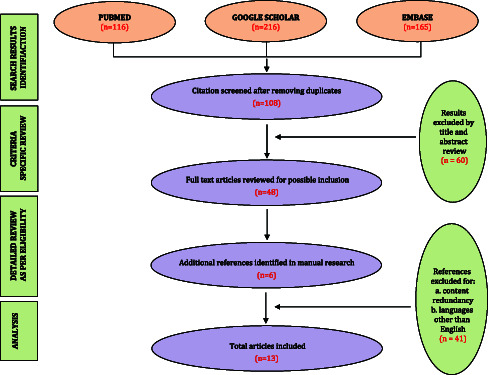
Chronic pain is the leading cause of morbidity in the world and is strongly associated with physical and psychological disabilities. In this pandemic, most of the pain care centers are forced to shut their doors leaving patients in dismay and adding to their misery. A systematic review was performed following the recommendations of the Preferred Reporting Items for Systematic Reviews and Meta-Analyses statement. All research articles from March 2020 to September 15, 2020, available on PubMed, Google scholar, and EmBase were included in this study. The keywords used for data search were "chronic pain," "coronavirus," "pain management," "COVID-19," "drugs usage in covid-19," "recommendation," and "guidelines". This review summarizes findings from the current literature available worldwide from different databases regarding guidelines to practice during chronic pain in coronavirus disease (COVID) crisis. This article acts as a specimen on how to handle future pandemics. We concluded that chronic pain management is a fundamental right and telemedicine is the silver lining that can be used for primary, follow-up consultation and to address mental health issues in chronic pain patients. Outpatient department visits should be scheduled using "forward triage." Pain Interventions should be carried out if urgent or semi-urgent with necessary precautions. Reopening of elective procedures with COVID testing can be planned, considering pain interventions to be usually percutaneous, of short duration, and involving office procedures with minimal aerosol generation. Drugs contrib- uting to immune suppression, for example, strong opioids and steroids, should be avoided. Regenerative therapy can be used instead during pain interventions. Physicians are expected to follow the recommended government guidelines before prescribing any drugs.
慢性疼痛是全球发病的主要原因,与身体和心理残疾密切相关。在这场大流行中,大多数疼痛护理中心被迫关闭,让患者感到沮丧,加重了他们的痛苦。按照系统评价和Meta分析的首选报告项目声明的建议进行了一项系统评价。本研究纳入了2020年3月至2020年9月15日在PubMed、谷歌学术和EmBase上可获得的所有研究文章。用于数据搜索的关键词是“慢性疼痛”“冠状病毒”“疼痛管理”“COVID-19”“COVID-19中的药物使用”“建议”和“指南”。本综述总结了来自世界各地不同数据库的当前文献中关于冠状病毒病(COVID)危机期间慢性疼痛治疗指南的研究结果。本文可作为应对未来大流行的一个范例。我们得出结论,慢性疼痛管理是一项基本权利,远程医疗是一线希望,可用于初级、随访咨询以及解决慢性疼痛患者的心理健康问题。门诊部就诊应采用“前瞻性分诊”进行安排。如果是紧急或半紧急情况,应采取必要的预防措施后进行疼痛干预。可以考虑到疼痛干预通常是经皮的、持续时间短且涉及产生气溶胶最少的门诊手术,计划在进行COVID检测后重新开展择期手术。应避免使用会导致免疫抑制的药物,例如强效阿片类药物和类固醇。在疼痛干预期间可改用再生疗法。医生在开任何药物之前应遵循政府推荐的指南。