Gupta Anju, Gupta Nishkarsh, Singh Pooja, Girdhar Kiran Kumar
Department of Anaesthesiology, Pain Medicine and Critical care, AIIMS, New Delhi, India.
Department of Onco-Anaesthesiology and Palliative Medicine, DRBRAIRCH, AIIMS, Delhi, India.
Turk J Anaesthesiol Reanim. 2022 Jun;50(3):225-227. doi: 10.5152/TJAR.2021.21180.
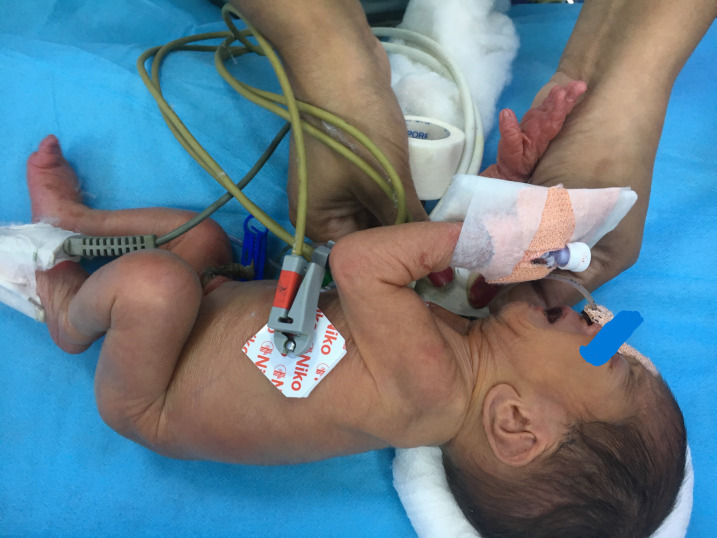
The infants are explicitly vulnerable to develop anaesthesia-related complications, with micropreemies being at the end of the spectrum because of their unique morphological and physiological features. Airway changes in pediatric patients are most exaggerated in these tiny infants and their immature lungs provide a little reserve, and therefore, securing airways can be challenging in this population. Moreover, many devices available for managing difficult airways in adults are not available for use in this miniature version. Videolaryngoscopes are a useful addition to anaesthesiologists' armamentarium but for micropreemies, size of videolaryngoscope can be a limiting factor as no vide- olaryngoscope comes in "00" size. The technique of videolaryngoscope may need to be modified in these patients. Regional anaesthesia can be an invaluable component of their perioperative care to facilitate a smooth recovery. The successful management of these vulnerable neonates requires a multidisciplinary team approach to maintain perioperative homeostasis of their immature organ systems.
婴儿明显易发生与麻醉相关的并发症,微早产儿因其独特的形态和生理特征而处于这一范围的末端。儿科患者的气道变化在这些微小婴儿中最为明显,且他们未成熟的肺部储备能力有限,因此,确保这一人群的气道安全具有挑战性。此外,许多可用于处理成人困难气道的设备无法用于这些微型患者。视频喉镜是麻醉医生装备中的一项有用补充,但对于微早产儿来说,视频喉镜的尺寸可能是一个限制因素,因为没有“00”尺寸的视频喉镜。在这些患者中可能需要对视频喉镜技术进行改进。区域麻醉可以是他们围手术期护理的一个宝贵组成部分,以促进顺利康复。成功管理这些脆弱的新生儿需要多学科团队方法来维持其未成熟器官系统的围手术期内环境稳定。