Department of Neurosurgery, Nanjing Drum Tower Hospital, Clinical College of Nanjing Medical University, Nanjing, China.
Department of Neurosurgery, Nanjing Drum Tower Hospital, The Affiliated Hospital of Nanjing University Medical School, Nanjing, China.
Brain Behav. 2022 Aug;12(8):e2686. doi: 10.1002/brb3.2686. Epub 2022 Jul 8.
Traumatic brain injury (TBI) is the leading cause of death and disability worldwide. Mild hypothermia (32-35°C) has been found to show neuroprotective effects against TBI. However, the specific mechanism is still elusive. In the current study, we explored the relationship between oxidative damage after TBI and treatment with mild hypothermia as well as the underlying molecular mechanisms.
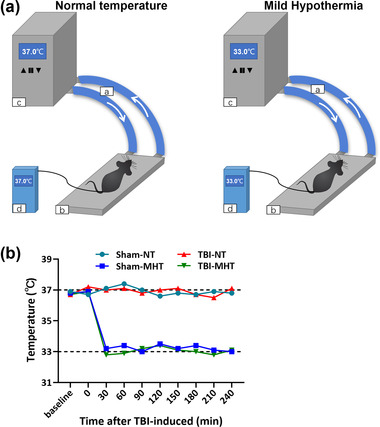
We used the closed cortex injury model to perform the brain injury and a temperature monitoring and control system to regulate the body temperature of mice after injury. Adult male C57BL/6 mice were adopted in this study and divided into four experimental groups. Tissue samples were harvested 24 h after injury.
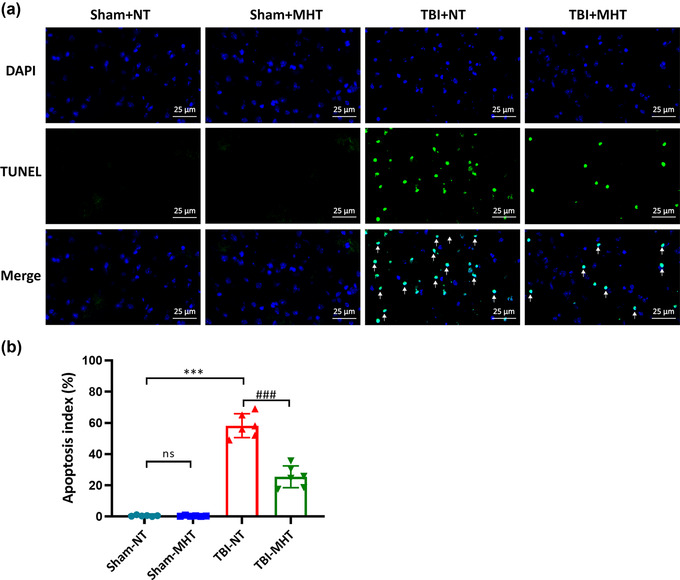
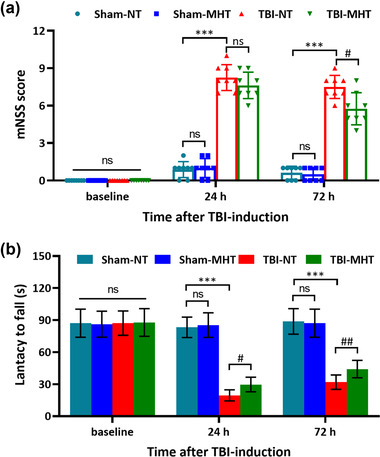
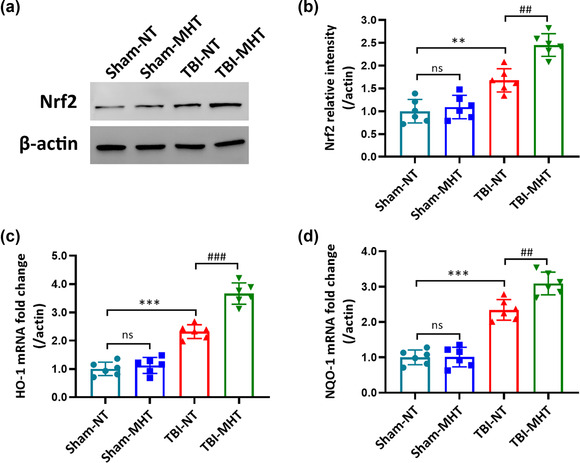
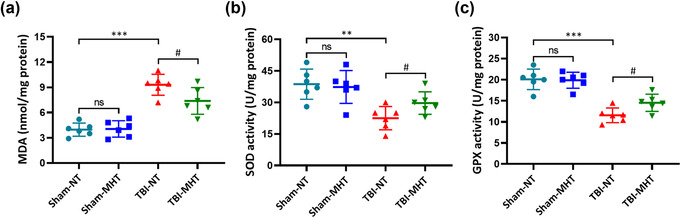
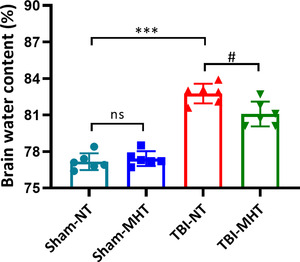
First, our results showed that treatment with mild hypothermia significantly improved neurobehavioral dysfunction and alleviated brain edema after TBI. Moreover, treatment with mild hypothermia enhanced the activity of the antioxidant enzymes superoxide dismutase and glutathione peroxidase and reduced the accumulation of lipid peroxidation malondialdehyde. Importantly, the expression and activation of the nuclear factor erythroid 2-related factor 2-antioxidant response element (Nrf2-ARE) pathway were upregulated by mild hypothermia after TBI. Finally, treatment with hypothermia significantly decreased the cell apoptosis induced by TBI.
Our results showed that the protective effects of mild hypothermia after TBI may be achieved by the upregulation of the Nrf2-ARE pathway and revealed Nrf2 as a potentially important target to improve the prognosis of TBI.
创伤性脑损伤(TBI)是全球范围内导致死亡和残疾的主要原因。轻度低温(32-35°C)已被发现对 TBI 具有神经保护作用。然而,具体的机制仍不清楚。在本研究中,我们探讨了 TBI 后氧化损伤与轻度低温治疗之间的关系以及潜在的分子机制。
我们使用闭合性皮质损伤模型进行脑损伤,并使用温度监测和控制系统来调节损伤后小鼠的体温。本研究采用成年雄性 C57BL/6 小鼠,并将其分为四个实验组。损伤后 24 小时采集组织样本。
首先,我们的结果表明,轻度低温治疗可显著改善 TBI 后的神经行为功能障碍和脑水肿。此外,轻度低温治疗可增强抗氧化酶超氧化物歧化酶和谷胱甘肽过氧化物酶的活性,并减少脂质过氧化丙二醛的积累。重要的是,TBI 后轻度低温治疗可上调核因子红细胞 2 相关因子 2-抗氧化反应元件(Nrf2-ARE)通路的表达和激活。最后,低温治疗可显著减少 TBI 诱导的细胞凋亡。
我们的结果表明,TBI 后轻度低温治疗的保护作用可能是通过上调 Nrf2-ARE 通路实现的,并揭示了 Nrf2 作为改善 TBI 预后的潜在重要靶点。