Stängle Sabrina, Benedetti Franzisca Domeisen, Hediger Hannele, Bonmarin Mathias, Loeser Martin, Fringer André
ZHAW - Zurich University of Applied Sciences, School of Health Professions, Institute of Nursing, Katharina-Sulzer-Platz 9, 8401, Winterthur, Switzerland.
ZHAW - Zurich University of Applied Sciences, School of Engineering, Institute of Computational Physics, Technikumstrasse 71, 8401, Winterthur, Switzerland.
BMC Nurs. 2022 Jul 8;21(1):181. doi: 10.1186/s12912-022-00946-7.
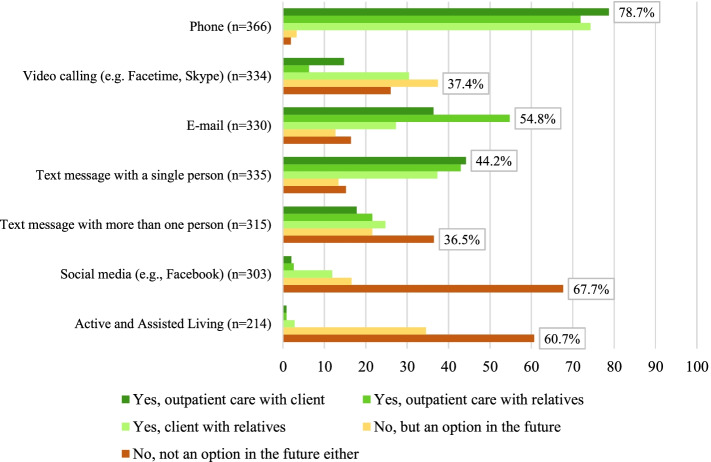
There is limited data on the use of digital technologies in outpatient care in Switzerland. Our objectives were therefore to determine which digital technologies are used and whether they had an impact on loneliness and social isolation in the wake of the COVID-19 pandemic.
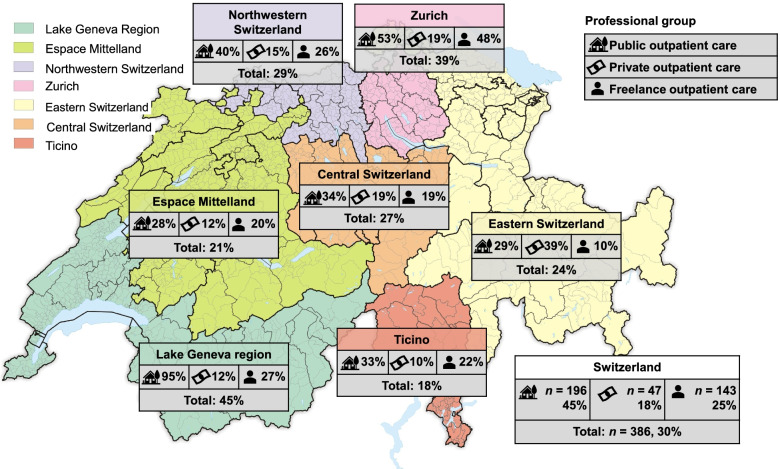
A cross-sectional survey design was used with a convenience sample of 1272 outpatient care providers in Switzerland. The questionnaire used is based on an unsystematic literature review and a previous qualitative study with six outpatient caregivers and two caring relatives, based on which the 30 items for this questionnaire were developed. Data were analyzed descriptively, and group comparisons were made using the Kruskal Wallis test. Changes over time were measured using Friedman test with Bonferroni post hoc tests and Wilcoxon test for paired samples.
The impact of the COVID-19 pandemic was evident both on the part of the health care system, e.g., inadequate protective equipment; on the part of health care providers, e.g., increasing fatigue in keeping abreast of the virus as the pandemic progressed; and on the part of clients, who reduced services of care, e.g., out of fear of infection. According to the assessment of the outpatient caregivers, loneliness and social isolation of the clients was high in spring 2020 and increased strongly in the following winter. Alternative solutions, such as digital technologies, were hardly used or not used at all by the clients.
The results suggest that the pandemic is dramatically impacting clients. This highlights the urgent need to invest in the development of appropriate digital technologies reducing the impact of social isolation and loneliness and the associated long-term costs to the healthcare system.
关于瑞士门诊护理中数字技术使用情况的数据有限。因此,我们的目标是确定使用了哪些数字技术,以及它们在新冠疫情之后是否对孤独感和社会隔离产生了影响。
采用横断面调查设计,对瑞士1272名门诊护理提供者进行便利抽样。所使用的问卷基于非系统的文献综述以及之前对六名门诊护理人员和两名护理亲属的定性研究,在此基础上制定了该问卷的30个项目。对数据进行描述性分析,并使用Kruskal Wallis检验进行组间比较。使用Friedman检验及Bonferroni事后检验和配对样本的Wilcoxon检验来测量随时间的变化。
新冠疫情的影响在医疗保健系统方面很明显,例如防护设备不足;在医疗保健提供者方面,例如随着疫情的发展,跟上病毒情况的疲劳感增加;在客户方面,例如出于对感染的恐惧而减少护理服务。根据门诊护理人员的评估,2020年春季客户的孤独感和社会隔离程度很高,在随后的冬季大幅增加。客户几乎没有使用或根本没有使用数字技术等替代解决方案。
结果表明,疫情正在对客户产生巨大影响。这凸显了迫切需要投资开发适当的数字技术,以减少社会隔离和孤独感的影响以及对医疗保健系统的相关长期成本。