Hou Ya-Chin, Chen Chien-Yu, Huang Chien-Jui, Wang Chih-Jung, Chao Ying-Jui, Chiang Nai-Jung, Wang Hao-Chen, Tung Hui-Ling, Liu Hsiao-Chun, Shan Yan-Shen
Institute of Clinical Medicine, College of Medicine, National Cheng Kung University, Tainan 704, Taiwan.
Department of Clinical Medical Research, National Cheng Kung University Hospital, College of Medicine, National Cheng Kung University, Tainan 704, Taiwan.
Cancers (Basel). 2022 Jun 26;14(13):3137. doi: 10.3390/cancers14133137.
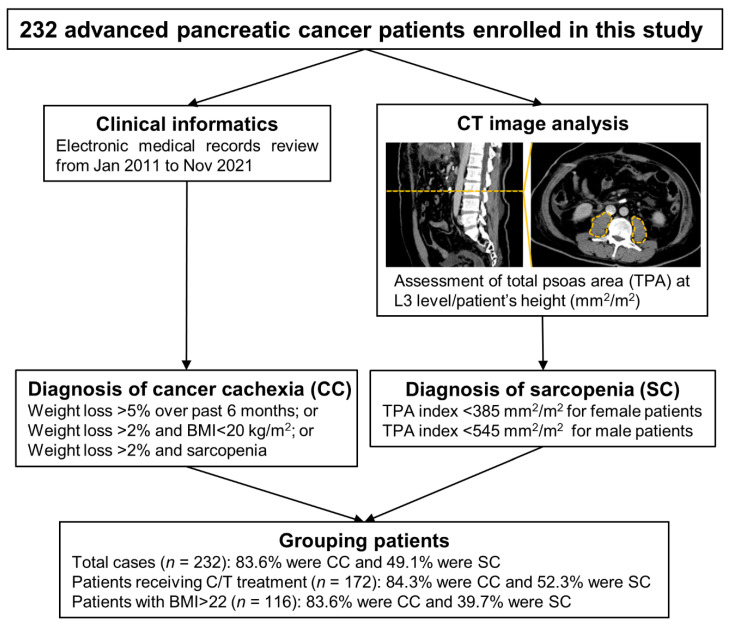
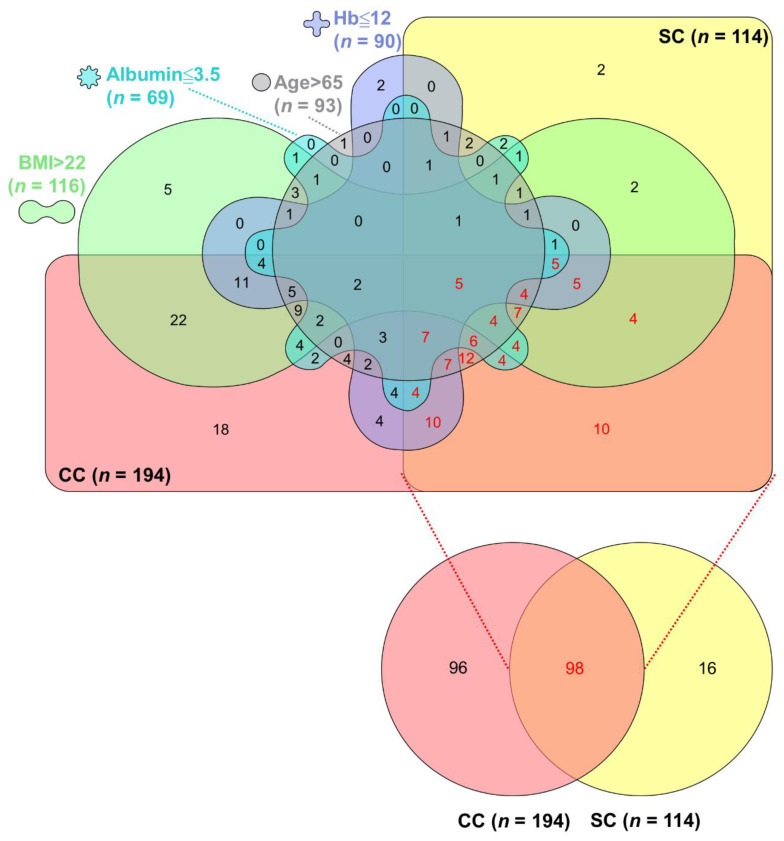
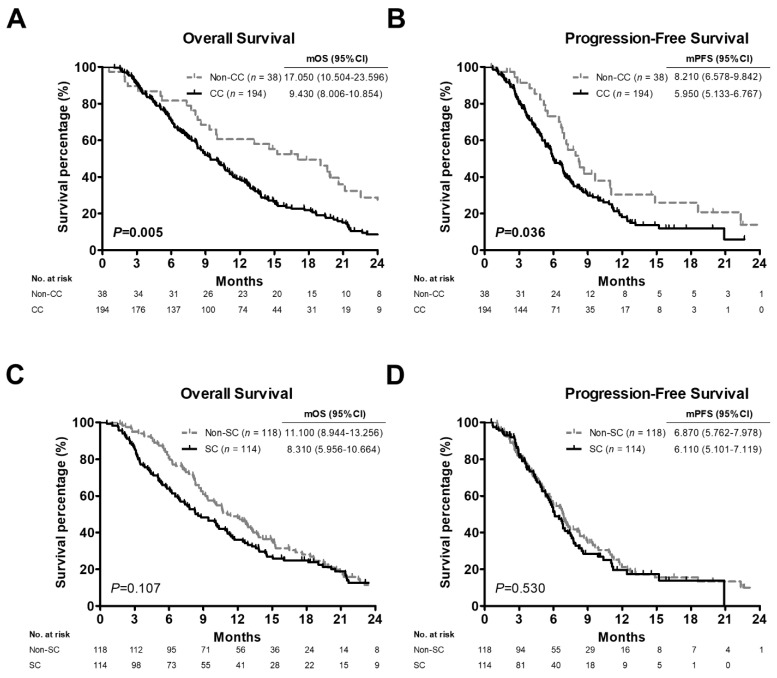
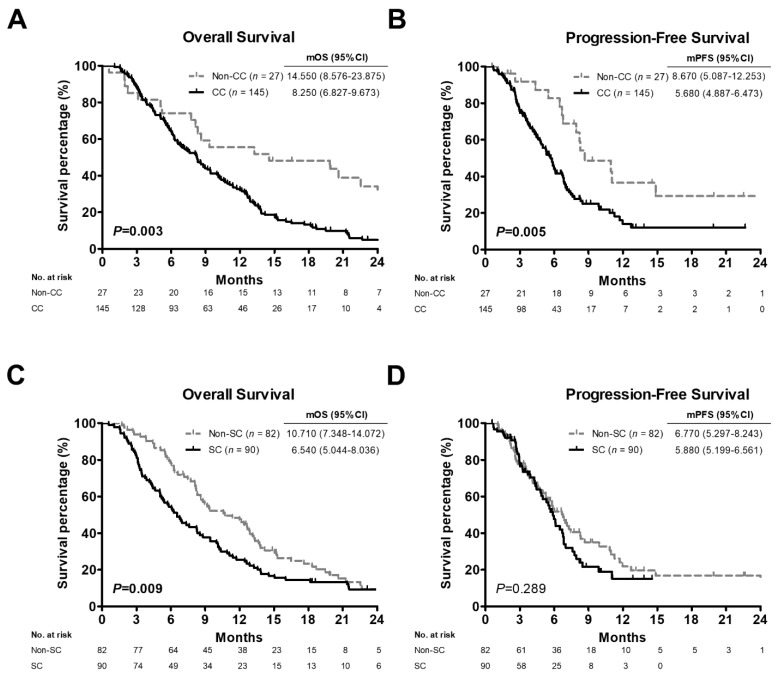
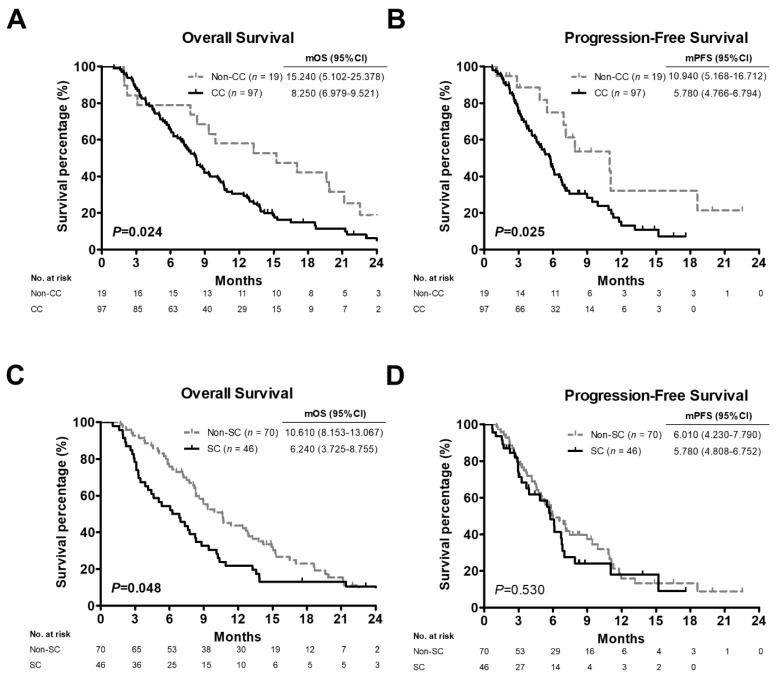
Pancreatic cancer (PC) has the highest frequency of developing cancer cachexia (CC)-sarcopenia (SC) syndrome, which negatively influences patients' outcome, quality of life, and tolerance/response to treatments. However, the clinical impacts of CC, SC, and their associated factors on outcomes for advanced PC has yet to be fully investigated. A total of 232 patients were enrolled in this study for the retrospective review of their clinical information and the measurement of skeletal muscle areas at the third lumber vertebra by computed tomography scan to identify CC or SC. The association and concurrent occurrence of clinicopathological features in each patient, prevalence rates, and prognosis with the CC or SC were calculated. CC and SC were observed in 83.6% ( = 194) and 49.1% ( = 114) of PC patients, respectively. Low hemoglobin levels more often occurred in CC patients than in non-CC patients ( = 0.014). Older age ( = 0.000), female gender ( = 0.024), low body mass index (BMI) values ( = 0.004), low hemoglobin levels ( = 0.036), and low albumin levels ( = 0.001) were more often found in SC patients than in non-SC patients. Univariate and multivariate analyses showed that CC was an independent poor prognostic factor of overall survival (OS) and progression-free survival for all patients, the chemotherapy (C/T) subgroup, and the high BMI subgroup. Meanwhile, SC was an independent predictor of poor OS for the subgroups of C/T or high BMI but not for all patients. These findings reveal the clinical differences for CC and SC and provide useful information for predicting the prognosis of advanced PC patients and conducting personalized medicine.
胰腺癌(PC)发生癌症恶病质(CC)-肌肉减少症(SC)综合征的频率最高,这对患者的预后、生活质量以及对治疗的耐受性/反应产生负面影响。然而,CC、SC及其相关因素对晚期PC患者预后的临床影响尚未得到充分研究。本研究共纳入232例患者,对其临床信息进行回顾性分析,并通过计算机断层扫描测量第三腰椎水平的骨骼肌面积,以确定是否存在CC或SC。计算了每位患者临床病理特征的相关性和并发情况、患病率以及CC或SC患者的预后。PC患者中CC和SC的发生率分别为83.6%(n = 194)和49.1%(n = 114)。CC患者血红蛋白水平低的情况比非CC患者更常见(P = 0.014)。SC患者比非SC患者更常出现年龄较大(P = 0.000)、女性(P = 0.024)、低体重指数(BMI)值(P = 0.004)、低血红蛋白水平(P = 0.036)和低白蛋白水平(P = 0.001)。单因素和多因素分析表明,CC是所有患者、化疗(C/T)亚组和高BMI亚组总生存期(OS)和无进展生存期的独立不良预后因素。同时,SC是C/T或高BMI亚组OS不良的独立预测因素,但不是所有患者的独立预测因素。这些发现揭示了CC和SC的临床差异,为预测晚期PC患者的预后和实施个性化医疗提供了有用信息。