Department of Evolutionary Genetics, Max Planck Institute for Evolutionary Anthropology, Leipzig, Germany.
Elife. 2022 Jul 11;11:e75464. doi: 10.7554/eLife.75464.
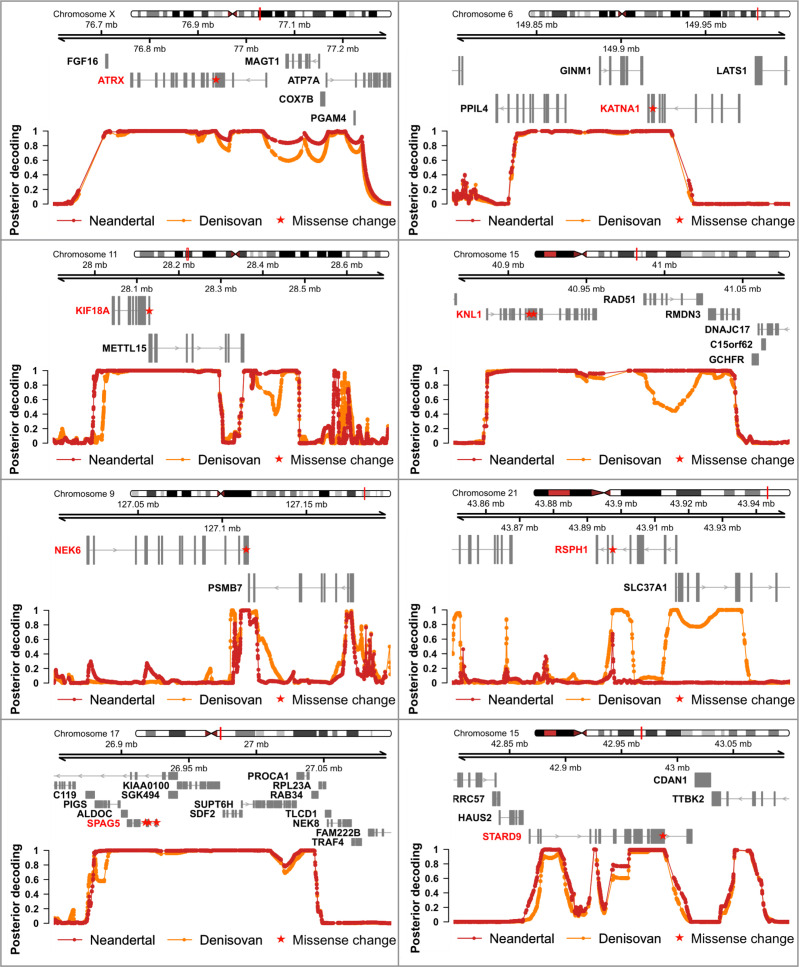
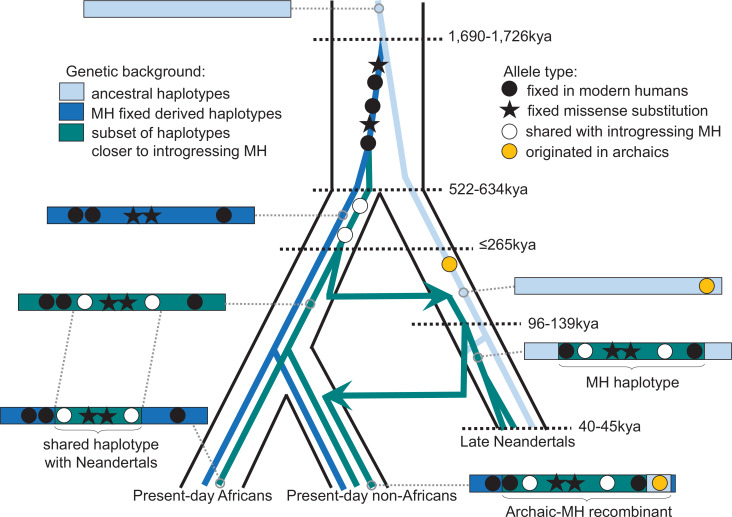
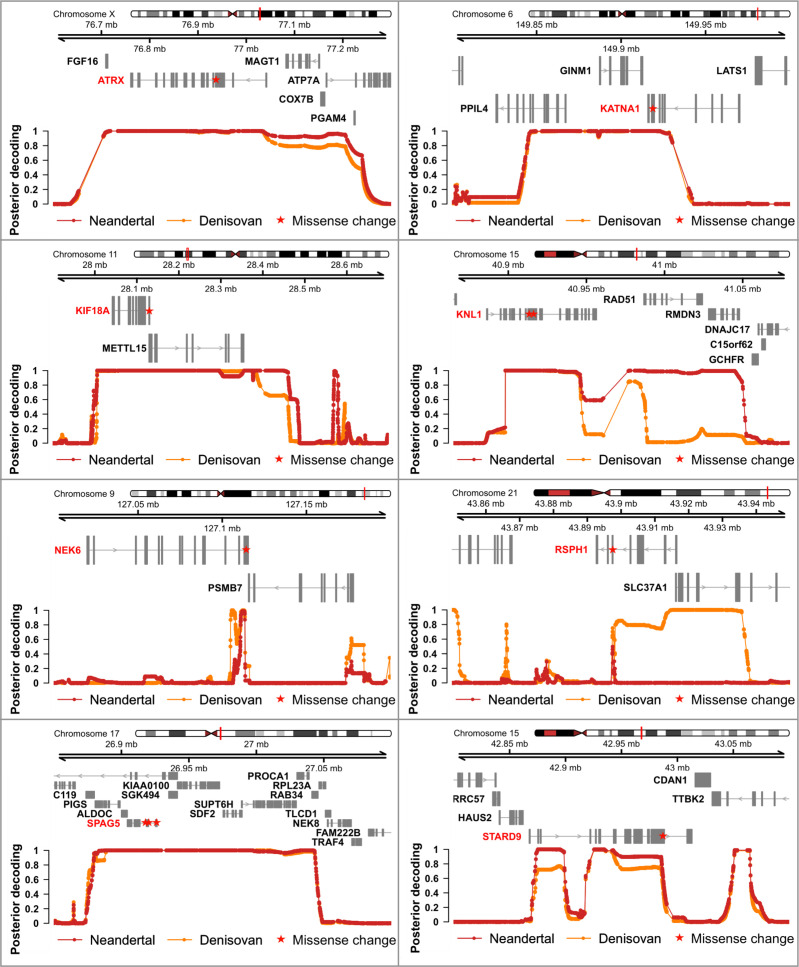
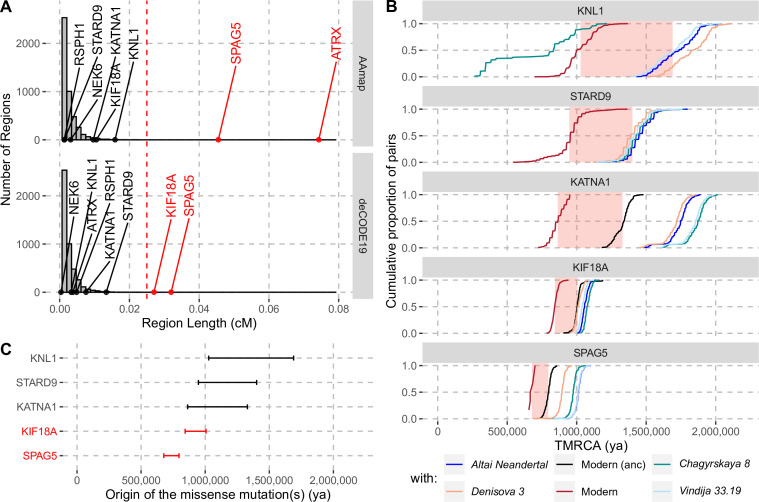
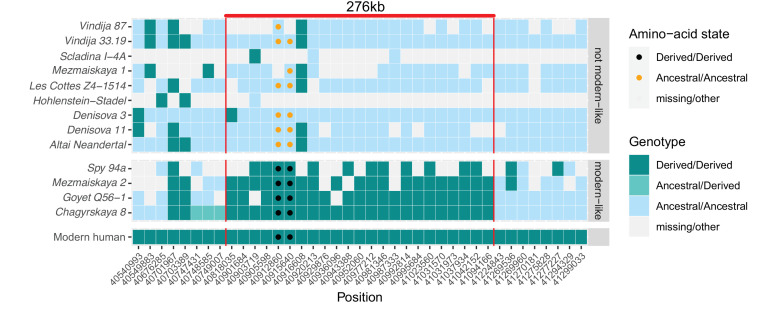
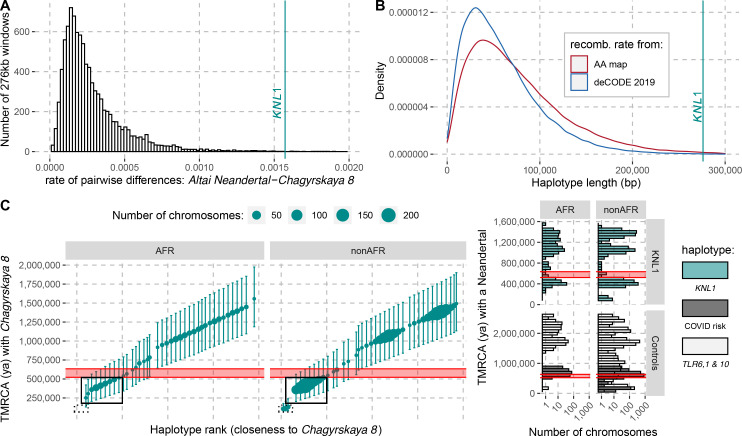
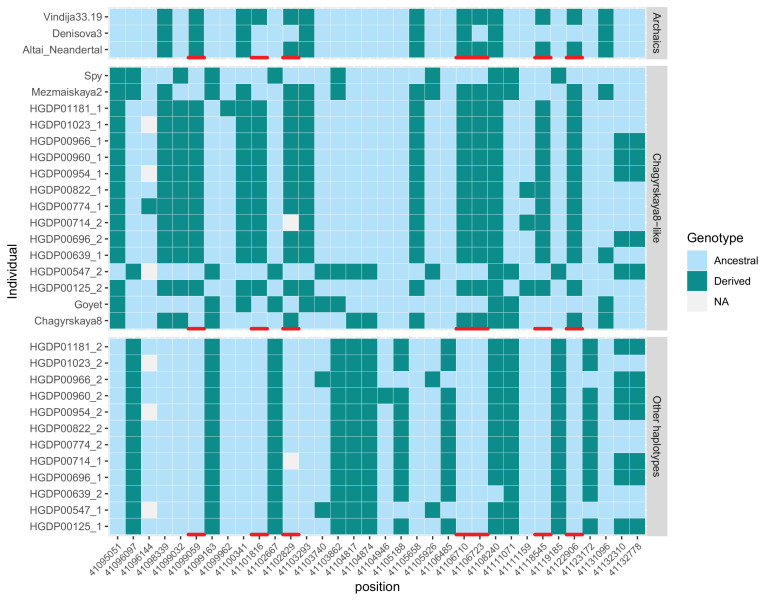
Proteins associated with the spindle apparatus, a cytoskeletal structure that ensures the proper segregation of chromosomes during cell division, experienced an unusual number of amino acid substitutions in modern humans after the split from the ancestors of Neandertals and Denisovans. Here, we analyze the history of these substitutions and show that some of the genes in which they occur may have been targets of positive selection. We also find that the two changes in the kinetochore scaffold 1 (KNL1) protein, previously believed to be specific to modern humans, were present in some Neandertals. We show that the gene of these Neandertals shared a common ancestor with present-day Africans about 200,000 years ago due to gene flow from the ancestors (or relatives) of modern humans into Neandertals. Subsequently, some non-Africans inherited this modern human-like gene variant from Neandertals, but none inherited the ancestral gene variants. These results add to the growing evidence of early contacts between modern humans and archaic groups in Eurasia and illustrate the intricate relationships among these groups.
纺锤体相关蛋白是一种细胞骨架结构,可确保细胞分裂过程中染色体的正确分离。在与尼安德特人和丹尼索瓦人祖先分离后,现代人中这些蛋白的氨基酸替换异常频繁。在这里,我们分析了这些替换的历史,并表明它们发生的一些基因可能是正选择的目标。我们还发现,先前认为仅存在于现代人中的着丝粒支架蛋白 1 (KNL1) 中的两个变化也存在于一些尼安德特人中。我们发现,这些尼安德特人的 基因由于现代人祖先(或亲属)的基因流入,大约在 20 万年前与现今的非洲人拥有共同的祖先。随后,一些非非洲人从尼安德特人那里继承了这种类似现代人的基因变体,但没有人继承了祖先的基因变体。这些结果增加了有关现代人与欧亚大陆古人类早期接触的证据,并说明了这些群体之间复杂的关系。