ARC Centre of Excellence in Plant Energy Biology and School of Molecular Science, The University of Western Australia, Bayliss Building M316, Crawley, WA 6009, Australia.
Western Australia Proteomics Facility, University of Western Australia, Bayliss Building M316, Crawley, WA 6009, Australia.
Essays Biochem. 2022 Aug 5;66(2):243-253. doi: 10.1042/EBC20210041.
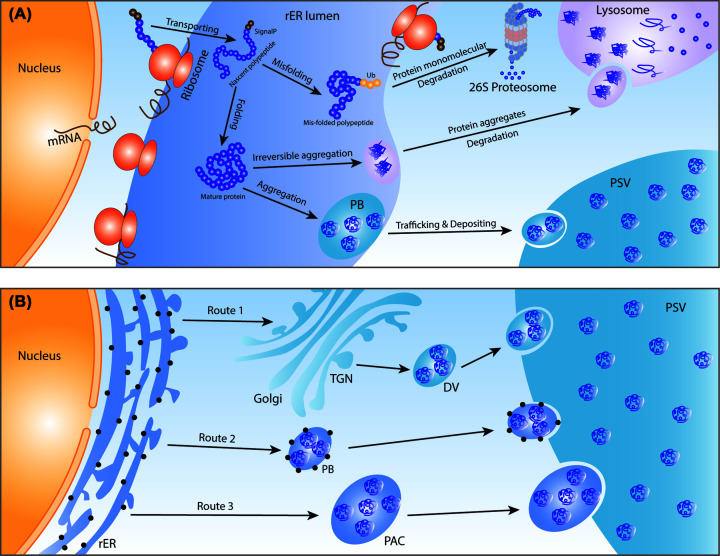
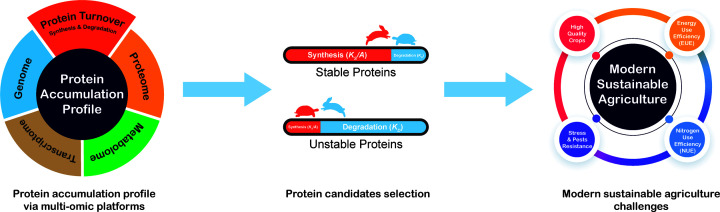
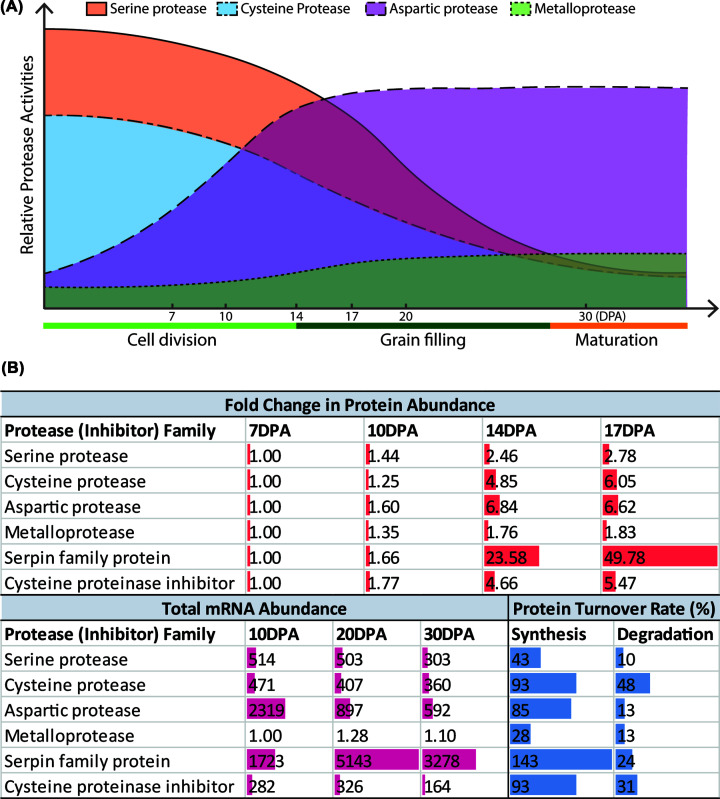
Storage proteins deposited in the endosperm of cereal grains are both a nitrogen reserve for seed germination and seedling growth and a primary protein source for human nutrition. Detailed surveys of the patterns of storage protein accumulation in cereal grains during grain development have been undertaken, but an in-depth understanding of the molecular mechanisms that regulate these patterns is still lacking. Accumulation of storage proteins in cereal grains involves a series of subcellular compartments, a set of energy-dependent events that compete with other cellular processes, and a balance of protein synthesis and protein degradation rates at different times during the developmental process. In this review, we focus on the importance of rates in cereal grain storage protein accumulation during grain development and outline the potential implications and applications of this information to accelerate modern agriculture breeding programmes and optimize energy use efficiency in proteostasis.
贮藏蛋白沉积在谷类作物的胚乳中,既是种子萌发和幼苗生长的氮素储备,也是人类营养的主要蛋白质来源。人们已经对谷类作物在发育过程中贮藏蛋白积累的模式进行了详细的调查,但对调节这些模式的分子机制仍缺乏深入的了解。谷物中贮藏蛋白的积累涉及一系列亚细胞区室,一系列依赖能量的事件与其他细胞过程竞争,以及在发育过程的不同时间蛋白质合成和蛋白质降解率之间的平衡。在这篇综述中,我们重点关注在谷物发育过程中贮藏蛋白积累的速率的重要性,并概述了这一信息在加速现代农业育种计划和优化蛋白质稳定性中的能量利用效率方面的潜在意义和应用。