Faculty of Biochemistry and Molecular Medicine & Biocenter Oulu, University of Oulu, Oulu, Finland.
Department of Biomedicine, University of Bergen, Bergen, Norway.
Cell Mol Life Sci. 2022 Jul 12;79(8):419. doi: 10.1007/s00018-022-04428-6.
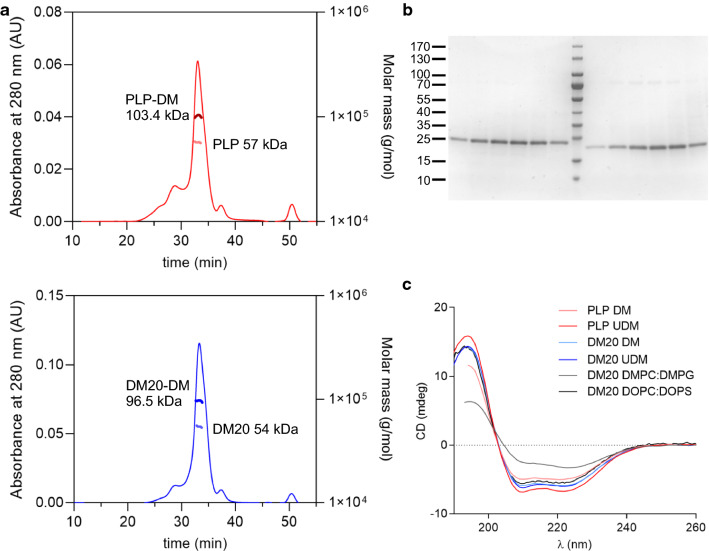
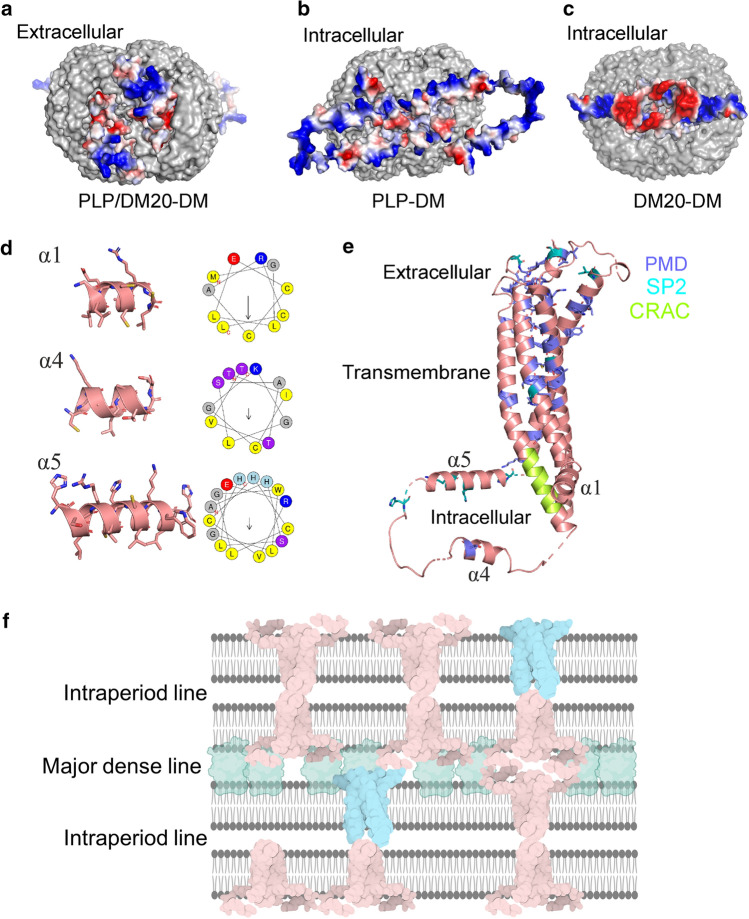
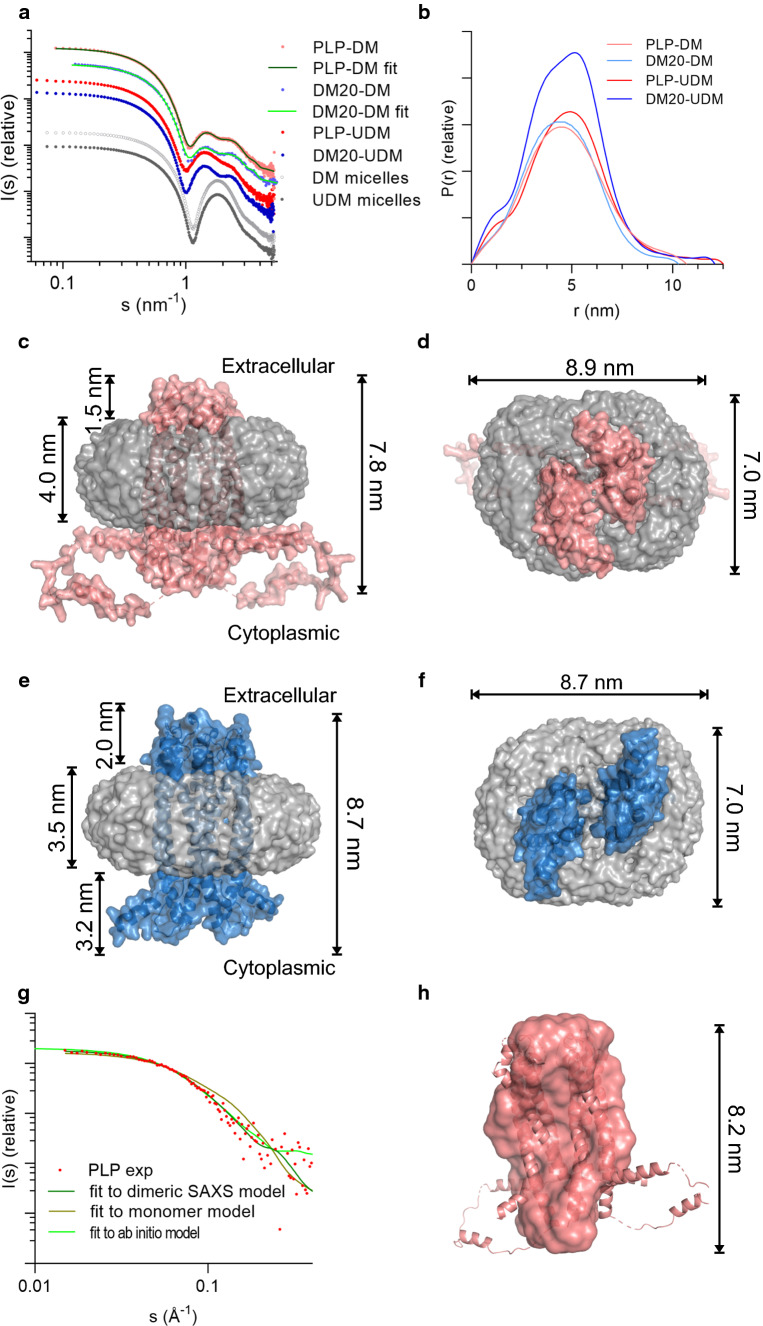
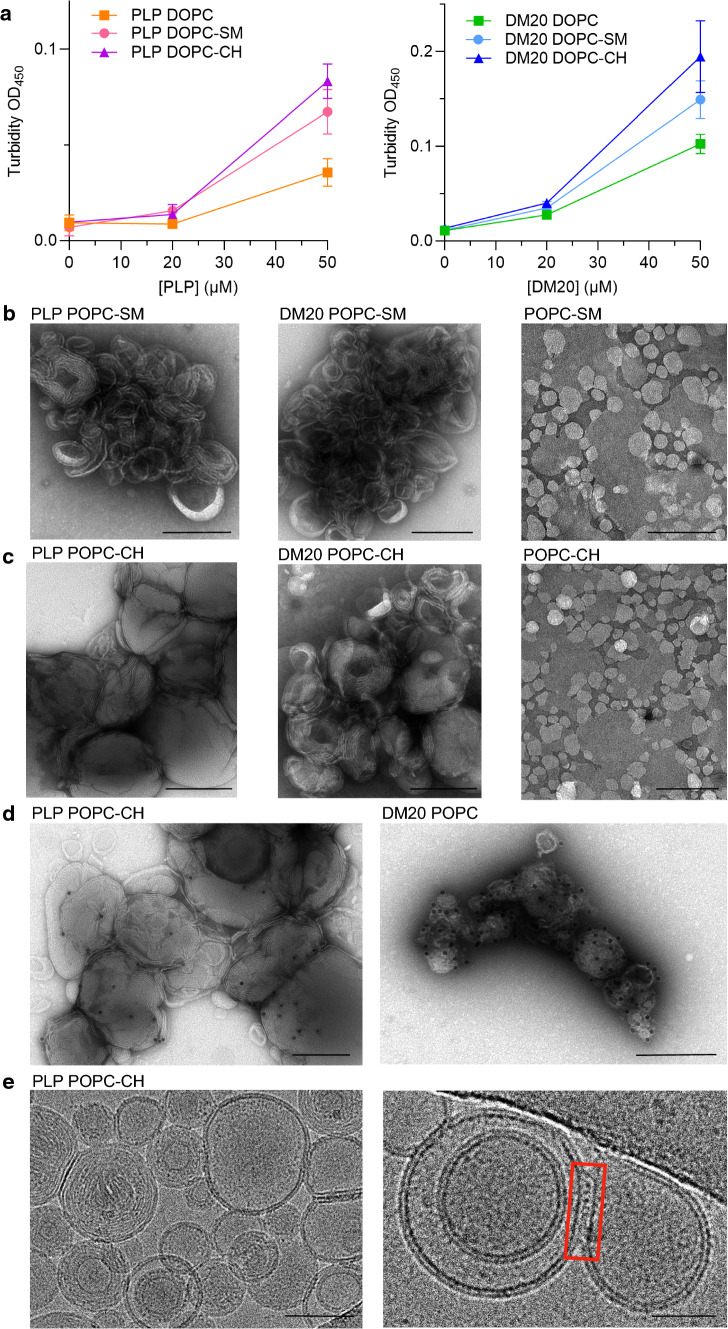
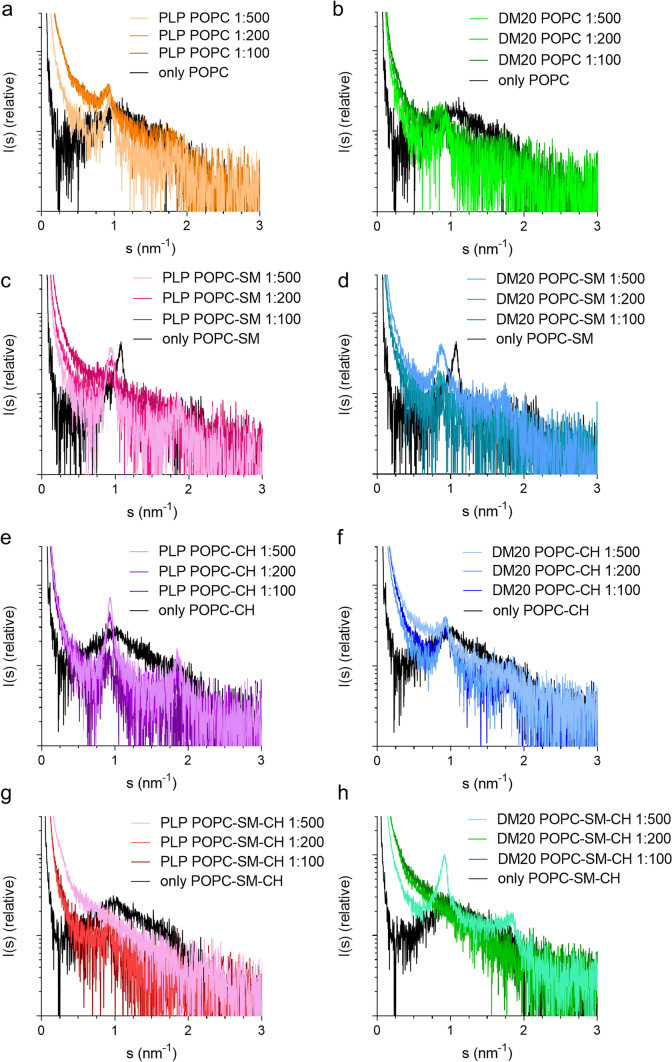
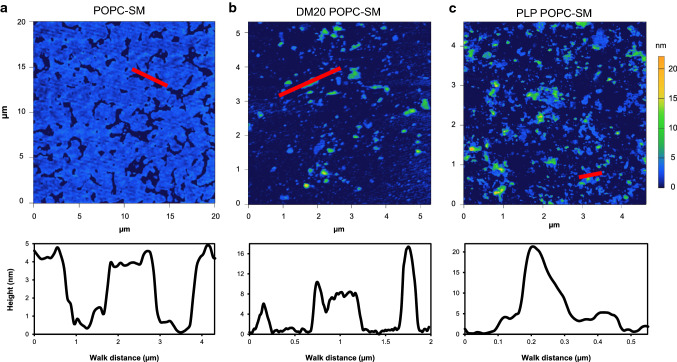
The myelin sheath is an essential, multilayered membrane structure that insulates axons, enabling the rapid transmission of nerve impulses. The tetraspan myelin proteolipid protein (PLP) is the most abundant protein of compact myelin in the central nervous system (CNS). The integral membrane protein PLP adheres myelin membranes together and enhances the compaction of myelin, having a fundamental role in myelin stability and axonal support. PLP is linked to severe CNS neuropathies, including inherited Pelizaeus-Merzbacher disease and spastic paraplegia type 2, as well as multiple sclerosis. Nevertheless, the structure, lipid interaction properties, and membrane organization mechanisms of PLP have remained unidentified. We expressed, purified, and structurally characterized human PLP and its shorter isoform DM20. Synchrotron radiation circular dichroism spectroscopy and small-angle X-ray and neutron scattering revealed a dimeric, α-helical conformation for both PLP and DM20 in detergent complexes, and pinpoint structural variations between the isoforms and their influence on protein function. In phosphatidylcholine membranes, reconstituted PLP and DM20 spontaneously induced formation of multilamellar myelin-like membrane assemblies. Cholesterol and sphingomyelin enhanced the membrane organization but were not crucial for membrane stacking. Electron cryomicroscopy, atomic force microscopy, and X-ray diffraction experiments for membrane-embedded PLP/DM20 illustrated effective membrane stacking and ordered organization of membrane assemblies with a repeat distance in line with CNS myelin. Our results shed light on the 3D structure of myelin PLP and DM20, their structure-function differences, as well as fundamental protein-lipid interplay in CNS compact myelin.
髓鞘是一种重要的多层膜结构,可隔离轴突,从而实现神经冲动的快速传递。四跨膜髓鞘少突胶质细胞糖蛋白(PLP)是中枢神经系统(CNS)中致密髓鞘的最丰富蛋白。完整膜蛋白 PLP 将髓鞘膜黏附在一起,并增强髓鞘的紧凑度,在髓鞘稳定性和轴突支持方面发挥着基本作用。PLP 与严重的中枢神经系统神经病变有关,包括遗传性 Pelizaeus-Merzbacher 病和痉挛性截瘫 2 型,以及多发性硬化症。尽管如此,PLP 的结构、脂质相互作用特性和膜组织机制仍未得到确定。我们表达、纯化并结构表征了人 PLP 及其较短的同工型 DM20。同步辐射圆二色性光谱和小角 X 射线和中子散射表明,PLP 和 DM20 在去污剂复合物中均为二聚体、α-螺旋构象,并且同工型之间存在结构差异,并影响其蛋白功能。在磷脂酰胆碱膜中,重建的 PLP 和 DM20 自发诱导形成多层类髓鞘膜组装体。胆固醇和神经鞘磷脂增强了膜组织,但对膜堆叠不是必需的。用于膜嵌入的 PLP/DM20 的电子低温显微镜、原子力显微镜和 X 射线衍射实验说明了有效的膜堆叠和膜组装的有序组织,其重复距离与 CNS 髓鞘一致。我们的结果阐明了髓鞘 PLP 和 DM20 的 3D 结构、它们的结构-功能差异,以及 CNS 致密髓鞘中基本的蛋白-脂质相互作用。