
娃娃脸和可爱会引起人们照顾和与幼儿玩耍的兴趣,但当孩子们戴口罩时,这种兴趣就会减少。
Kindchenschema and cuteness elicit interest in caring for and playing with young children, but less so when children are masked.
机构信息
Department of Psychology, George Mason University, Fairfax, VA, USA.
出版信息
Sci Rep. 2022 Jul 13;12(1):11903. doi: 10.1038/s41598-022-15922-z.
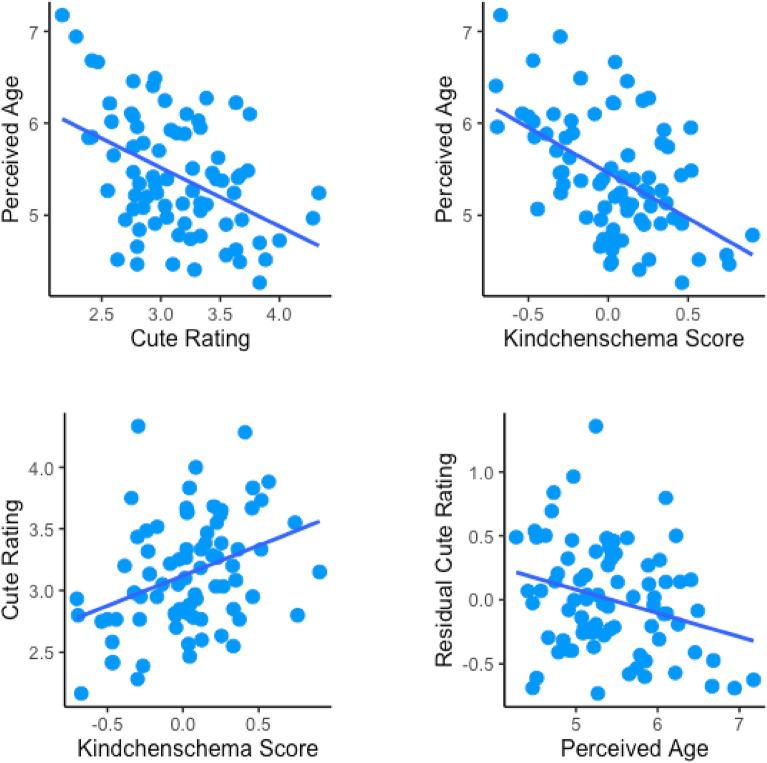
Cuteness in the young has long been theorized to elicit care and protection. Most research on this topic has focused on human infants, despite theories suggesting that cuteness may elicit broader social interest that could support learning and development beyond infancy. In four experiments (N = 531 adults, 98 children), we tested whether 'kindchenschema'-facial features associated with cuteness-and perceived cuteness elicit interest in playing with and caring for children, and whether masks disrupt these processes. Participants viewed images of children's faces, masked or unmasked. Kindchenschema correlated with perceived cuteness and age, and these variables predicted adults' interest in playing with and caring for children. Masks did not reduce cuteness ratings or interest in children, although they weakened relations between perceived cuteness and interest, and between perceived age and interest. Cuteness and related signals may guide adults' interactions with children, fostering learning and development.
长久以来,人们一直认为幼儿的可爱会引起人们的关心和保护。尽管有理论表明可爱可能会引起更广泛的社会兴趣,从而支持婴儿期以外的学习和发展,但该主题的大多数研究都集中在人类婴儿身上。在四项实验中(N=531 名成年人,98 名儿童),我们测试了“kindchenschema”-与可爱相关的面部特征以及感知到的可爱是否会引起与儿童玩耍和照顾儿童的兴趣,以及面具是否会破坏这些过程。参与者观看了儿童面部的图像,有面具或没有面具。Kindchenschema 与感知到的可爱和年龄相关,这些变量预测了成年人与儿童玩耍和照顾儿童的兴趣。面具并没有降低对儿童的可爱评价或兴趣,尽管它们削弱了感知可爱和兴趣之间以及感知年龄和兴趣之间的关系。可爱和相关信号可能会引导成年人与儿童互动,促进学习和发展。

 Zotero 插件