Hughes Charmayne Mary Lee, Tran Bao, Modan Amir, Zhang Xiaorong
NeuroTech Lab, Health Equity Institute, San Francisco State University, San Francisco, CA, United States.
Department of Kinesiology, San Francisco State University, San Francisco, CA, United States.
Front Bioeng Biotechnol. 2022 Jun 27;10:918617. doi: 10.3389/fbioe.2022.918617. eCollection 2022.
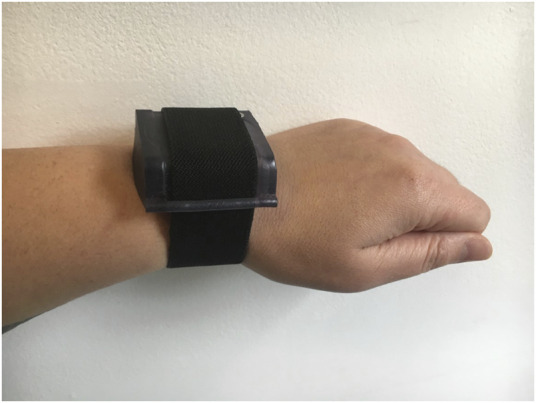
Stroke is one of the leading causes of death and disability worldwide, with a disproportionate burden represented by low- and middle-income countries (LMICs). To improve post-stroke outcomes in LMICs, researchers have sought to leverage emerging technologies that overcome traditional barriers associated with stroke management. One such technology, inertial measurement units (IMUs), exhibit great potential as a low-cost, portable means to evaluate and monitor patient progress during decentralized rehabilitation protocols. As such, the aim of the present study was to determine the ability of a low-cost single IMU sensor-based wearable system (named the T'ena sensor) to reliably and accurately assess movement quality and efficiency in physically and neurologically healthy adults. Upper limb movement kinematics measured by the T'ena sensor were compared to the gold standard reference system during three functional tasks, and root mean square errors, Pearson's correlation coefficients, intraclass correlation coefficients, and the Bland Altman method were used to compare kinematic variables of interest between the two systems for absolute accuracy and equivalency. The T'ena sensor and the gold standard reference system were significantly correlated for all tasks and measures ( range = 0.648-0.947), although less so for the Finger to Nose task ( range = 0.648-0.894). Results demonstrate that single IMU systems are a valid, reliable, and objective method by which to measure movement kinematics during functional tasks. Context-appropriate enabling technologies specifically designed to address barriers to quality health services in LMICs can accelerate progress towards the United Nations Sustainable Development Goal 3.
中风是全球主要的死亡和残疾原因之一,低收入和中等收入国家(LMICs)所承受的负担尤为沉重。为改善LMICs中风后的预后,研究人员试图利用新兴技术来克服与中风管理相关的传统障碍。其中一种技术,即惯性测量单元(IMUs),作为一种低成本、便携式的手段,在分散式康复方案中评估和监测患者进展方面具有巨大潜力。因此,本研究的目的是确定一种基于低成本单IMU传感器的可穿戴系统(名为T'ena传感器)在身体和神经功能健康的成年人中可靠且准确地评估运动质量和效率的能力。在三项功能任务中,将T'ena传感器测量的上肢运动运动学与金标准参考系统进行比较,并使用均方根误差、皮尔逊相关系数、组内相关系数和布兰德-奥特曼方法来比较两个系统之间感兴趣的运动学变量的绝对准确性和等效性。对于所有任务和测量,T'ena传感器与金标准参考系统均具有显著相关性(范围 = 0.648 - 0.947),尽管在指鼻任务中相关性较低(范围 = 0.648 - 0.894)。结果表明,单IMU系统是一种在功能任务期间测量运动运动学的有效、可靠且客观的方法。专门为解决LMICs优质医疗服务障碍而设计的适合具体情况的赋能技术可以加速实现联合国可持续发展目标3的进程。