Department of Pediatrics, Sun Yat-Sen Memorial Hospital, Sun Yat-Sen University, Guangzhou, Guangdong Province, China.
Guangdong Provincial Key Laboratory of Malignant Tumor Epigenetics and Gene Regulation, Sun Yat-Sen Memorial Hospital, Sun Yat-Sen University, Guangzhou, Guangdong Province, China.
Cancer Med. 2023 Jan;12(2):1418-1430. doi: 10.1002/cam4.5026. Epub 2022 Jul 14.
Alterations of 11q23/KMT2A are the most prevalent cytogenetic abnormalities in acute myeloid leukemia (AML) and the prognostic significance of 11q23/KMT2A-rearranged AML based on various translocation partners varies among different studies. However, few studies evaluated the molecular characteristics of 11q23/KMT2A-rearranged pediatric AML. We aim to analyze the mutational landscape of 11q23/KMT2A-rearranged AML and assess their prognostic value in outcomes.
The mutational landscape and clinical prognosis of 105 children with 11q23/KMT2A-rearranged AML in comparison with 277 children with non-11q23/KMT2A-rearranged AML were analyzed using publicly accessible next-generation sequencing data from Therapeutically Applicable Research to Generate Effective Treatments (TARGET) dataset.
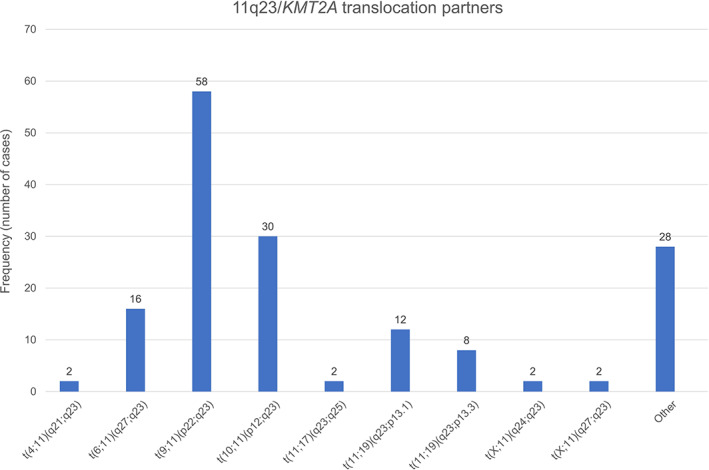
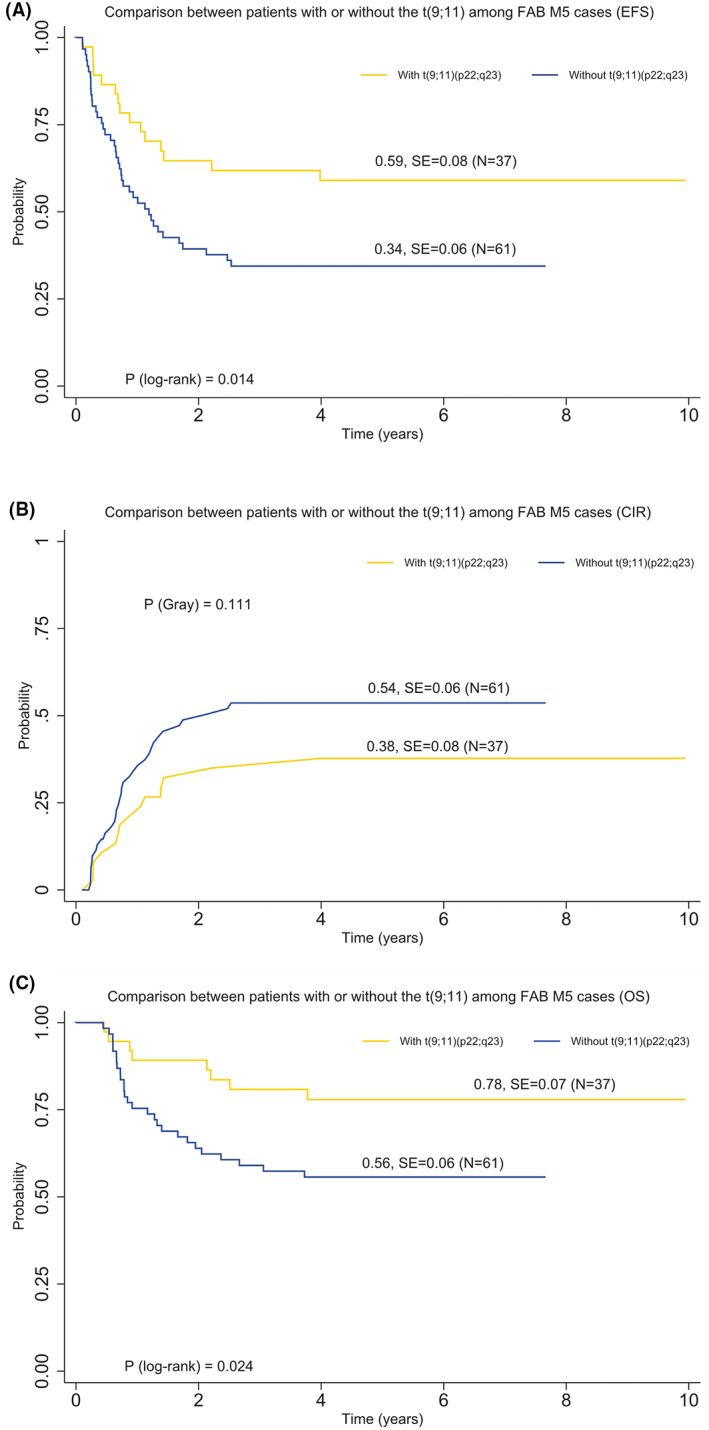
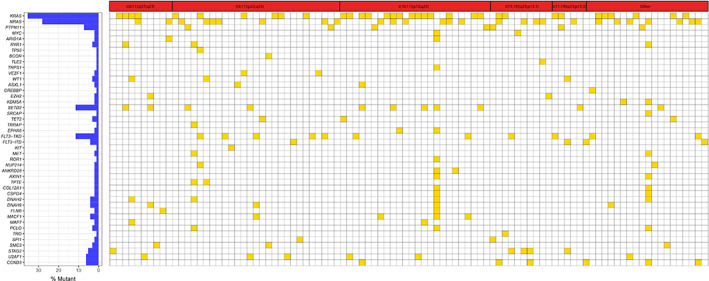
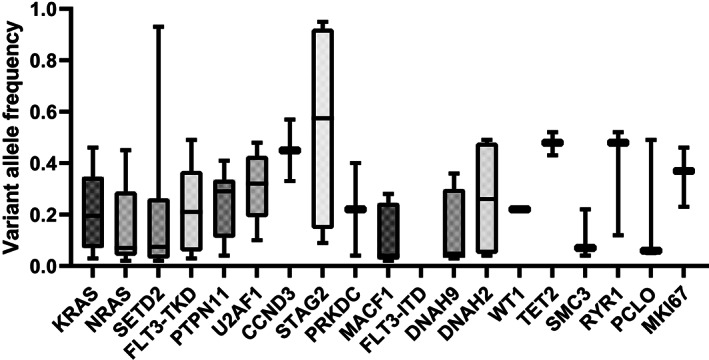
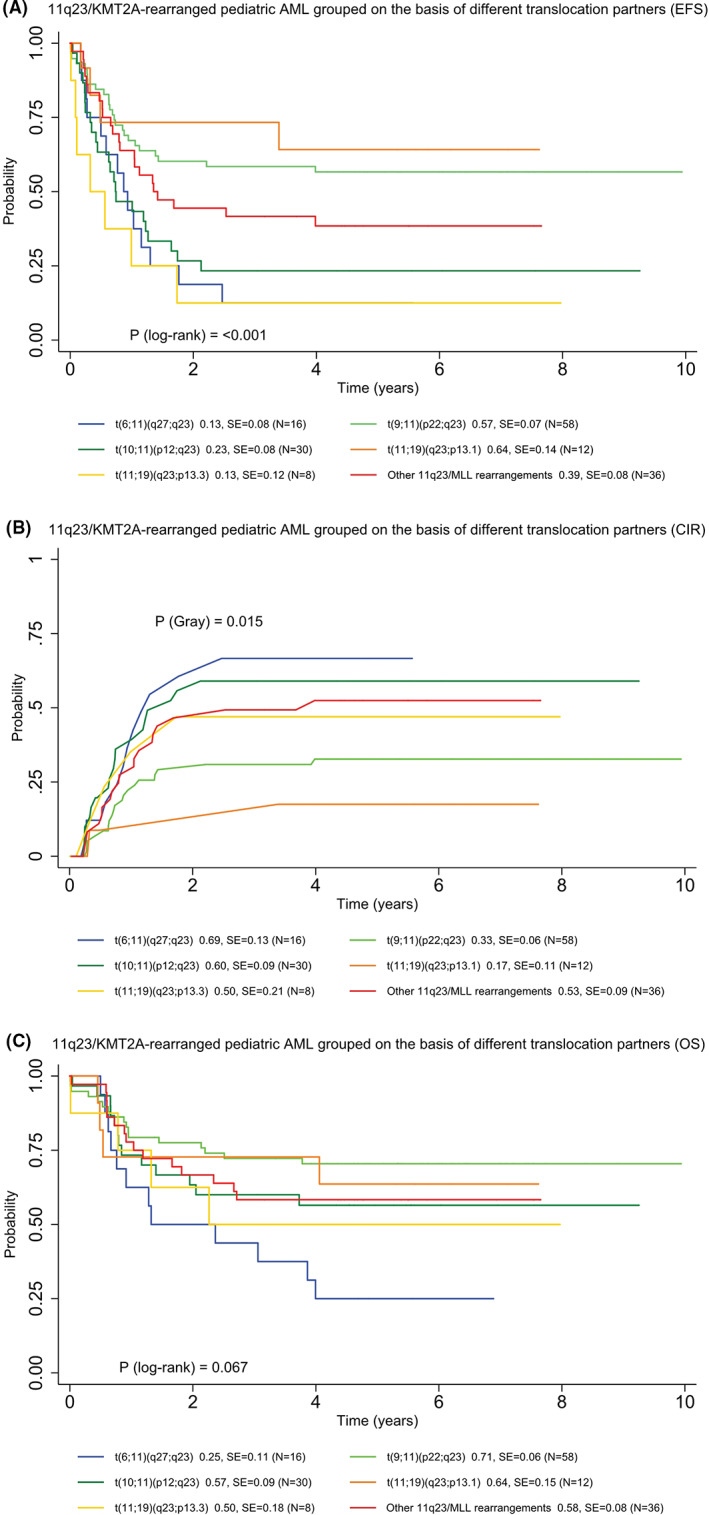
Pediatric AML patients with 11q23/KMT2A-rearrangements harbored a low number of mutations (Median, 1 mutation/patient, range, 1-22), 58% of which involved in RAS pathway mutations (KRAS, NRAS, and PTPN11) and 10.5% of which comprised of SETD2 mutations. Compared with non-11q23/KMT2A-rearranged AML, the incidence of KRAS (32.4% vs. 10.1%, P〈0.001) and SETD2 (10.5% vs. 1.4%, P=0.001) gene mutations in 11q23/KMT2A-rearranged AML was significantly higher. Both KRAS and SETD2 mutations occurred more often in t(10;11)(p12;q23). KRAS mutations were correlated with worse 5-year event-free survival [EFS] (Plog-rank = 0.001) and 5-year overall survival [OS] (Plog-rank = 0.009) and the presence of SETD2 mutations increases the 5-year relapse rate (PGray = 0.004). Multivariate analyses confirmed KRAS mutations in 11q23/KMT2A-rearranged AML as an independent predictor for poor EFS (hazard ratio [HR] = 2.10, P=0.05) and OS (HR = 2.39, P=0.054).
Our findings show that pediatric patients with 11q23/KMT2A rearrangements have characteristic mutation patterns and varying clinical outcomes depending on different translocation partners, which could be utilized to develop more accurate risk stratification and tailored therapies.
11q23/KMT2A 改变是急性髓系白血病(AML)中最常见的细胞遗传学异常,基于不同的易位伙伴,11q23/KMT2A 重排 AML 的预后意义在不同的研究中有所不同。然而,很少有研究评估 11q23/KMT2A 重排的儿科 AML 的分子特征。我们旨在分析 11q23/KMT2A 重排 AML 的突变景观,并评估其在预后方面的预后价值。
利用 Therapeutically Applicable Research to Generate Effective Treatments(TARGET)数据集的公开可用下一代测序数据,分析 105 例 11q23/KMT2A 重排 AML 患儿与 277 例非 11q23/KMT2A 重排 AML 患儿的突变景观和临床预后。
11q23/KMT2A 重排的儿科 AML 患者突变数量较少(中位数为 1 个突变/患者,范围为 1-22),58%的突变为 RAS 通路突变(KRAS、NRAS 和 PTPN11),10.5%的突变为 SETD2 突变。与非 11q23/KMT2A 重排 AML 相比,11q23/KMT2A 重排 AML 中 KRAS(32.4%比 10.1%,P〈0.001)和 SETD2(10.5%比 1.4%,P=0.001)基因突变的发生率明显更高。KRAS 和 SETD2 突变均发生于 t(10;11)(p12;q23)。KRAS 突变与 5 年无事件生存率(EFS)(Plog-rank = 0.001)和 5 年总生存率(OS)(Plog-rank = 0.009)较差相关,SETD2 突变的存在增加了 5 年复发率(PGray = 0.004)。多变量分析证实,11q23/KMT2A 重排 AML 中的 KRAS 突变是 EFS(危险比[HR] = 2.10,P=0.05)和 OS(HR = 2.39,P=0.054)不良的独立预测因素。
我们的研究结果表明,患有 11q23/KMT2A 重排的儿科患者具有特征性的突变模式,并且根据不同的易位伙伴具有不同的临床结局,这可以用于开发更准确的风险分层和针对性治疗。