Division of Immunology, Immunity to Infection and Respiratory Medicine, Faculty of Biology, Medicine and Health, School of Biological Sciences, University of Manchester, Manchester, UK.
Manchester Institute of Biotechnology, University of Manchester, Manchester, UK.
J Appl Microbiol. 2022 Oct;133(4):2445-2456. doi: 10.1111/jam.15716. Epub 2022 Aug 2.
This study sought to assess the volatile organic compound (VOC) profiles of ampicillin-resistant and -susceptible Escherichia coli to evaluate whether VOC analysis may be utilized to identify resistant phenotypes.
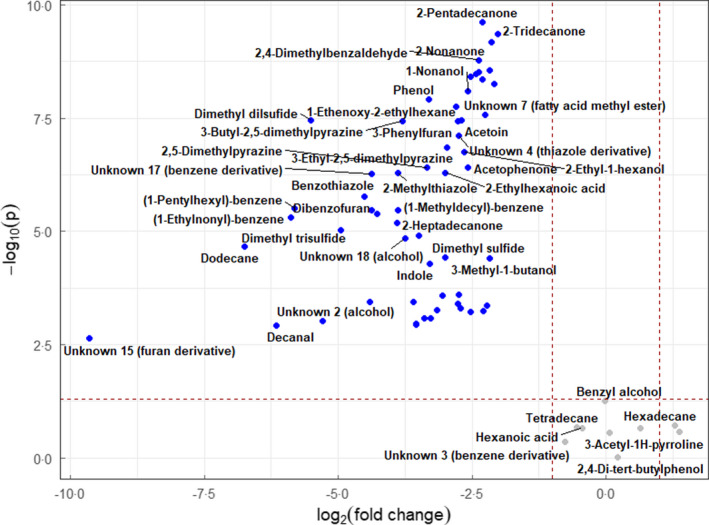
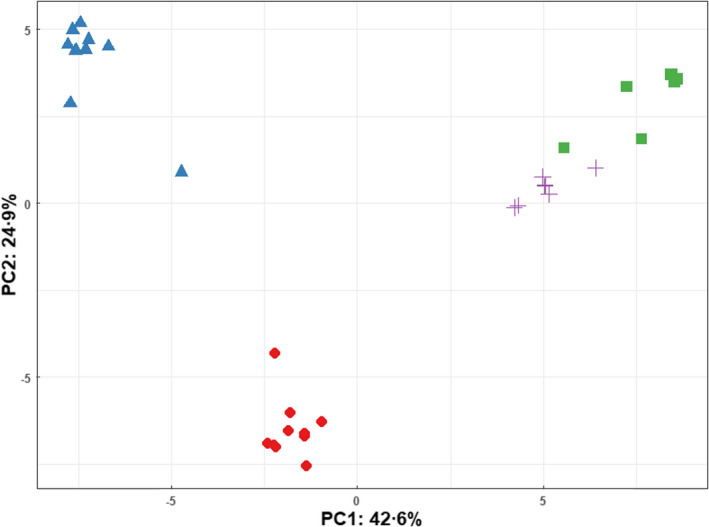
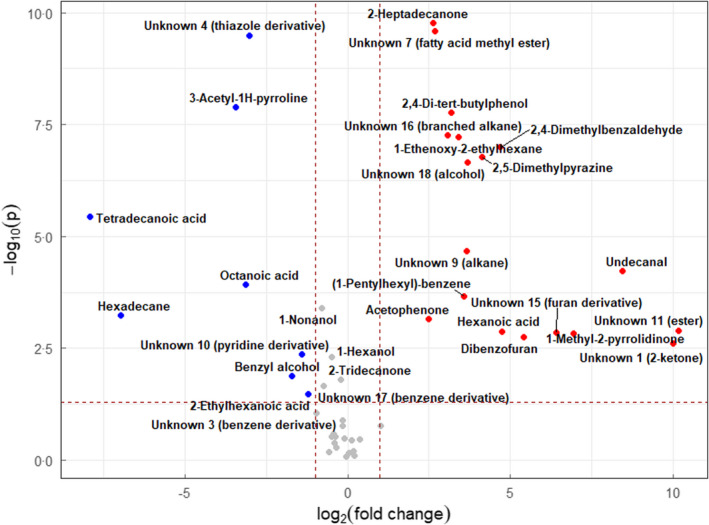
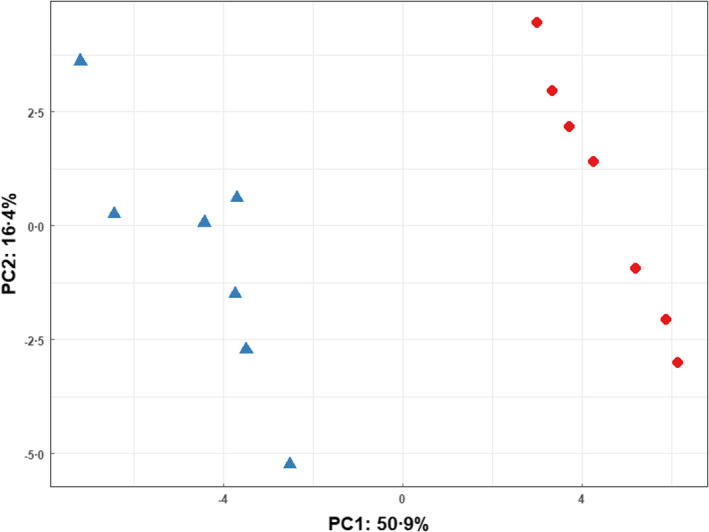
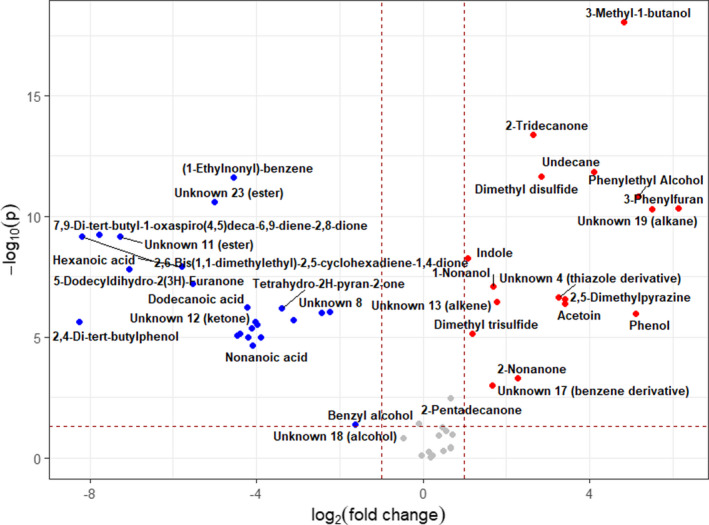
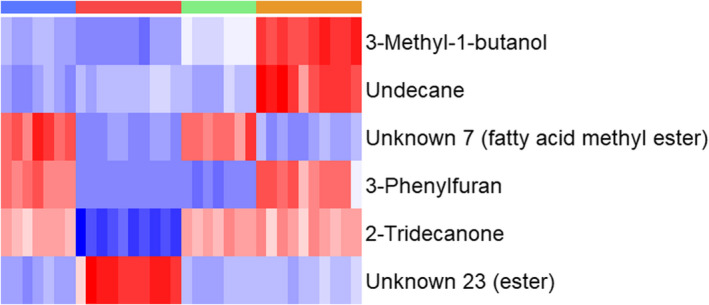
An E. coli BL21 (DE3) strain and its pET16b plasmid transformed ampicillin-resistant counterpart were cultured for 6 h in drug-free, low- and high-concentrations of ampicillin. Headspace analysis was undertaken using thermal desorption-gas chromatography-mass spectrometry. Results revealed distinct VOC profiles with ampicillin-resistant bacteria distinguishable from their susceptible counterparts using as few as six compounds. A minimum of 30 compounds (fold change >2, p ≤ 0.05) were differentially expressed between the strains across all set-ups. Furthermore, three compounds (indole, acetoin and 3-methyl-1-butanol) were observed to be significantly more abundant (fold change >2, p ≤ 0.05) in the resistant strain compared to the susceptible strain both in the presence and in the absence of drug stress.
Results indicate that E. coli with acquired ampicillin resistance exhibit an altered VOC profile compared to their susceptible counterpart both in the presence and in the absence of antibiotic stress. This suggests that there are fundamental differences between the metabolisms of ampicillin-resistant and -susceptible E. coli which may be detected by means of VOC analysis.
Our findings suggest that VOC profiles may be utilized to differentiate between resistant and susceptible bacteria using just six compounds. Consequently, the development of machine-learning models using VOC signatures shows considerable diagnostic applicability for the rapid and accurate detection of antimicrobial resistance.
本研究旨在评估耐氨苄西林和敏感的大肠杆菌的挥发性有机化合物 (VOC) 谱,以评估 VOC 分析是否可用于鉴定耐药表型。
培养大肠杆菌 BL21 (DE3) 菌株及其 pET16b 质粒转化的氨苄西林耐药对应物 6 小时,在无药物、低浓度和高浓度氨苄西林的情况下进行培养。使用热解吸-气相色谱-质谱法进行顶空分析。结果显示,氨苄西林耐药菌的 VOC 谱与敏感菌有明显区别,甚至使用 6 种化合物即可区分。在所有设置中,菌株之间至少有 30 种化合物(倍数变化>2,p≤0.05)差异表达。此外,在有和没有药物压力的情况下,与敏感株相比,耐药株中三种化合物(吲哚、乙酰丁酮和 3-甲基-1-丁醇)的丰度明显更高(倍数变化>2,p≤0.05)。
结果表明,与敏感株相比,获得氨苄西林耐药性的大肠杆菌在有和没有抗生素压力的情况下表现出不同的 VOC 谱。这表明氨苄西林耐药和敏感大肠杆菌的代谢之间存在根本差异,这些差异可以通过 VOC 分析检测到。
我们的研究结果表明,仅使用 6 种化合物就可以通过 VOC 谱区分耐药菌和敏感菌。因此,使用 VOC 特征开发机器学习模型对快速准确检测抗菌药物耐药性具有重要的诊断应用价值。