Pan Jing, Wang Haiyan, Yao Tiantian, Liao Xuejiao, Cheng Hao, Liangpunsakul Suthat, Wang Yan, Zhang Min, Zhang Zheng
Department of Infectious Disease, Peking University First Hospital, Beijing, China.
Liver Disease Department of The Fifth Medical Center of the General Hospital of PLA, Beijing, China.
J Clin Transl Hepatol. 2022 Jun 28;10(3):405-411. doi: 10.14218/JCTH.2021.00142. Epub 2022 Jan 4.
Hepatitis B surface antigen (HBsAg) clearance is significantly more common in children with chronic hepatitis B (CHB) than in adults; however, the possible influencing factors related to HBsAg loss have yet to be found. This study aimed to explore the efficacy of long-term interferon (IFN)α therapy in treating children with CHB and analyzed the factors influencing functional cure after treatment.
A total of 236 children aged 1-6 years and diagnosed with CHB via liver biopsy were included in the study, all receiving IFNα treatment (IFNα-2b monotherapy, IFNα-2b followed by lamivudine [LAM] or IFNα-2b combined with LAM) and followed up for 144 weeks. A comprehensive analysis was conducted on clinical data, including biochemical items, serum markers of hepatitis B virus (HBV) and immunological indexes, and logistic regression analysis was used to screen the influencing factors related to HBsAg loss.
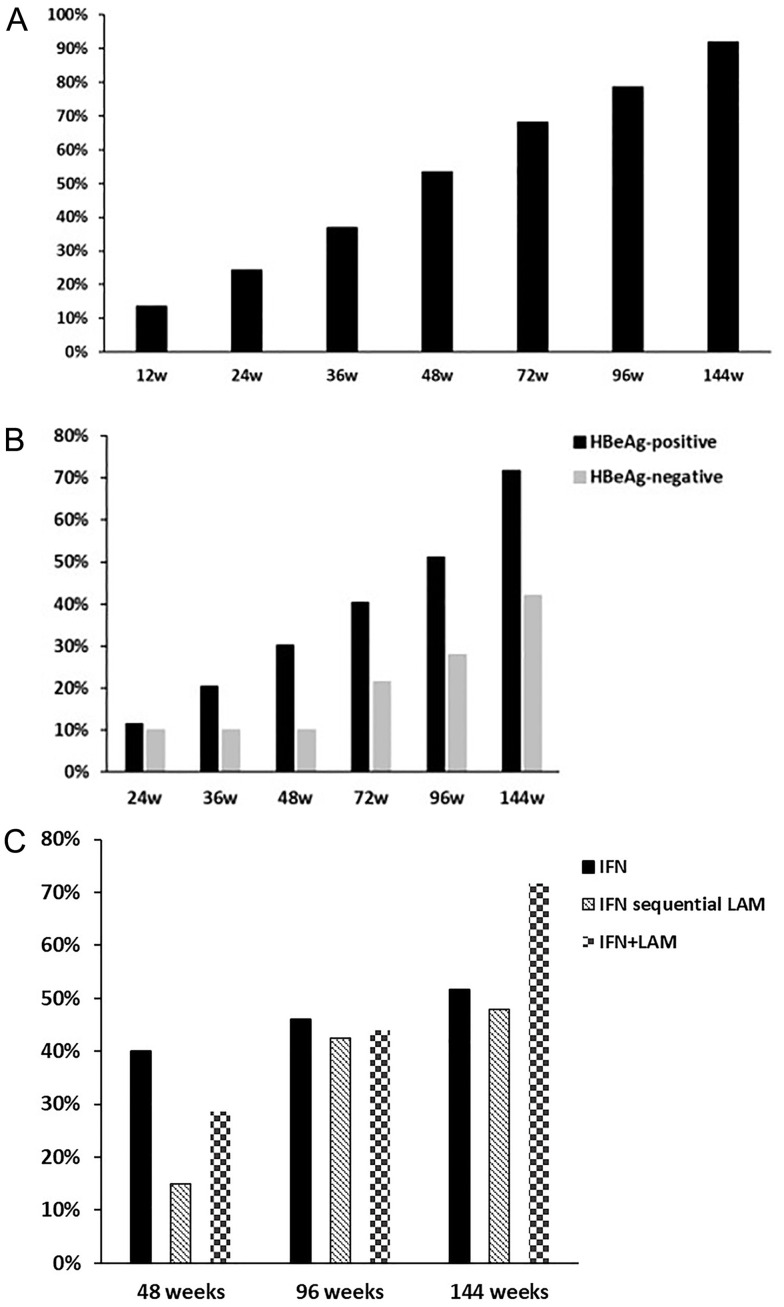
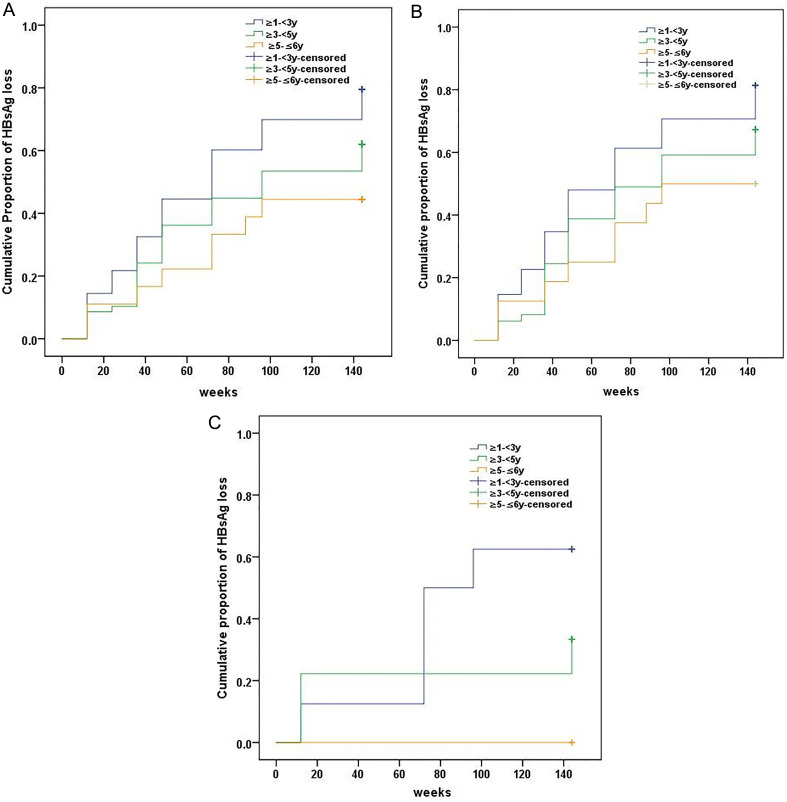
The cumulative loss rates of HBsAg were 79.5%, 62.1% and 42.1% at 144 weeks after the start of treatment in the 1-3 years-old group, 3-5 years-old group and 5-7 years-old group, respectively (<0.05). IFNα-2b combined with LAM treatment displayed the highest HBsAg loss rates compared with monotherapy and sequential treatment (=0.011). Younger baseline age and lower HBsAg levels were independent factors for the prediction of HBsAg loss (<0.05). The baseline PreS1 and hepatitis B core antibody levels in the HBsAg loss group were lower than those in the HBsAg non-loss group. In addition, the PreS1 level was positively corelated with the level of HBsAg, HBV DNA and liver inflammation.
Long-term treatment with IFNα was effective in achieving HBsAg loss in CHB children aged 1-6 years-old. Age less than 3 years-old and lower HBsAg levels are independent predictors of functional cure in children with CHB.
慢性乙型肝炎(CHB)患儿的乙肝表面抗原(HBsAg)清除率显著高于成人;然而,尚未发现与HBsAg消失相关的可能影响因素。本研究旨在探讨长期干扰素(IFN)α治疗CHB患儿的疗效,并分析治疗后影响功能性治愈的因素。
本研究纳入了236例经肝活检确诊为CHB的1至6岁儿童,所有患儿均接受IFNα治疗(IFNα-2b单药治疗、IFNα-2b序贯拉米夫定[LAM]或IFNα-2b联合LAM),并随访144周。对临床数据进行综合分析,包括生化指标、乙肝病毒(HBV)血清学标志物和免疫指标,并采用逻辑回归分析筛选与HBsAg消失相关的影响因素。
1至3岁组、3至5岁组和5至7岁组在治疗开始后144周时HBsAg的累积消失率分别为79.5%、62.1%和42.1%(<0.05)。与单药治疗和序贯治疗相比,IFNα-2b联合LAM治疗的HBsAg消失率最高(=0.011)。基线年龄较小和HBsAg水平较低是预测HBsAg消失的独立因素(<0.05)。HBsAg消失组的基线前S1和乙肝核心抗体水平低于HBsAg未消失组。此外,前S1水平与HBsAg、HBV DNA水平及肝脏炎症呈正相关。
长期使用IFNα治疗可有效使1至6岁CHB患儿实现HBsAg消失。年龄小于3岁和较低的HBsAg水平是CHB患儿功能性治愈的独立预测因素。