Peng Yizhong, Qing Xiangcheng, Shu Hongyang, Tian Shuo, Yang Wenbo, Chen Songfeng, Lin Hui, Lv Xiao, Zhao Lei, Chen Xi, Pu Feifei, Huang Donghua, Cao Xu, Shao Zengwu
Department of Orthopaedics, Union Hospital, Tongji Medical College, Huazhong University of Science and Technology, Wuhan, Hubei Province, China.
Division of Cardiology, Department of Internal Medicine, Tongji Hospital, Tongji Medical College, Huazhong University of Science and Technology, Wuhan, Hubei Province, China.
Biomater Transl. 2021 Jun 28;2(2):91-142. doi: 10.12336/biomatertransl.2021.02.003. eCollection 2021.
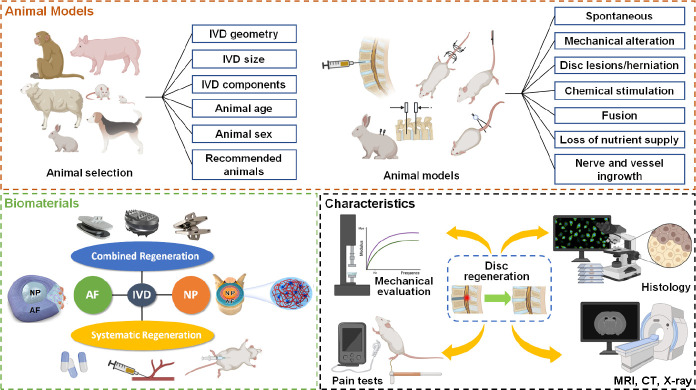
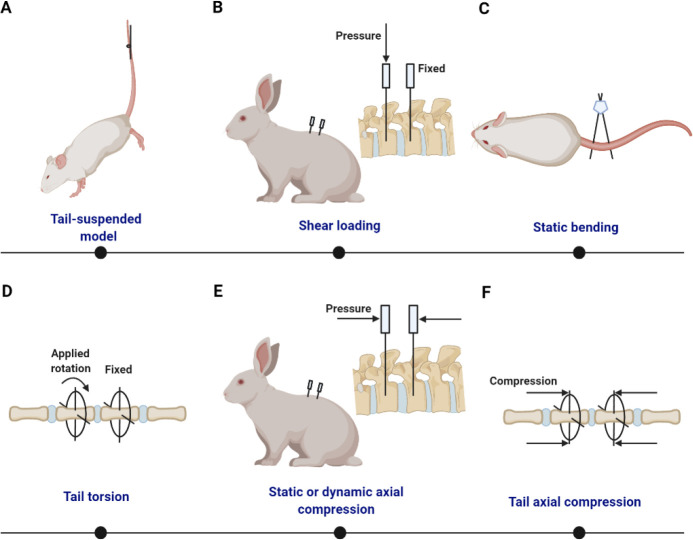
Low back pain is a vital musculoskeletal disease that impairs life quality, leads to disability and imposes heavy economic burden on the society, while it is greatly attributed to intervertebral disc degeneration (IDD). However, the existing treatments, such as medicines, chiropractic adjustments and surgery, cannot achieve ideal disc regeneration. Therefore, advanced bioactive therapies are implemented, including stem cells delivery, bioreagents administration, and implantation of biomaterials etc. Among these researches, few reported unsatisfying regenerative outcomes. However, these advanced therapies have barely achieved successful clinical translation. The main reason for the inconsistency between satisfying preclinical results and poor clinical translation may largely rely on the animal models that cannot actually simulate the human disc degeneration. The inappropriate animal model also leads to difficulties in comparing the efficacies among biomaterials in different reaches. Therefore, animal models that better simulate the clinical charateristics of human IDD should be acknowledged. In addition, in vivo regenerative outcomes should be carefully evaluated to obtain robust results. Nevertheless, many researches neglect certain critical characteristics, such as adhesive properties for biomaterials blocking annulus fibrosus defects and hyperalgesia that is closely related to the clinical manifestations, e.g., low back pain. Herein, in this review, we summarized the animal models established for IDD, and highlighted the proper models and parameters that may result in acknowledged IDD models. Then, we discussed the existing biomaterials for disc regeneration and the characteristics that should be considered for regenerating different parts of discs. Finally, well-established assays and parameters for in vivo disc regeneration are explored.
腰痛是一种重要的肌肉骨骼疾病,它会损害生活质量,导致残疾,并给社会带来沉重的经济负担,而这在很大程度上归因于椎间盘退变(IDD)。然而,现有的治疗方法,如药物、脊椎按摩治疗和手术,都无法实现理想的椎间盘再生。因此,人们实施了先进的生物活性疗法,包括干细胞递送、生物试剂给药和生物材料植入等。在这些研究中,很少有报道称再生结果不尽人意。然而,这些先进的疗法几乎没有成功实现临床转化。临床前结果令人满意与临床转化不佳之间存在不一致的主要原因可能在很大程度上取决于无法实际模拟人类椎间盘退变的动物模型。不合适的动物模型也导致在比较不同研究中生物材料的疗效时存在困难。因此,应该认可能更好地模拟人类IDD临床特征的动物模型。此外,应该仔细评估体内再生结果以获得可靠的结果。然而,许多研究忽略了某些关键特征,例如生物材料封闭纤维环缺损的粘附特性以及与临床表现(如腰痛)密切相关的痛觉过敏。在此,在这篇综述中,我们总结了为IDD建立的动物模型,并强调了可能产生公认的IDD模型的合适模型和参数。然后,我们讨论了现有的用于椎间盘再生的生物材料以及在再生椎间盘不同部位时应考虑的特性。最后,探索了用于体内椎间盘再生的成熟检测方法和参数。