Wang Zhicheng, Bian Weikang, Yan Yufeng, Zhang Dai-Min
Department of Cardiology, Nanjing First Hospital, Nanjing Medical University, Nanjing, China.
Department of Cardiology, Sir Run Run Hospital, Nanjing Medical University, Nanjing, China.
Front Pharmacol. 2022 Jun 28;13:868401. doi: 10.3389/fphar.2022.868401. eCollection 2022.
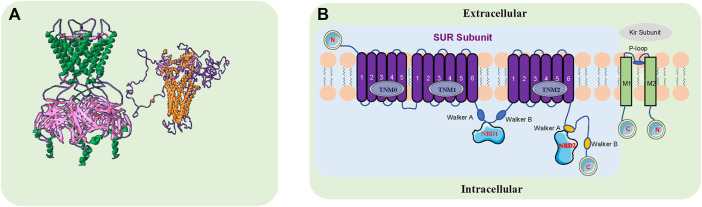
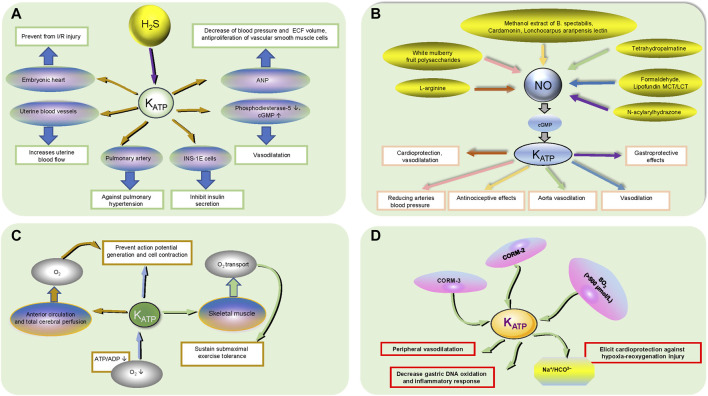
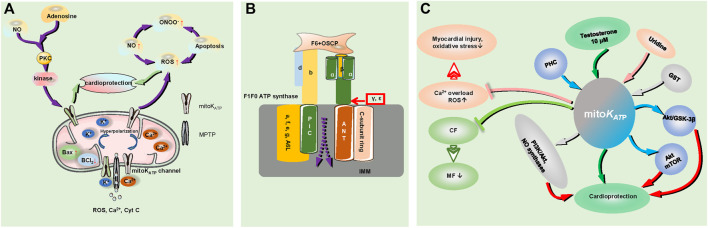
ATP-sensitive potassium channels (K channels) play pivotal roles in excitable cells and link cellular metabolism with membrane excitability. The action potential converts electricity into dynamics by ion channel-mediated ion exchange to generate systole, involved in every heartbeat. Activation of the K channel repolarizes the membrane potential and decreases early afterdepolarization (EAD)-mediated arrhythmias. K channels in cardiomyocytes have less function under physiological conditions but they open during severe and prolonged anoxia due to a reduced ATP/ADP ratio, lessening cellular excitability and thus preventing action potential generation and cell contraction. Small active molecules activate and enhance the opening of the K channel, which induces the repolarization of the membrane and decreases the occurrence of malignant arrhythmia. Accumulated evidence indicates that mutation of K channels deteriorates the regulatory roles in mutation-related diseases. However, patients with mutations in K channels still have no efficient treatment. Hence, in this study, we describe the role of K channels and subunits in angiocardiopathy, summarize the mutations of the K channels and the functional regulation of small active molecules in K channels, elucidate the potential mechanisms of mutant K channels and provide insight into clinical therapeutic strategies.
ATP敏感性钾通道(K通道)在可兴奋细胞中发挥关键作用,并将细胞代谢与膜兴奋性联系起来。动作电位通过离子通道介导的离子交换将电转化为动力学,从而产生收缩期,参与每一次心跳。K通道的激活使膜电位复极化,并减少早期后去极化(EAD)介导的心律失常。心肌细胞中的K通道在生理条件下功能较弱,但在严重且持续的缺氧状态下,由于ATP/ADP比值降低,它们会开放,降低细胞兴奋性,从而防止动作电位的产生和细胞收缩。小活性分子激活并增强K通道的开放,诱导膜复极化并减少恶性心律失常的发生。越来越多的证据表明,K通道的突变会削弱其在突变相关疾病中的调节作用。然而,K通道突变的患者仍然没有有效的治疗方法。因此,在本研究中,我们描述了K通道及其亚基在心血管疾病中的作用,总结了K通道的突变以及小活性分子对K通道的功能调节,阐明了突变K通道的潜在机制,并为临床治疗策略提供见解。