Department of Optical Nanoscopy, Max Planck Institute for Medical Research (MPI-MR), Jahnstraße 29, 69120, Heidelberg, Germany.
Department of NanoBiophotonics, Max Planck Institute for Multidisciplinary Sciences (MPI-NAT), Am Fassberg 11, 37077, Göttingen, Germany.
Chembiochem. 2022 Sep 16;23(18):e202200395. doi: 10.1002/cbic.202200395. Epub 2022 Aug 16.
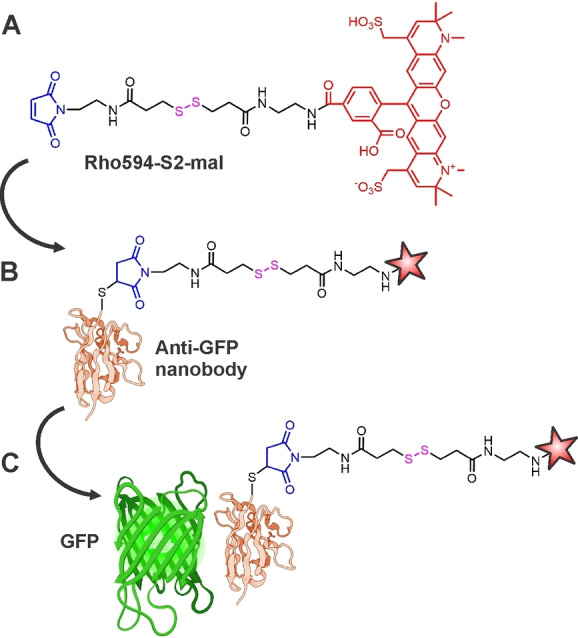
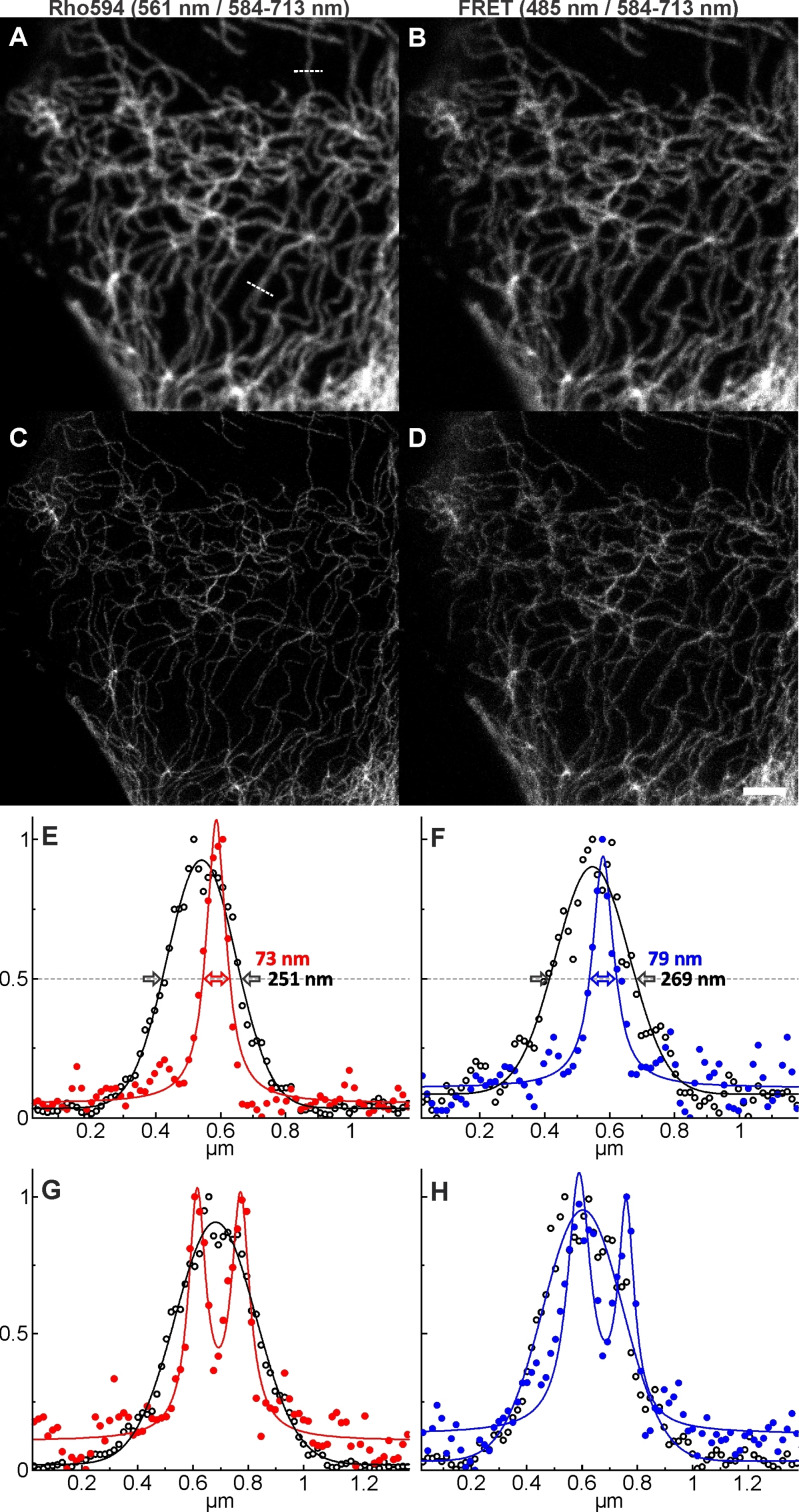
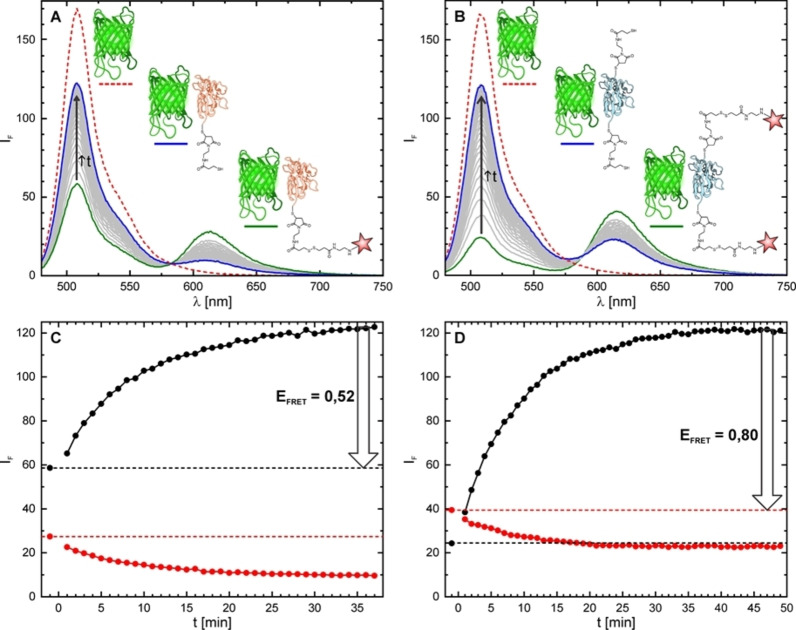
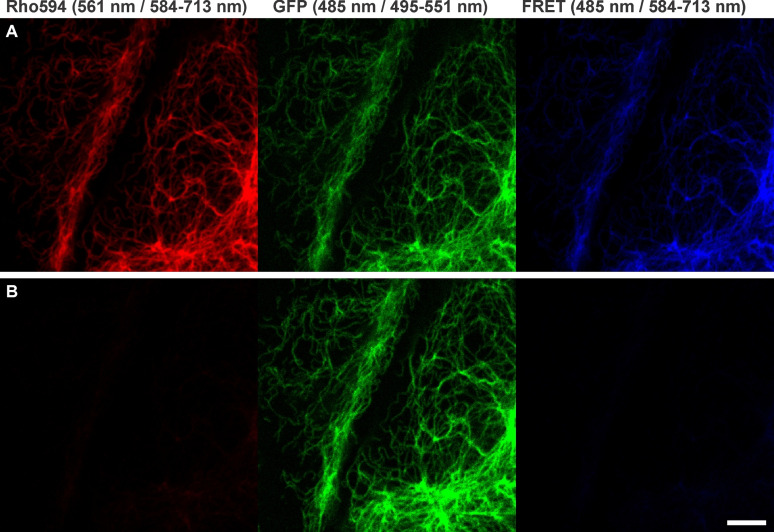
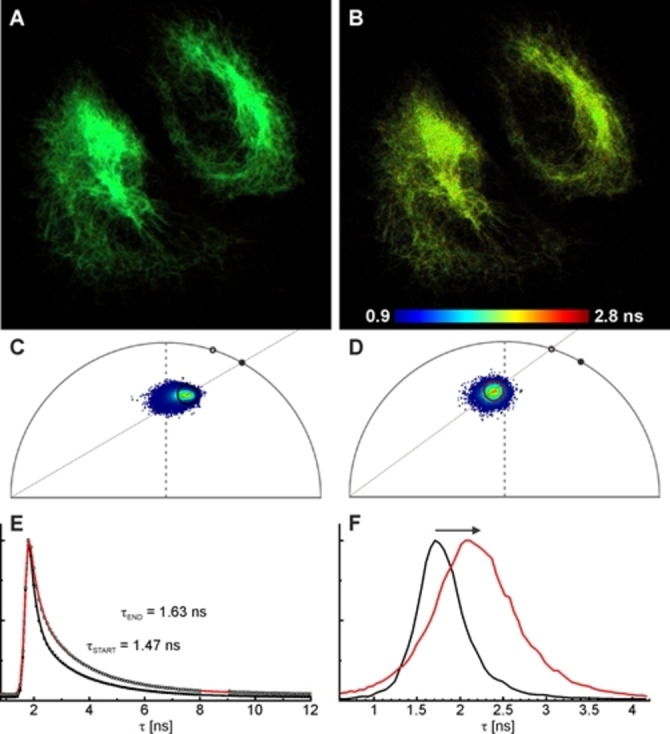
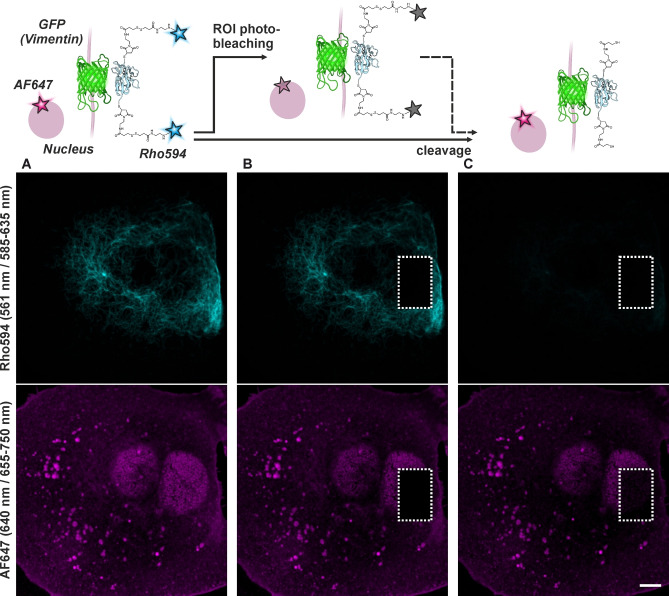
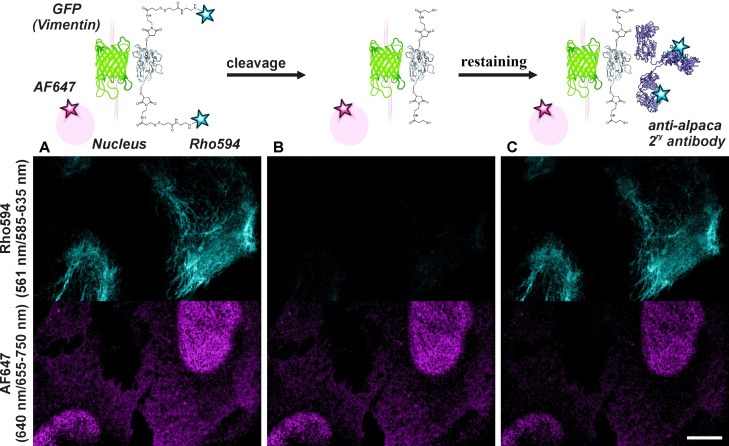
A bright and photostable fluorescent dye with a disulfide (S-S) linker and maleimide group (Rho594-S2-mal), as cleavable and reactive sites, was synthesized and conjugated with anti-GFP nanobodies (NB). The binding of EGFP (FRET donor) with anti-GFP NB labeled with one or two Rho594-S2-mal residues was studied in vitro and in cellulo. The linker was cleaved with dithiothreitol recovering the donor (FP) signal. The bioconjugates (FP-NB-dye) were applied in FRET-FLIM assays, confocal imaging, and superresolution STED microscopy.
一种带有二硫键(S-S)连接物和马来酰亚胺基团(Rho594-S2-mal)的明亮且光稳定的荧光染料,作为可切割和反应性位点,被合成并与抗 GFP 纳米抗体(NB)缀合。在体外和细胞内研究了带有一个或两个 Rho594-S2-mal 残基的抗 GFP NB 标记的 EGFP(FRET 供体)与 Rho594-S2-mal 的结合。用二硫苏糖醇(DTT)切割连接物,恢复供体(FP)信号。生物缀合物(FP-NB-dye)被应用于 FRET-FLIM 测定、共聚焦成像和超分辨率 STED 显微镜。