Awan Zuhier, Alrayes Nuha, Khan Zeenath, Almansouri Majid, Ibrahim Hussain Bima Abdulhadi, Almukadi Haifa, Ibrahim Kutbi Hussam, Jayasheela Shetty Preetha, Ahmad Shaik Noor, Banaganapalli Babajan
Department of Clinical Biochemistry, Faculty of Medicine, King Abdulaziz University, Jeddah, Saudi Arabia.
Department of Genetics, Al Borg Diagnostics, Jeddah, Saudi Arabia.
Saudi J Biol Sci. 2022 May;29(5):3287-3299. doi: 10.1016/j.sjbs.2022.02.002. Epub 2022 Feb 9.
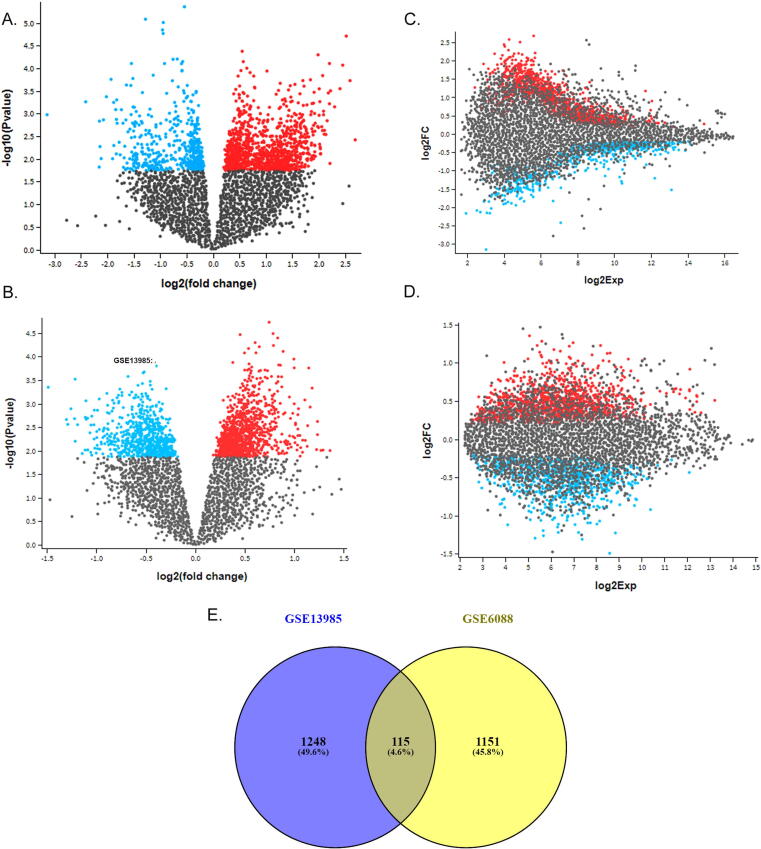
Familial hypercholesterolemia (FH) is a monogenic lipid disorder which promotes atherosclerosis and cardiovascular diseases. Owing to the lack of sufficient published information, this study aims to identify the potential genetic biomarkers for FH by studying the global gene expression profile of blood cells. The microarray expression data of FH patients and controls was analyzed by different computational biology methods like differential expression analysis, protein network mapping, hub gene identification, functional enrichment of biological pathways, and immune cell restriction analysis. Our results showed the dysregulated expression of 115 genes connected to lipid homeostasis, immune responses, cell adhesion molecules, canonical Wnt signaling, mucin type O-glycan biosynthesis pathways in FH patients. The findings from expanded protein interaction network construction with known FH genes and subsequent Gene Ontology (GO) annotations have also supported the above findings, in addition to identifying the involvement of dysregulated thyroid hormone and ErbB signaling pathways in FH patients. The genes like were found to be enriched under all GO annotation categories. The subsequent phenotype ontology results have revealed , as key hub genes contributing to the inflammation underlying cardiovascular and immune response related phenotypes. Immune cell restriction findings show that above three genes are highly expressed by T-follicular helper CD4 T cells, naïve B cells, and monocytes, respectively. These findings not only provide a theoretical basis to understand the role of immune dysregulations underlying the atherosclerosis among FH patients but may also pave the way to develop genomic medicine for cardiovascular diseases.
家族性高胆固醇血症(FH)是一种单基因脂质紊乱疾病,可促进动脉粥样硬化和心血管疾病的发生。由于缺乏足够的已发表信息,本研究旨在通过研究血细胞的全基因表达谱来确定FH的潜在遗传生物标志物。采用差异表达分析、蛋白质网络映射、枢纽基因鉴定、生物通路功能富集和免疫细胞限制分析等不同的计算生物学方法,对FH患者和对照组的微阵列表达数据进行了分析。我们的结果显示,FH患者中115个与脂质稳态、免疫反应、细胞粘附分子、经典Wnt信号传导、粘蛋白型O-聚糖生物合成途径相关的基因表达失调。除了确定FH患者中甲状腺激素和ErbB信号通路失调的参与外,通过与已知FH基因构建扩展的蛋白质相互作用网络以及随后的基因本体(GO)注释得出的结果也支持了上述发现。发现 等基因在所有GO注释类别下均富集。随后的表型本体结果显示, 和 是导致心血管和免疫反应相关表型炎症的关键枢纽基因。免疫细胞限制分析结果表明,上述三个基因分别在T滤泡辅助性CD4 T细胞、初始B细胞和单核细胞中高表达。这些发现不仅为理解FH患者动脉粥样硬化背后免疫失调的作用提供了理论基础,也可能为开发心血管疾病的基因组医学铺平道路。