Department of Medicine, Cairns Hospital, Cairns, Queensland, Australia.
Tropical Public Health Service, Cairns, Queensland, Australia.
PLoS Negl Trop Dis. 2022 Jul 18;16(7):e0010604. doi: 10.1371/journal.pntd.0010604. eCollection 2022 Jul.
Patients with rheumatic heart disease (RHD) and congestive cardiac failure (CCF) are believed to have an increased risk of melioidosis and are thought to be more likely to die from the infection. This study was performed to confirm these findings in a region with a high incidence of all three conditions.
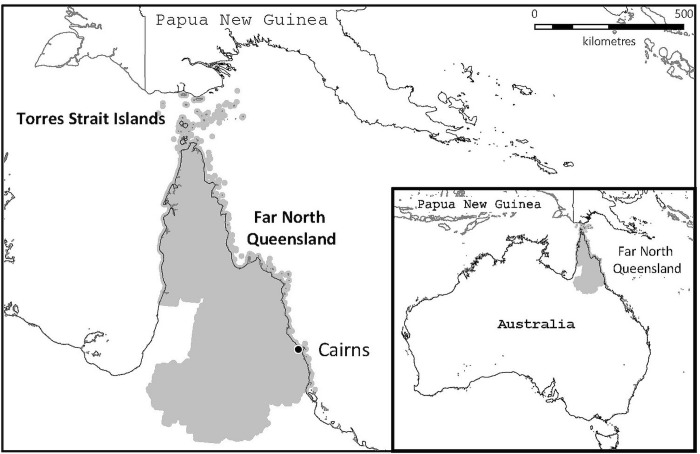
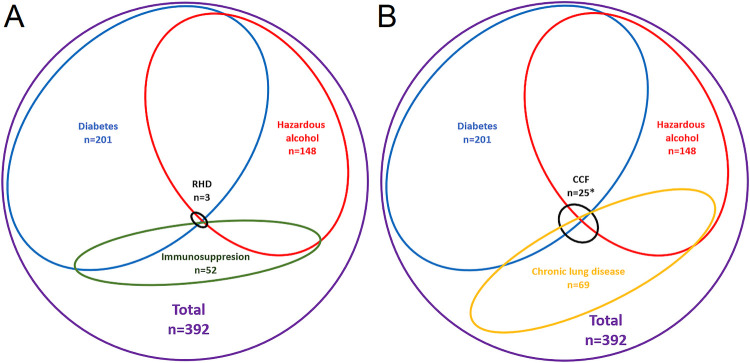
Between January 1998 and December 2021 there were 392 cases of melioidosis in Far North Queensland, tropical Australia; 200/392 (51.0%) identified as an Indigenous Australian, and 337/392 (86.0%) had a confirmed predisposing comorbidity that increased risk for the infection. Overall, 46/392 (11.7%) died before hospital discharge; the case fatality rate declining during the study period (p for trend = 0.001). There were only 3/392 (0.8%) with confirmed RHD, all of whom had at least one other risk factor for melioidosis; all 3 survived to hospital discharge. Among the 200 Indigenous Australians in the cohort, 2 had confirmed RHD; not statistically greater than the prevalence of RHD in the local general Indigenous population (1.0% versus 1.2%, p = 1.0). RHD was present in only 1/193 (0.5%) cases of melioidosis diagnosed after October 2016, a period which coincided with prospective data collection. There were 26/392 (6.6%) with confirmed CCF, but all 26 had another traditional risk factor for melioidosis. Patients with CCF were more likely to also have chronic lung disease (OR (95% CI: 4.46 (1.93-10.31), p<0.001) and chronic kidney disease (odds ratio (OR) (95% confidence interval (CI): 2.98 (1.22-7.29), p = 0.01) than those who did not have CCF. Two patients with melioidosis and CCF died before hospital discharge; both were elderly (aged 81 and 91 years) and had significant comorbidity.
In this region of tropical Australia RHD and CCF do not appear to be independent risk factors for melioidosis and have limited prognostic utility.
患有风湿性心脏病(RHD)和充血性心力衰竭(CCF)的患者被认为感染类鼻疽的风险增加,并且更有可能死于该感染。本研究旨在证实这一发现,该研究在一个三种疾病发病率均较高的地区进行。
1998 年 1 月至 2021 年 12 月,澳大利亚热带地区远北昆士兰州有 392 例类鼻疽病例;200/392(51.0%)确定为澳大利亚原住民,337/392(86.0%)有明确的易患合并症,增加了感染风险。总体而言,46/392(11.7%)在出院前死亡;研究期间病死率呈下降趋势(趋势检验 p = 0.001)。仅有 3/392(0.8%)确诊患有 RHD,均至少有一个其他类鼻疽风险因素;3 人均存活至出院。在队列中的 200 名澳大利亚原住民中,有 2 人确诊患有 RHD;这一比例与当地一般原住民人群中 RHD 的患病率(1.0%比 1.2%,p = 1.0)无统计学差异。在 2016 年 10 月以后诊断的 193 例类鼻疽病例中,仅 1 例(0.5%)确诊患有 RHD,这一时期与前瞻性数据收集相吻合。有 26/392(6.6%)确诊患有 CCF,但所有 26 例均有其他传统的类鼻疽风险因素。患有 CCF 的患者更有可能同时患有慢性肺部疾病(比值比(OR)(95%置信区间(CI):4.46(1.93-10.31),p<0.001)和慢性肾脏疾病(优势比(OR)(95%CI):2.98(1.22-7.29),p = 0.01),而没有 CCF 的患者。有 2 例患有类鼻疽和 CCF 的患者在出院前死亡;两人均为老年人(81 岁和 91 岁),且合并症严重。
在澳大利亚热带地区,RHD 和 CCF 似乎不是类鼻疽的独立危险因素,对预后的预测价值有限。