Department of General-, Visceral-, Transplant-, Vascular- and Pediatric Surgery, Center of Operative Medicine (ZOM), University Hospital of Wuerzburg, Würzburg, Germany.
Institute of Medical Teaching and Medical Education Research, University Hospital of Wuerzburg, Würzburg, Germany.
Surg Endosc. 2022 Dec;36(12):8726-8736. doi: 10.1007/s00464-022-09408-2. Epub 2022 Jul 18.
Simulator training is an effective way of acquiring laparoscopic skills but there remains a need to optimize teaching methods to accelerate learning. We evaluated the effect of the mental exercise 'deconstruction into key steps' (DIKS) on the time required to acquire laparoscopic skills.
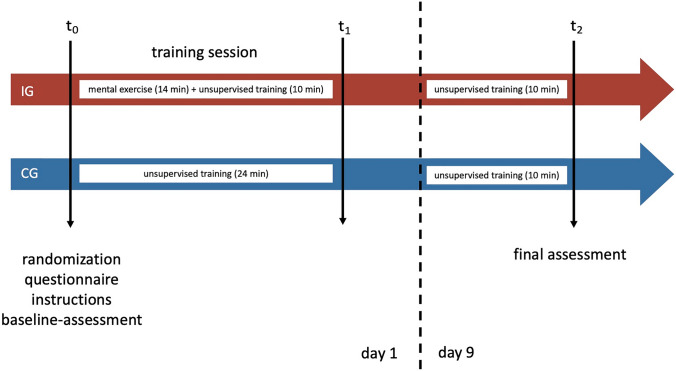
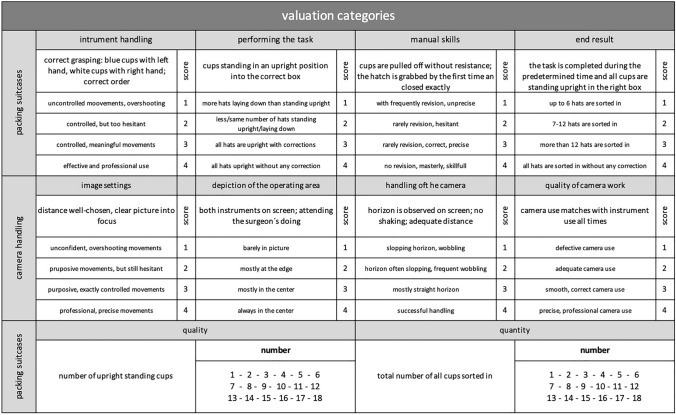
A randomized controlled trial with undergraduate medical students was implemented into a structured curricular laparoscopic training course. The intervention group (IG) was trained using the DIKS approach, while the control group (CG) underwent the standard course. Laparoscopic performance of all participants was video-recorded at baseline (t), after the first session (t) and after the second session (t) nine days later. Two double-blinded raters assessed the videos. The Impact of potential covariates on performance (gender, age, prior laparoscopic experience, self-assessed motivation and self-assessed dexterity) was evaluated with a self-report questionnaire.
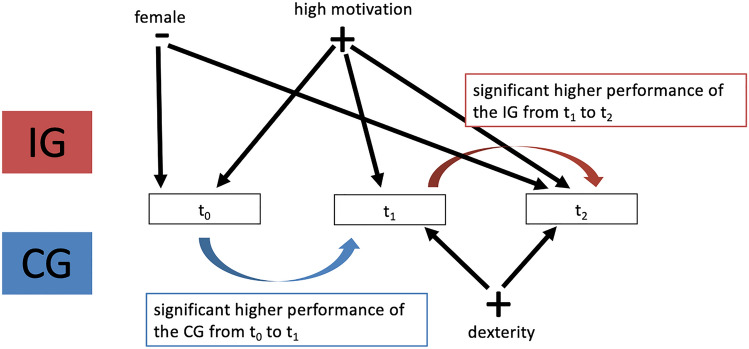
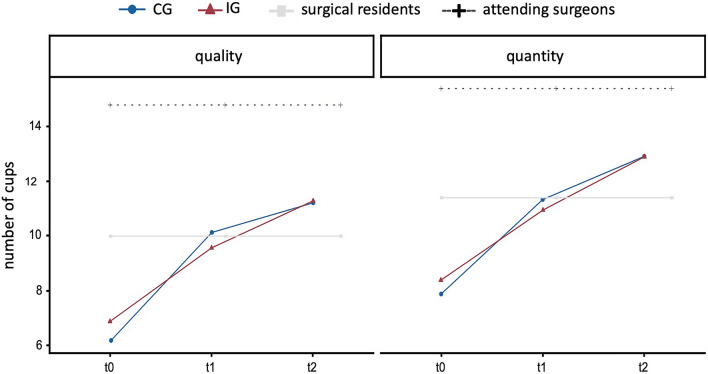
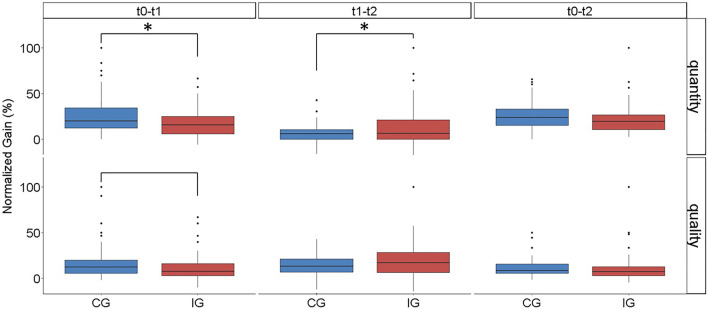
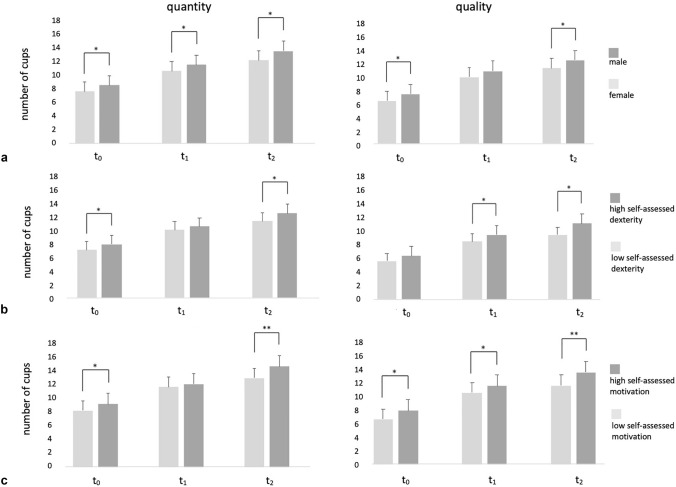
Both the IG (n = 58) and the CG (n = 68) improved their performance after each training session (p < 0.001) but with notable differences between sessions. Whereas the CG significantly improved their performance from t-t (p < 0.05), DIKS shortened practical exercise time by 58% so that the IG outperformed the CG from t-t, (p < 0.05). High self-assessed motivation and dexterity associated with significantly better performance (p < 0.05). Male participants demonstrated significantly higher overall performance (p < 0.05).
Mental exercises like DIKS can improve laparoscopic performance and shorten practice times. Given the limited exposure of surgical residents to simulator training, implementation of mental exercises like DIKS is highly recommended. Gender, self-assessed dexterity, and motivation all appreciably influence performance in laparoscopic training.
模拟器培训是获得腹腔镜技能的有效方法,但仍需要优化教学方法以加速学习。我们评估了“分解为关键步骤”(DIKS)心理练习对获得腹腔镜技能所需时间的影响。
在一项结构腹腔镜培训课程中实施了一项本科生医学专业的随机对照试验。干预组(IG)采用 DIKS 方法进行培训,而对照组(CG)则采用标准课程。所有参与者的腹腔镜表现均在基线(t)、第一次课程后(t)和 9 天后的第二次课程后(t)进行视频记录。两名双盲评分员对视频进行评估。通过自我报告问卷评估潜在协变量(性别、年龄、以前的腹腔镜经验、自我评估的动机和自我评估的灵巧性)对表现的影响。
IG(n=58)和 CG(n=68)在每次培训课程后都提高了他们的表现(p<0.001),但课程之间存在显著差异。CG 从 t-t 显著提高了他们的表现(p<0.05),而 DIKS 将实际练习时间缩短了 58%,使得 IG 从 t-t 开始优于 CG(p<0.05)。高自我评估的动机和灵巧性与表现显著相关(p<0.05)。男性参与者表现出显著更高的整体表现(p<0.05)。
像 DIKS 这样的心理练习可以提高腹腔镜表现并缩短练习时间。鉴于外科住院医师对模拟器培训的接触有限,强烈建议实施像 DIKS 这样的心理练习。性别、自我评估的灵巧性和动机都对腹腔镜训练中的表现产生明显影响。