Xiao Quan, Zhao Zhe, Teng Yun, Wu Lungang, Wang Jinlong, Xu Hongjun, Chen Sumei, Zhou Quan
Trauma Center, The Affiliated Lianshui County People's Hospital of Kangda College of Nanjing Medical University, Huai'an, Jiangsu Province 223400, China.
Department of Orthopaedics, The Affiliated Huai'an Hospital of Xuzhou Medical University, Huai'an, Jiangsu Province 223002, China.
Stem Cells Int. 2022 Jul 9;2022:9896444. doi: 10.1155/2022/9896444. eCollection 2022.
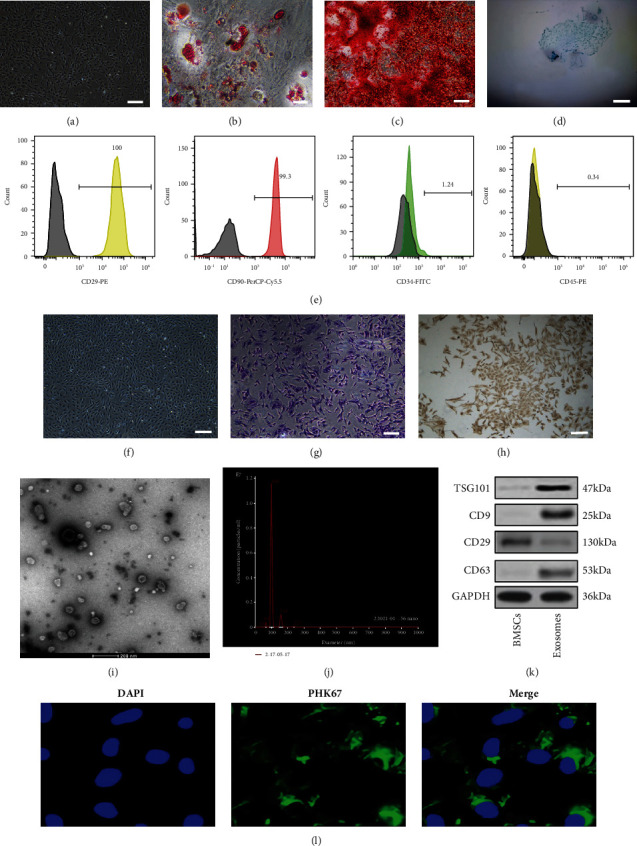
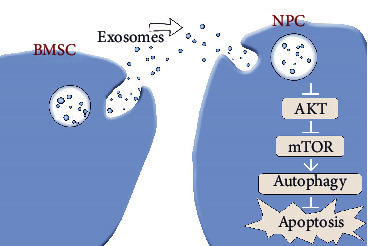
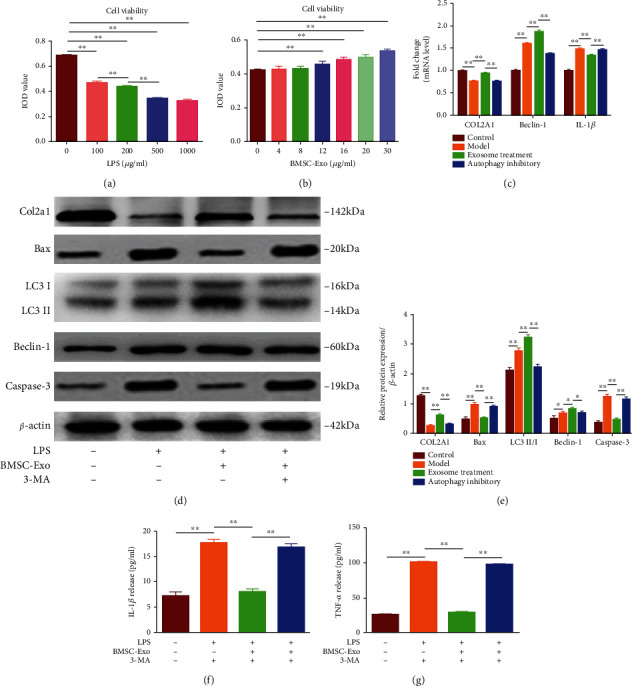
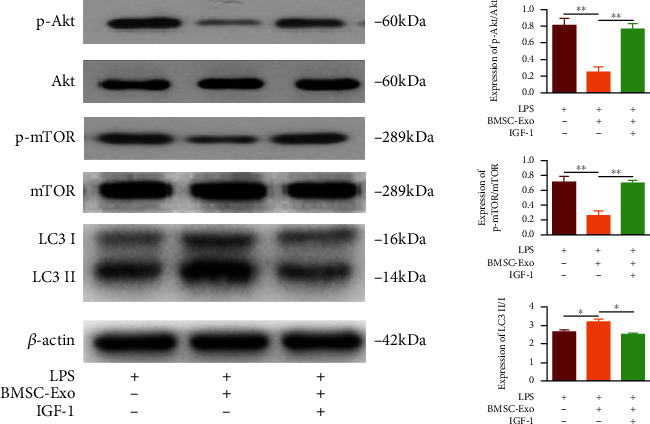
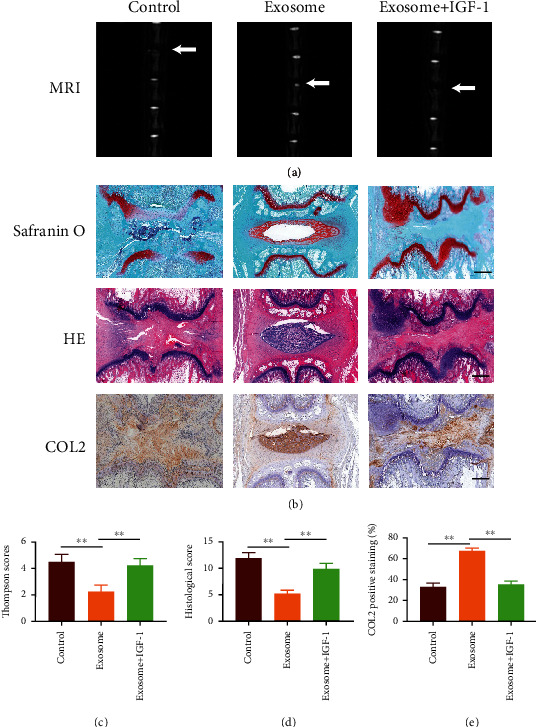
The pathogenesis of intervertebral disc degeneration (IDD) is still unclear. It has been shown that the pathological process of IDD is most closely related to inflammation of nucleus pulposus cells (NPCs), in which inflammatory factors play an important role. Exosomes are the main paracrine mediators and are microvesicles with biological functions similar to those of the cells from which they are derived. Studies have shown that bone mesenchymal stem cells (BMSCs) can inhibit apoptosis of NPCs by sending exosomes as anti-inflammatory and antioxidant, which has been proved to be effective on IDD. However, the specific mechanism of inhibiting apoptosis of NPCs is still unclear. In our study, BMSC-derived exosomes (BMSC-Exo) were isolated from the BMSC culture medium, and their antiapoptotic effects were evaluated in cells and rat models to explore the possible mechanisms. We observed that BMSC-Exo promotes autophagy in NPCs and inhibits the release of inflammatory factors such as IL-1 and TNF- in LPS-treated NPCs and inhibits apoptosis in NPCs. Further studies showed that BMSC-Exo inhibited the Akt-mTOR pathway. Intramuscular injection of BMSC-Exo alleviates disc degeneration in rat IDD models. In conclusion, our results suggest that BMSC-Exo can reduce NPC apoptosis and alleviate IDD by promoting autophagy by inhibiting the Akt-mTOR pathway. Our study confers a promising therapeutic strategy for IDD.
椎间盘退变(IDD)的发病机制仍不清楚。已有研究表明,IDD的病理过程与髓核细胞(NPCs)炎症密切相关,其中炎症因子起着重要作用。外泌体是主要的旁分泌介质,是具有与其来源细胞相似生物学功能的微囊泡。研究表明,骨髓间充质干细胞(BMSCs)可通过发送具有抗炎和抗氧化作用的外泌体来抑制NPCs的凋亡,这已被证明对IDD有效。然而,抑制NPCs凋亡的具体机制仍不清楚。在我们的研究中,从BMSC培养基中分离出BMSC来源的外泌体(BMSC-Exo),并在细胞和大鼠模型中评估其抗凋亡作用,以探索可能的机制。我们观察到BMSC-Exo促进NPCs的自噬,并抑制脂多糖处理的NPCs中白细胞介素-1和肿瘤坏死因子等炎症因子的释放,同时抑制NPCs的凋亡。进一步研究表明,BMSC-Exo抑制Akt-mTOR信号通路。肌肉注射BMSC-Exo可减轻大鼠IDD模型中的椎间盘退变。总之,我们的结果表明,BMSC-Exo可通过抑制Akt-mTOR信号通路促进自噬,从而减少NPCs凋亡并减轻IDD。我们的研究为IDD提供了一种有前景的治疗策略。