Postgraduate Program in Cardiac Electrophysiology and Pacing, Heart Rhythm Management Centre, European Reference Networks Guard-Heart Universitair Ziekenhuis Brussel, Vrije Universiteit Brussel Brussels Belgium.
Institute of Cardiology Università Cattolica del Sacro Cuore Rome Italy.
J Am Heart Assoc. 2022 Aug 2;11(15):e026290. doi: 10.1161/JAHA.122.026290. Epub 2022 Jul 20.
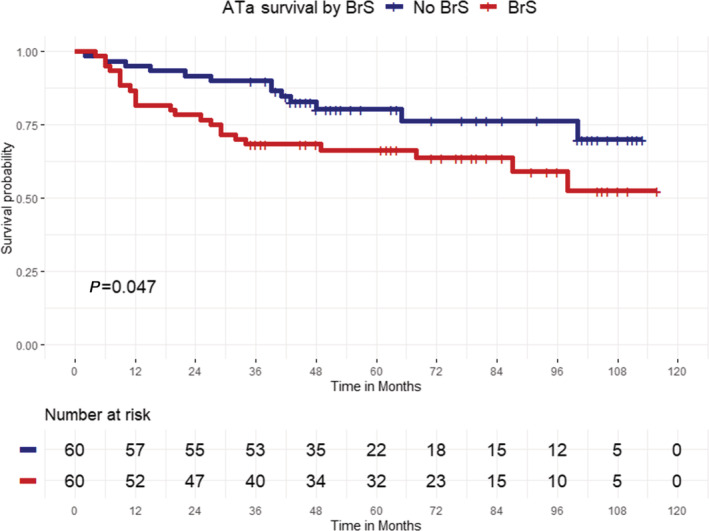
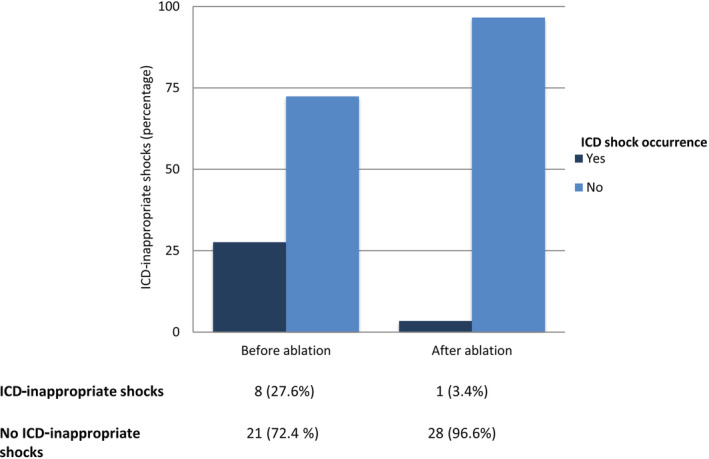
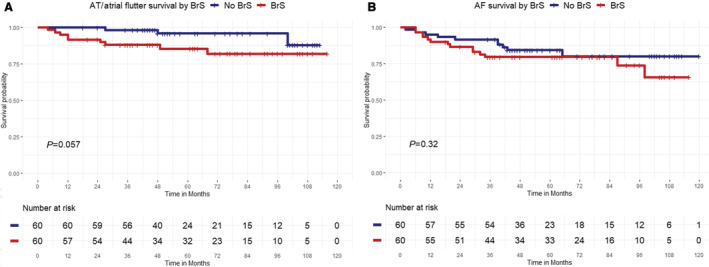
Background Pharmacological treatment of atrial fibrillation (AF) in the setting of Brugada syndrome (BrS) is challenging. In addition, patients with BrS with an implantable cardioverter-defibrillator (ICD) might experience inappropriate shocks for fast AF. Long-term outcome of pulmonary vein isolation in BrS has not been well established yet, and it is still unclear whether pulmonary vein triggers are the only pathophysiological mechanism of AF in BrS. The aim of the study is to assess the long-term outcomes in patients with BrS undergoing pulmonary vein isolation for paroxysmal AF compared with a matched cohort of patients without BrS. Methods and Results Sixty patients with BrS undergoing pulmonary vein isolation with cryoballoon catheter ablation for paroxysmal AF were matched with 60 patients without BrS, who underwent the same procedure. After a mean follow-up of 58.2±31.7 months, freedom from atrial tachyarrhythmias was achieved in 61.7% in the BrS group and in 78.3% in the non-BrS group (log-rank =0.047). In particular, freedom from AF was 76.7% in the first group and in 83.3% in the second (=0.27), while freedom from atrial tachycardia/atrial flutter was 85% and 95% (=0.057). In the BrS group, 29 patients (48.3%) had an ICD and 8 (27.6%) had a previous ICD-inappropriate shock for fast AF. In the BrS cohort, ICD-inappropriate interventions for AF were significantly reduced after ablation (3.4% versus 27.6%; =0.01). Conclusions Pulmonary vein isolation in patients with BrS was associated with higher rate of arrhythmic recurrence. Despite this, catheter ablation significantly reduced inappropriate ICD interventions in BrS patients and can be considered a therapeutic strategy to prevent inappropriate device therapies.
在 Brugada 综合征(BrS)患者中,心房颤动(AF)的药物治疗具有挑战性。此外,植入式心脏复律除颤器(ICD)的 BrS 患者可能会因快速 AF 而经历不适当的电击。BrS 患者行肺静脉隔离术的长期预后尚未得到充分证实,并且尚不清楚肺静脉触发是否是 BrS 中 AF 的唯一病理生理机制。本研究旨在评估与无 BrS 患者相匹配的 BrS 患者行阵发性 AF 肺静脉隔离术的长期结果。
60 例 BrS 患者行冷冻球囊导管消融术治疗阵发性 AF 行肺静脉隔离术,并与 60 例无 BrS 患者进行了相同的手术。平均随访 58.2±31.7 个月后,BrS 组有 61.7%的患者无房性快速心律失常,无 BrS 组有 78.3%的患者无房性快速心律失常(log-rank =0.047)。特别是,BrS 组有 76.7%的患者无 AF,而无 BrS 组有 83.3%的患者无 AF(=0.27),而 BrS 组有 85%的患者无房性心动过速/房扑,无 BrS 组有 95%的患者无房性心动过速/房扑(=0.057)。在 BrS 组中,29 例患者(48.3%)有 ICD,8 例患者(27.6%)有 ICD 因快速 AF 而不适当电击。在 BrS 组中,消融后 AF 导致的 ICD 不适当干预明显减少(3.4%比 27.6%;=0.01)。
BrS 患者行肺静脉隔离术与更高的心律失常复发率相关。尽管如此,导管消融术显著降低了 BrS 患者 ICD 不适当干预的发生率,可作为预防不适当器械治疗的治疗策略。