Marchionni Ivan, Pilati Nadia, Forli Angelo, Sessolo Michele, Tottene Angelita, Pietrobon Daniela
Department of Biomedical Sciences, University of Padova, Padova 35131, Italy.
Autifony Srl, Istituto di Ricerca Pediatrica Citta' della Speranza, Padova 35127, Italy.
J Neurosci. 2022 Aug 24;42(34):6654-6666. doi: 10.1523/JNEUROSCI.0228-22.2022.
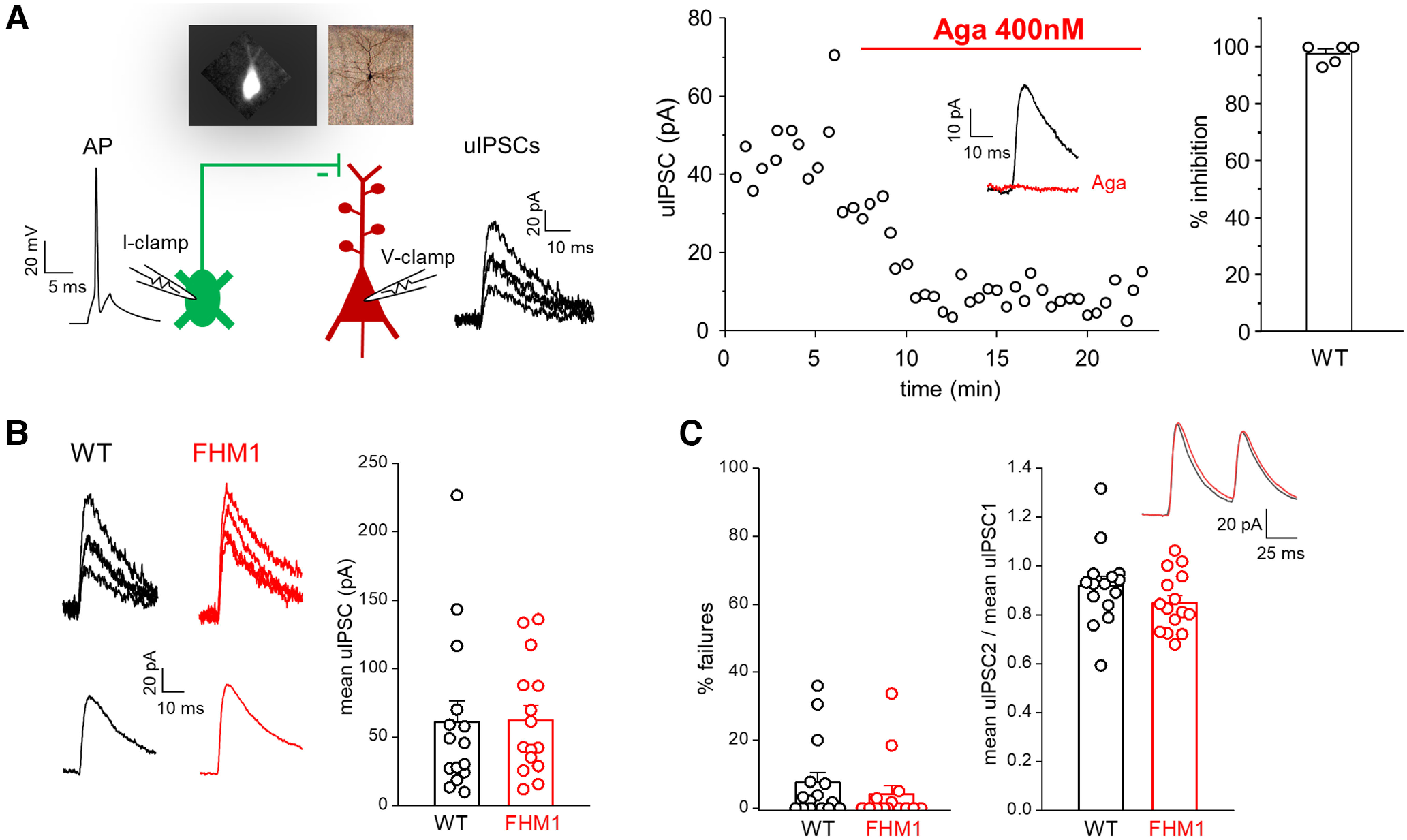
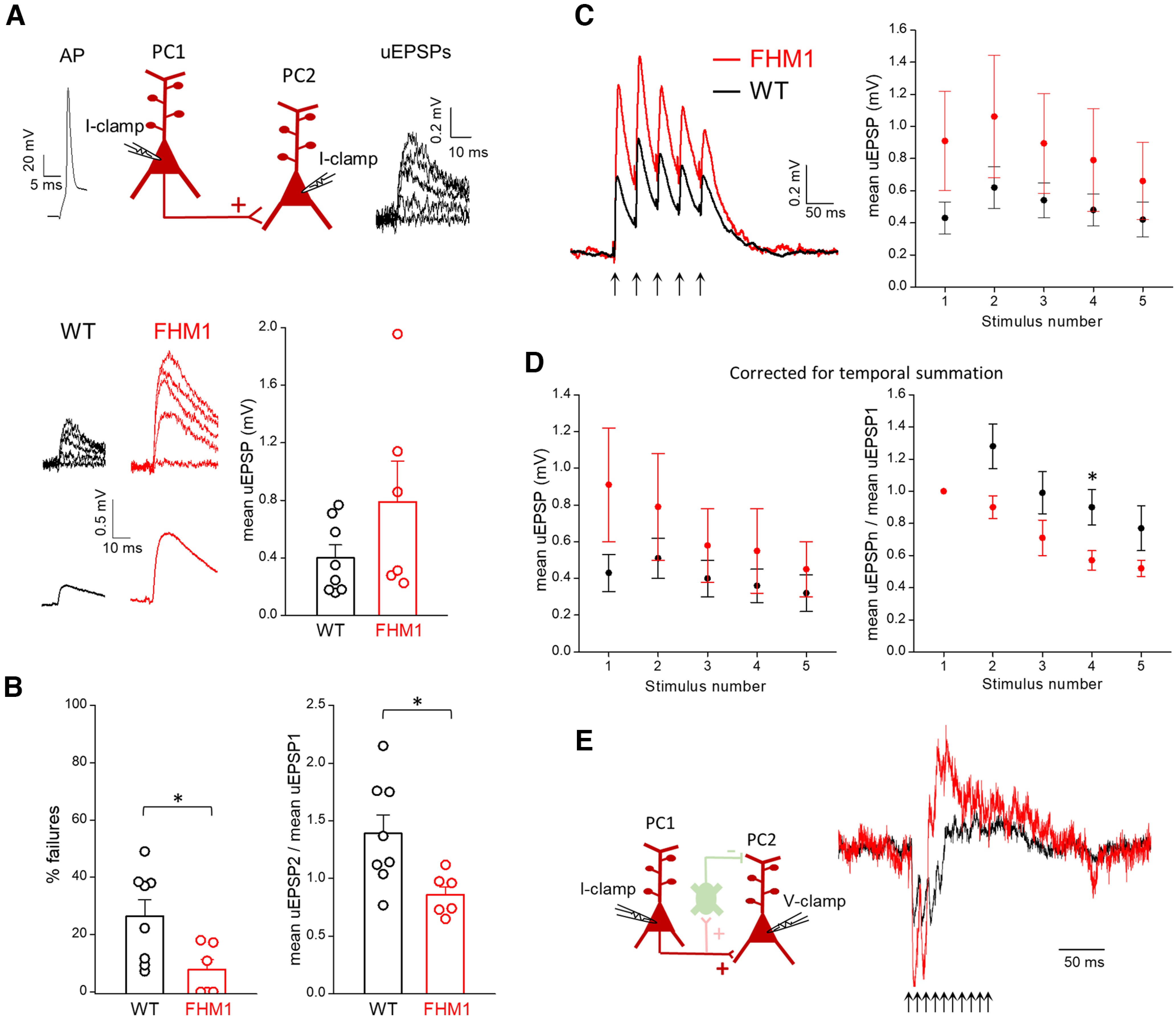
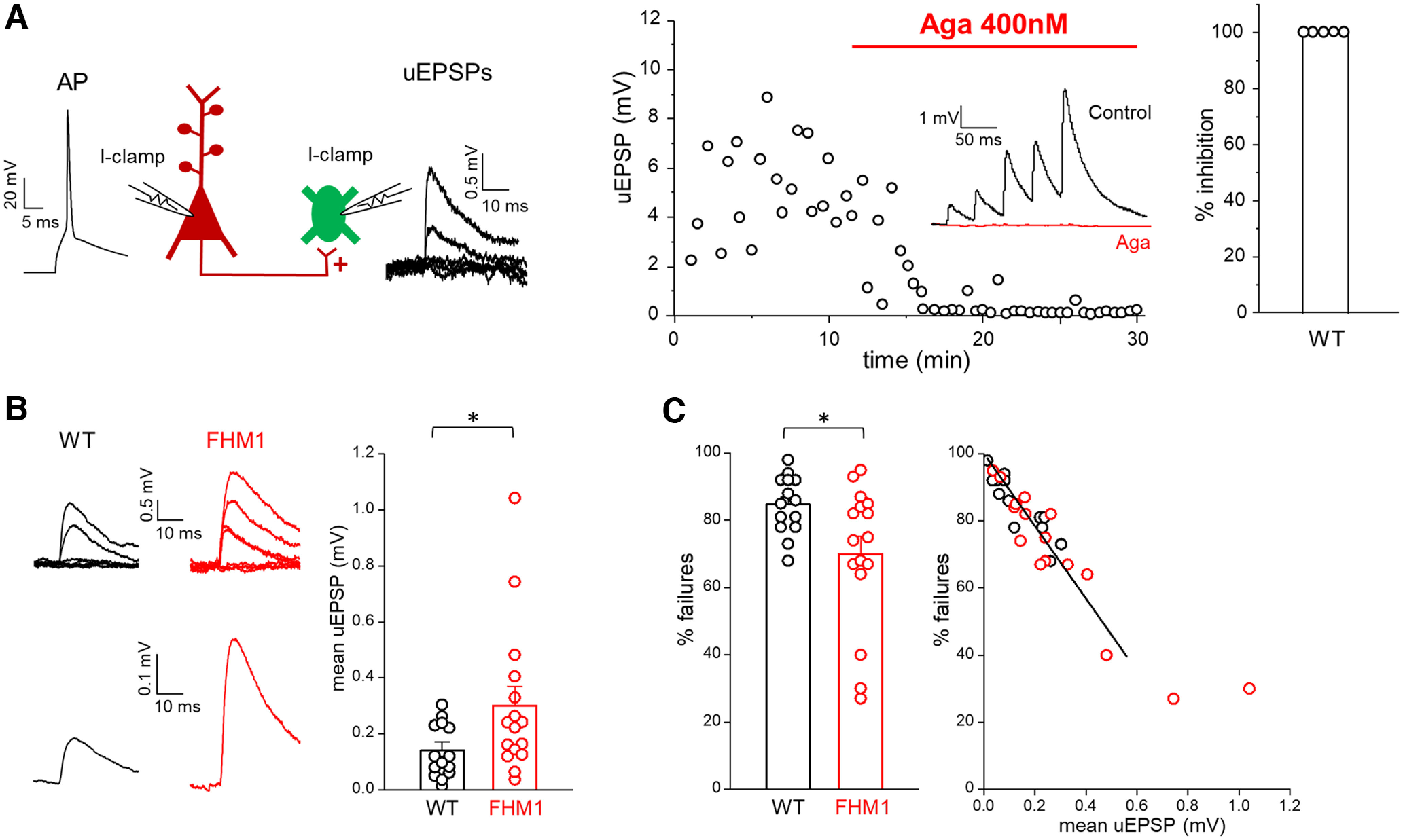
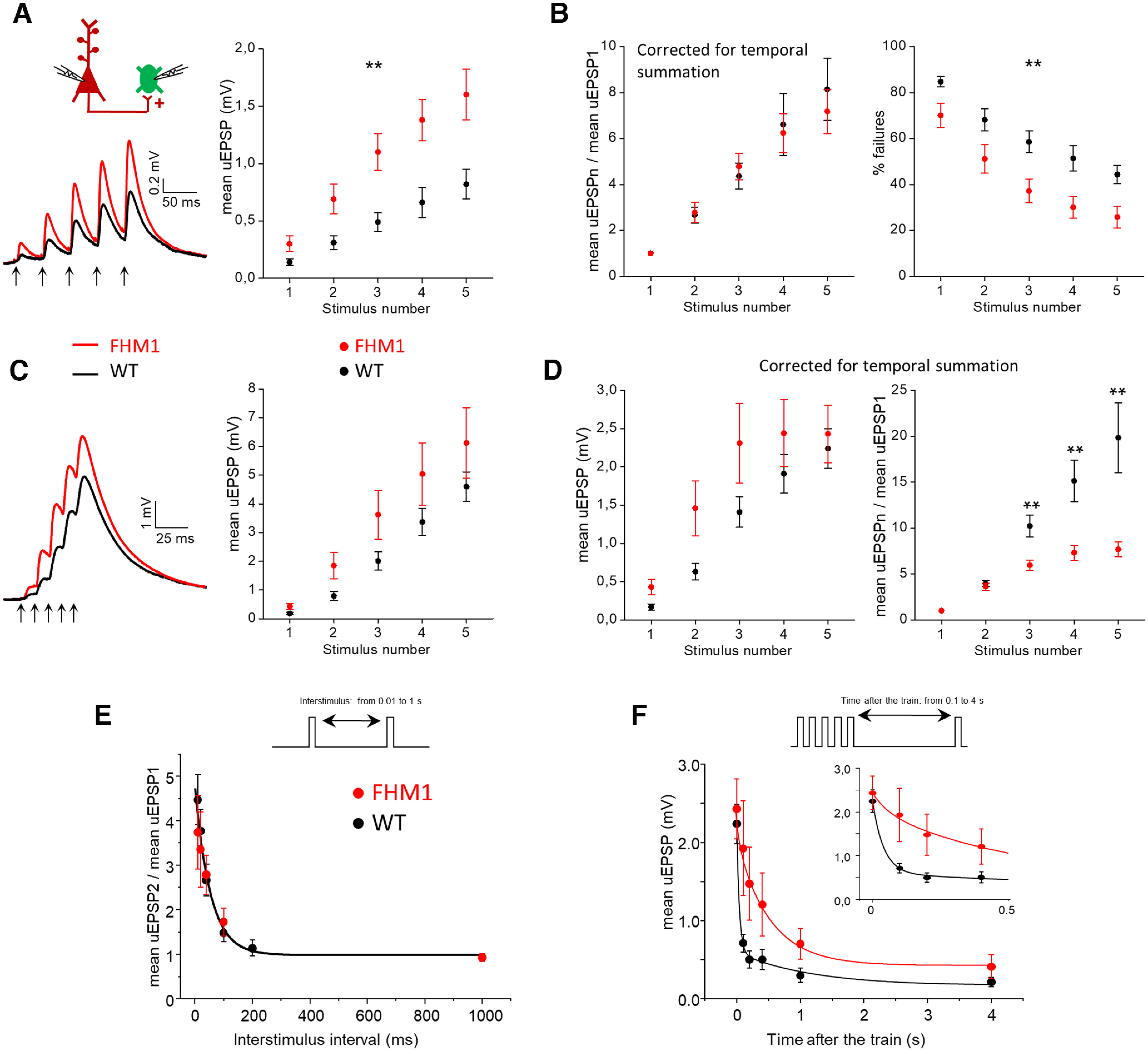
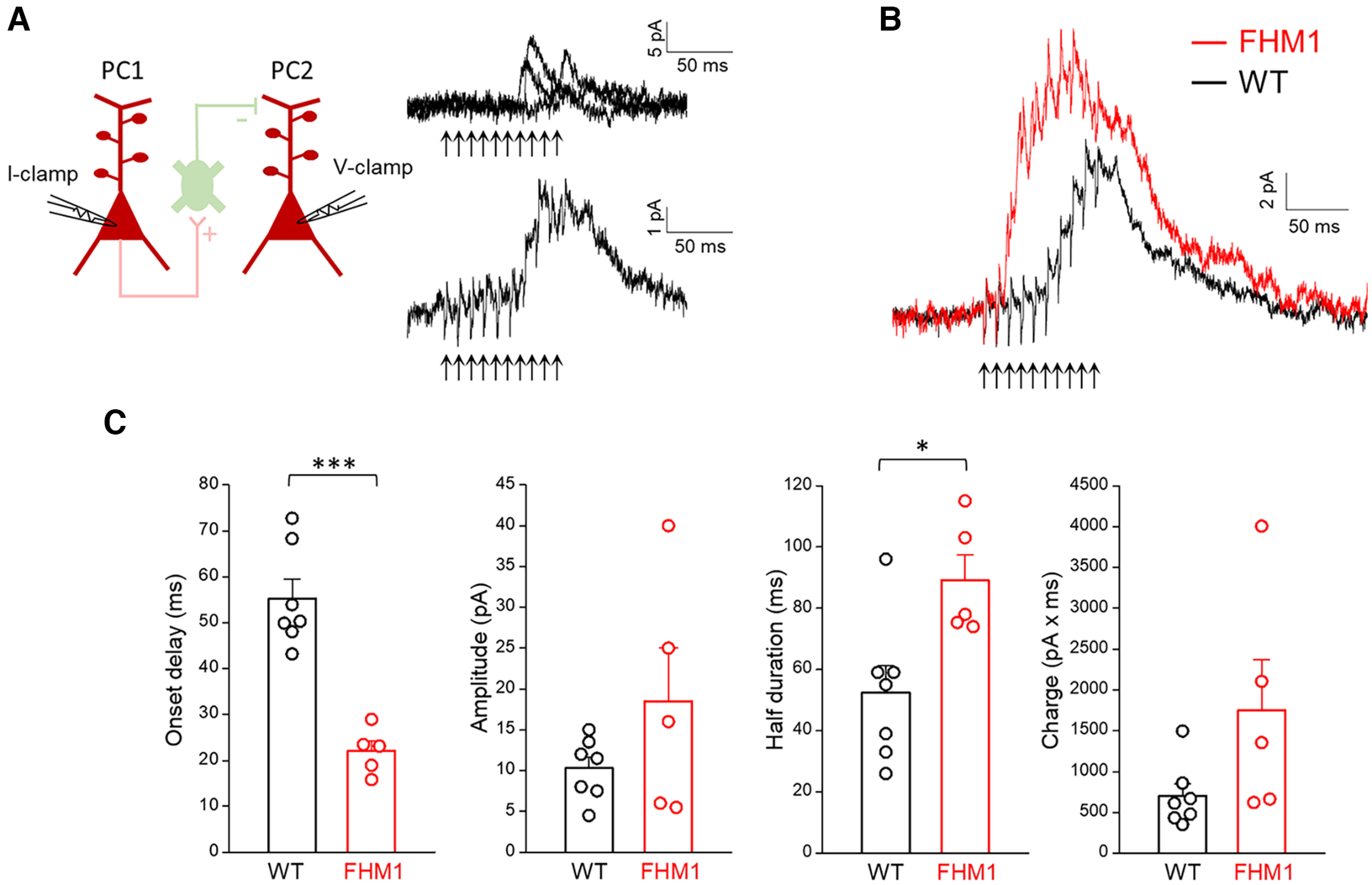
Migraine is a complex brain disorder, characterized by attacks of unilateral headache and global dysfunction in multisensory information processing, whose underlying cellular and circuit mechanisms remain unknown. The finding of enhanced excitatory, but unaltered inhibitory, neurotransmission at cortical synapses between pyramidal cells (PCs) and fast-spiking interneurons (FS INs) in mouse models of familial hemiplegic migraine (FHM) suggested the hypothesis that dysregulation of the excitatory-inhibitory (E/I) balance in specific circuits is a key pathogenic mechanism. Here, we investigated the cortical layer 2/3 (L2/3) feedback inhibition microcircuit involving somatostatin-expressing (SOM) INs in FHM1 mice of both sexes carrying a gain-of-function mutation in Ca2.1. Unitary inhibitory neurotransmission at SOM IN-PC synapses was unaltered while excitatory neurotransmission at both PC-SOM IN and PC-PC synapses was enhanced, because of increased probability of glutamate release, in FHM1 mice. Short-term synaptic depression was enhanced at PC-PC synapses while short-term synaptic facilitation was unaltered at PC-SOM IN synapses during 25-Hz repetitive activity. The frequency-dependent disynaptic inhibition (FDDI) mediated by SOM INs was enhanced, lasted longer and required shorter high-frequency bursts to be initiated in FHM1 mice. These findings, together with previous evidence of enhanced disynaptic feedforward inhibition by FS INs, suggest that the increased inhibition may effectively counteract the increased recurrent excitation in FHM1 mice and may even prevail in certain conditions. Considering the involvement of SOM INs in γ oscillations, surround suppression and context-dependent sensory perception, the facilitated recruitment of SOM INs, together with the enhanced recurrent excitation, may contribute to dysfunctional sensory processing in FHM1 and possibly migraine. Migraine is a complex brain disorder, characterized by attacks of unilateral headache and global dysfunction in multisensory information processing, whose underlying cellular and circuit mechanisms remain unknown, although dysregulation of the excitatory-inhibitory (E/I) balance in specific circuits could be a key pathogenic mechanism. Here, we provide insights into these mechanisms by investigating the cortical feedback inhibition microcircuit involving somatostatin-expressing interneurons (SOM INs) in a mouse model of a rare monogenic migraine. Despite unaltered inhibitory synaptic transmission, the disynaptic feedback inhibition mediated by SOM INs was enhanced in the migraine model because of enhanced recruitment of the INs. Recurrent cortical excitation was also enhanced. These alterations may contribute to context-dependent sensory processing dysfunctions in migraine.
偏头痛是一种复杂的脑部疾病,其特征为单侧头痛发作以及多感官信息处理的整体功能障碍,但其潜在的细胞和神经回路机制仍不清楚。在家族性偏瘫性偏头痛(FHM)小鼠模型中,发现锥体细胞(PCs)与快发放中间神经元(FS INs)之间的皮质突触处兴奋性神经传递增强,但抑制性神经传递未改变,这提示了特定神经回路中兴奋性-抑制性(E/I)平衡失调是关键致病机制的假说。在此,我们研究了携带Ca2.1功能获得性突变的两性FHM1小鼠中涉及表达生长抑素(SOM)的中间神经元的皮质第2/3层(L2/3)反馈抑制微回路。在FHM1小鼠中,SOM中间神经元与PC突触处的单突触抑制性神经传递未改变,而PC与SOM中间神经元以及PC与PC突触处的兴奋性神经传递均增强,这是由于谷氨酸释放概率增加所致。在25赫兹重复活动期间,PC与PC突触处的短期突触抑制增强,而PC与SOM中间神经元突触处的短期突触易化未改变。由SOM中间神经元介导的频率依赖性双突触抑制(FDDI)在FHM1小鼠中增强、持续时间更长且启动所需的高频爆发更短。这些发现,连同先前关于FS中间神经元增强双突触前馈抑制的证据,表明增加的抑制可能有效抵消FHM1小鼠中增加的反复性兴奋,甚至在某些情况下可能占主导。考虑到SOM中间神经元参与γ振荡、周围抑制和依赖上下文的感觉感知,SOM中间神经元的易化募集,连同增强的反复性兴奋,可能导致FHM1中功能失调的感觉处理,并可能与偏头痛有关。偏头痛是一种复杂的脑部疾病,其特征为单侧头痛发作以及多感官信息处理的整体功能障碍,尽管特定神经回路中兴奋性-抑制性(E/I)平衡失调可能是关键致病机制,但其潜在的细胞和神经回路机制仍不清楚。在此,我们通过研究一种罕见单基因偏头痛小鼠模型中涉及表达生长抑素的中间神经元(SOM中间神经元)的皮质反馈抑制微回路,深入了解了这些机制。尽管抑制性突触传递未改变,但在偏头痛模型中,由SOM中间神经元介导的双突触反馈抑制因中间神经元的募集增强而增强。皮质反复性兴奋也增强。这些改变可能导致偏头痛中依赖上下文的感觉处理功能障碍。