Jin Xinmin, Wang Jinhuan
Department of Clinical Medical, Qingdao University Medical College, Qingdao China.
Department of Pharmacy, The Affiliated Hospital of Qingdao University, Qingdao China.
Front Surg. 2022 Jul 5;9:905897. doi: 10.3389/fsurg.2022.905897. eCollection 2022.
Although accumulating literature has validated that necroptosis plays a prominent role in the tumorigenesis and progression of various malignant cancer, its mechanism in hepatocellular carcinoma (HCC) is poorly understood. Therefore, in the present study, we want to study the impact of necroptosis-related genes on the prognosis and microenvironment-infiltrating immunocytes and the effect of immunotherapy on patients with HCC.
The necroptosis-related genes were obtained by reviewing the available published literature; we then evaluated the effects of the prognostic genes on the relative abundance of microenvironment infiltrated immunocytes. After construction of the Risk Score Signature, we evaluated the prognostic value and the effects on immune cells infiltrating the tumor microenvironment (TME). Combining the available data on immunotherapy, we also investigated the impact on anti-PD-L1-based immunotherapy.
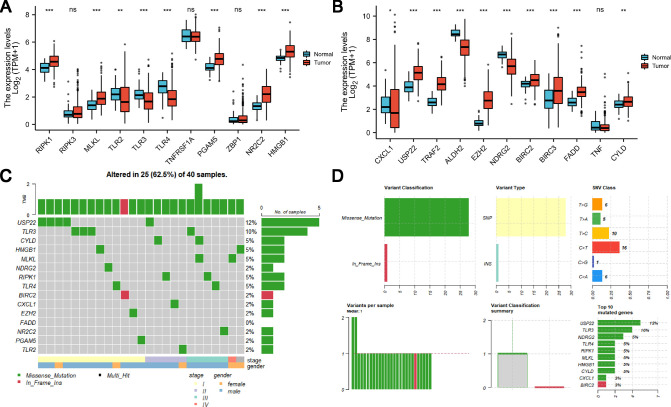
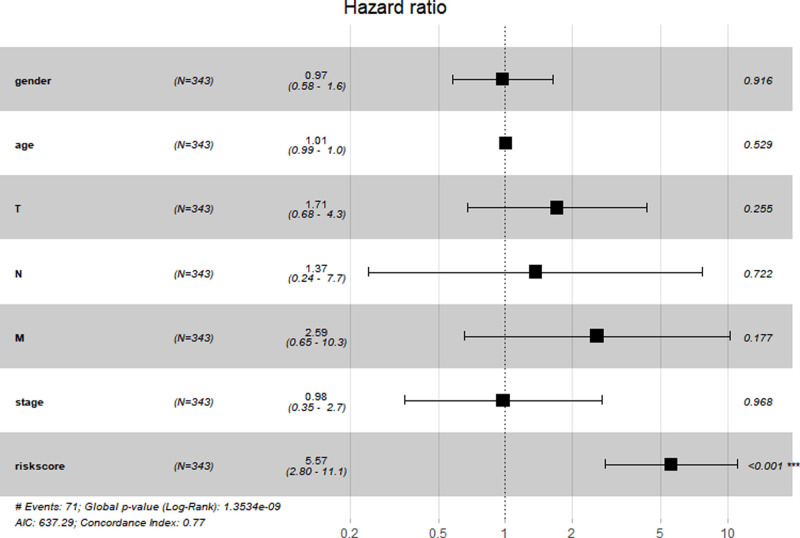
A comprehensive study of the published literature confirmed that 22 genes are related to necroptosis. Among them, 10 genes were related to the prognosis of the HCC cohort in The Cancer Genome Atlas (TCGA) and had a multifaceted influence on TME. We obtained the Risk Score Signature by Lasso regression. Furthermore, we also corroborated the correlation between the Risk Score Signature and tumor-infiltrating immune cells in the TME. Next, in the study of the correlation between the Signature and immunotherapy, we found that the Signature was significantly correlated with the reactivity of anti-PD-L1 immunotherapy. We also confirmed that the Risk Score Signature is a reliable and efficient independent prognostic marker of HCC.
We established a novel and effective prognostic model for patients with HCC, which is markedly related to the TME and immune infiltration in HCC and can also predict immunotherapeutic response and prognosis.
尽管越来越多的文献证实坏死性凋亡在各种恶性肿瘤的发生和发展中起重要作用,但其在肝细胞癌(HCC)中的机制尚不清楚。因此,在本研究中,我们旨在研究坏死性凋亡相关基因对预后及微环境浸润免疫细胞的影响,以及免疫治疗对HCC患者的作用。
通过查阅已发表的文献获取坏死性凋亡相关基因;然后评估这些预后基因对微环境浸润免疫细胞相对丰度的影响。构建风险评分特征后,我们评估其预后价值以及对肿瘤微环境(TME)中免疫细胞浸润的影响。结合现有的免疫治疗数据,我们还研究了其对基于抗PD-L1免疫治疗的影响。
对已发表文献的综合研究证实,22个基因与坏死性凋亡相关。其中,10个基因与癌症基因组图谱(TCGA)中HCC队列的预后相关,并对TME有多方面影响。我们通过套索回归获得了风险评分特征。此外,我们还证实了风险评分特征与TME中肿瘤浸润免疫细胞之间的相关性。接下来,在研究该特征与免疫治疗的相关性时,我们发现该特征与抗PD-L1免疫治疗的反应性显著相关。我们还证实,风险评分特征是HCC可靠且有效的独立预后标志物。
我们为HCC患者建立了一种新型有效的预后模型,该模型与HCC中的TME和免疫浸润显著相关,还可预测免疫治疗反应和预后。