Hanley K G, McFadden J P, Mitchell D L, Fowler C M, Stone S W, Yelle R V, Mayyasi M, Ergun R E, Andersson L, Benna M, Elrod M K, Jakosky B M
Space Sciences Laboratory University of California Berkeley Berkeley CA USA.
Department of Physics and Astronomy West Virginia University Morgantown WV USA.
J Geophys Res Space Phys. 2021 Dec;126(12):e2021JA029531. doi: 10.1029/2021JA029531. Epub 2021 Dec 12.
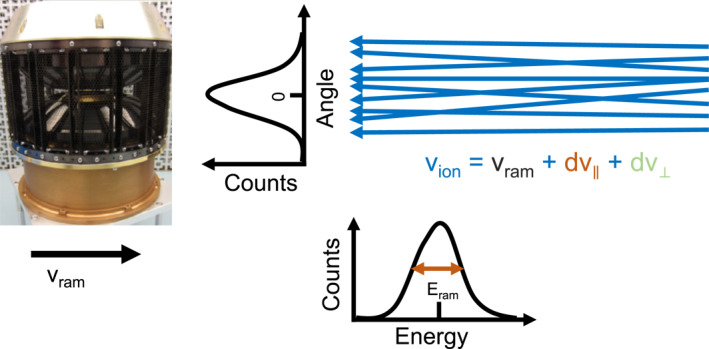
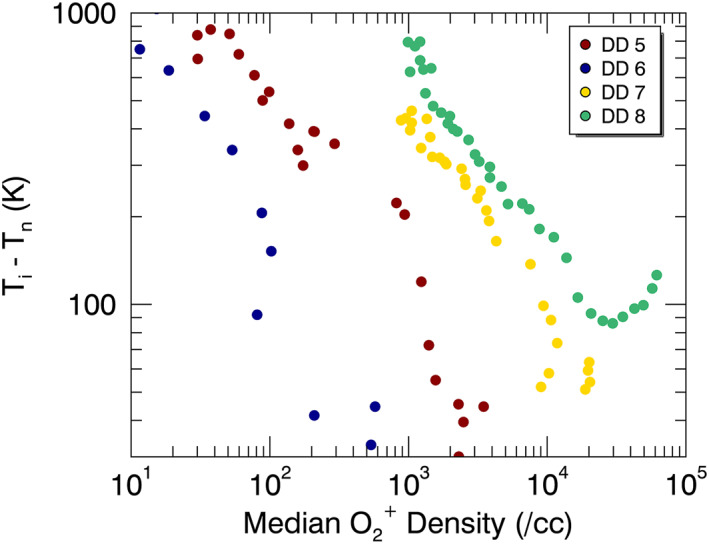
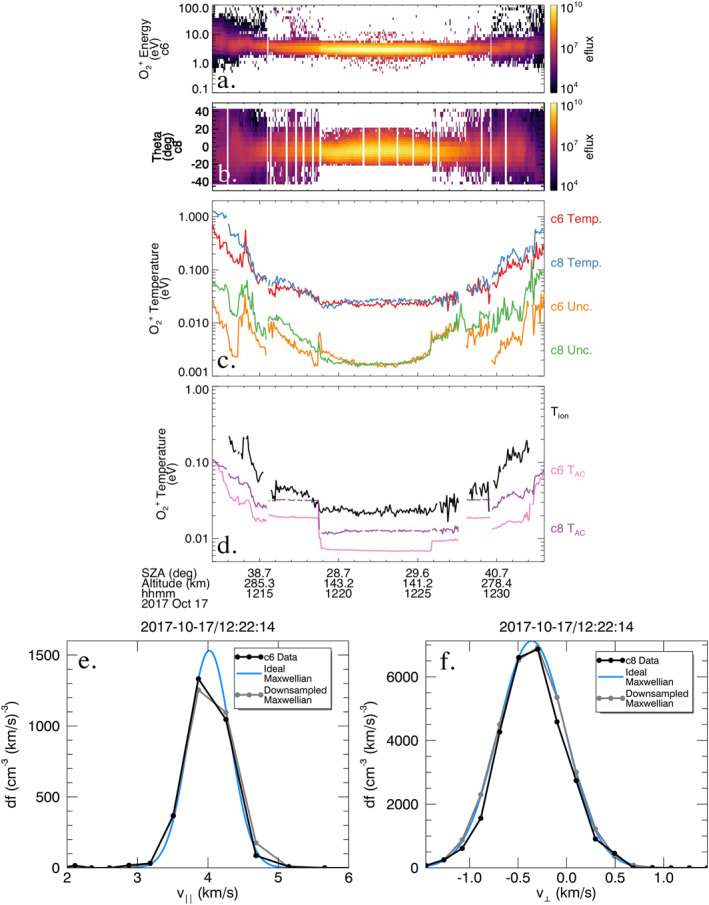
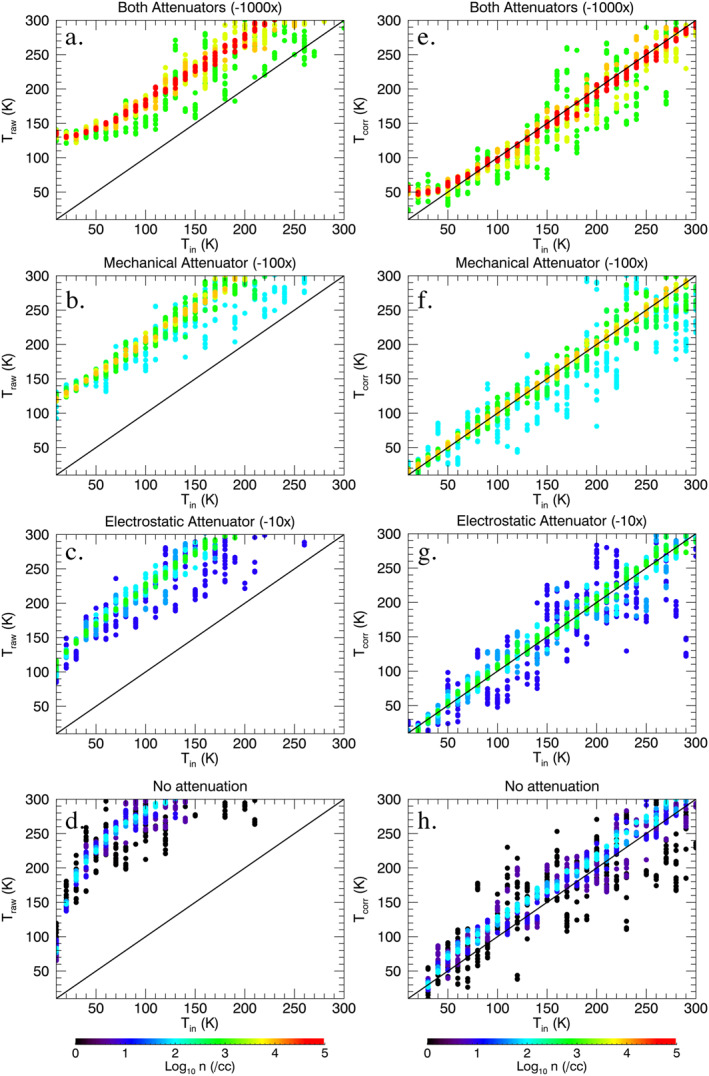
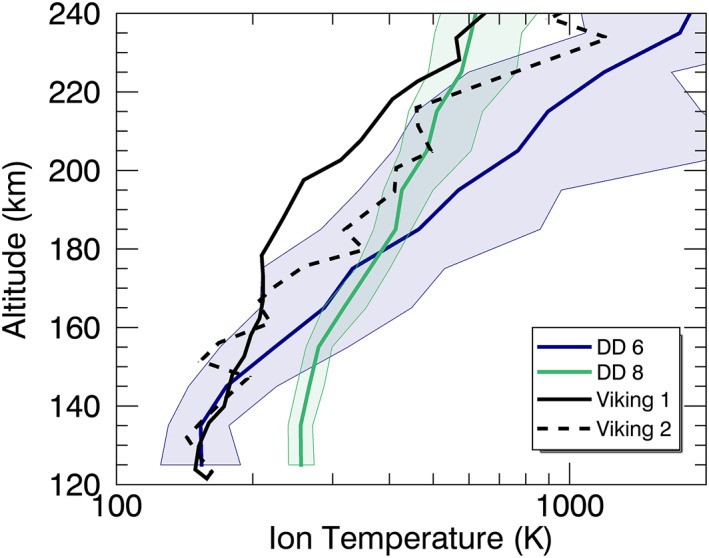
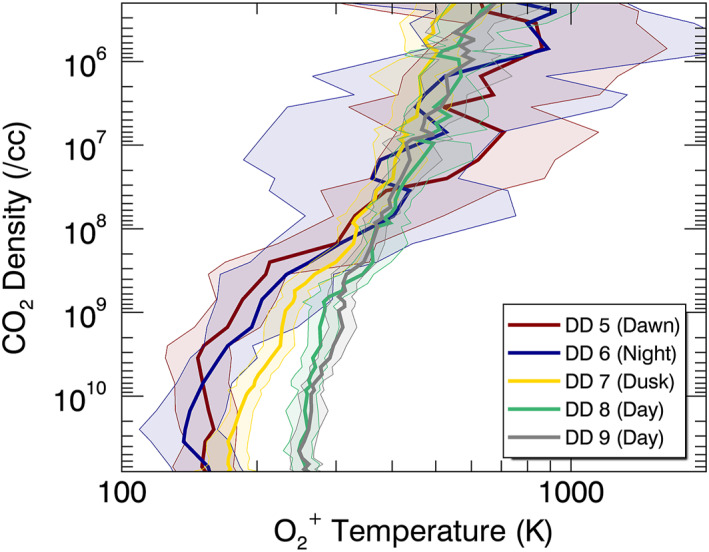
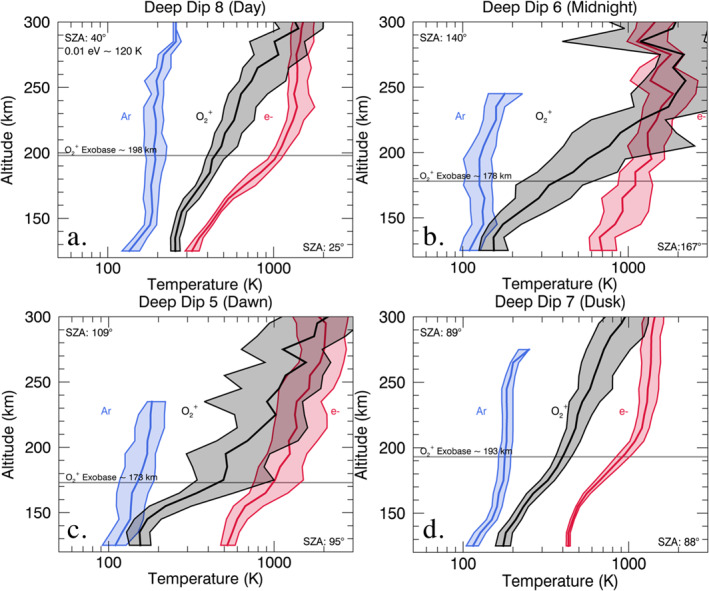
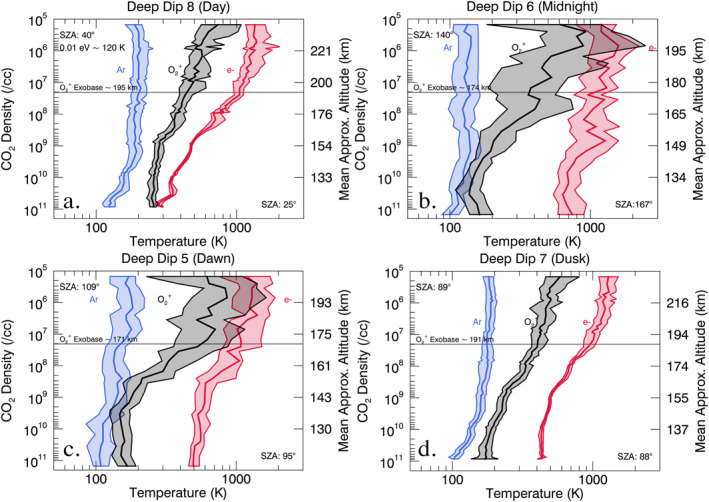
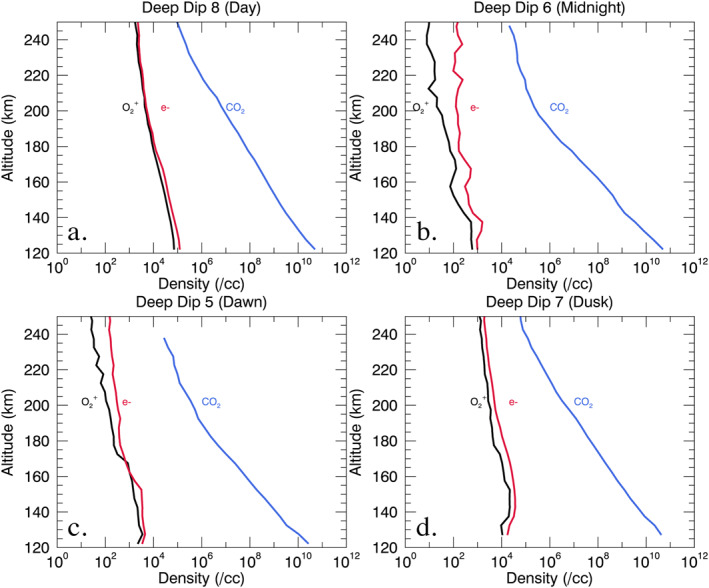
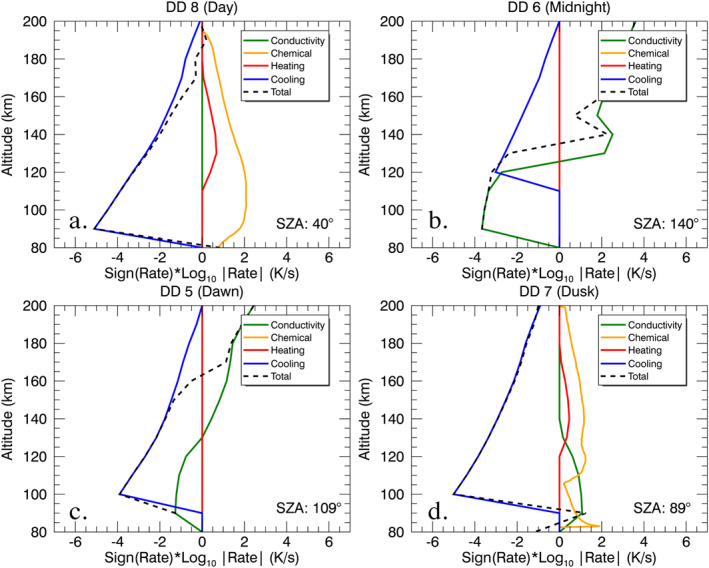
In situ measurements of ionospheric and thermospheric temperatures are experimentally challenging because orbiting spacecraft typically travel supersonically with respect to the cold gas and plasma. We present temperatures in Mars' ionosphere derived from data measured by the SupraThermal And Thermal Ion Composition instrument onboard the Mars Atmosphere and Volatile EvolutioN spacecraft. We focus on data obtained during nine special orbit maneuvers known as Deep Dips, during which MAVEN lowered its periapsis altitude from the nominal 150 to 120 km for 1 week in order to sample the ionospheric main peak and approach the homopause. We use two independent techniques to calculate ion temperatures from the measured energy and angular widths of the supersonic ram ion beam. After correcting for background and instrument response, we are able to measure ion temperatures as low as 100 K with associated uncertainties as low as 10%. It is theoretically expected that ion temperatures will converge to the neutral temperature at altitudes below the exobase region (∼180-200 km) due to strong collisional coupling; however, no evidence of the expected thermalization is observed. We have eliminated several possible explanations for the observed temperature difference between ions and neutrals, including Coulomb collisions with electrons, Joule heating, and heating caused by interactions with the spacecraft. The source of the energy maintaining the high ion temperatures remains unclear, suggesting that a fundamental piece of physics is missing from existing models of the Martian ionosphere.
对电离层和热层温度进行原位测量在实验上具有挑战性,因为轨道航天器相对于冷气体和等离子体通常以超音速飞行。我们展示了由火星大气与挥发物演化探测器上的超热和热离子成分仪器测量的数据得出的火星电离层温度。我们重点关注在九次被称为“深度俯冲”的特殊轨道机动期间获得的数据,在此期间,火星大气与挥发物演化探测器将其近心点高度从标称的150千米降低到120千米,持续1周,以便对电离层主峰进行采样并接近均质层顶。我们使用两种独立技术,根据测量的超音速冲压离子束的能量和角宽度来计算离子温度。在对背景和仪器响应进行校正后,我们能够测量低至100K的离子温度,相关不确定性低至10%。从理论上讲,由于强烈的碰撞耦合,在离地顶区域(约180 - 200千米)以下的高度,离子温度将收敛到中性温度;然而,未观察到预期的热化迹象。我们已经排除了对观测到的离子与中性粒子之间温度差异的几种可能解释,包括与电子的库仑碰撞、焦耳加热以及与航天器相互作用引起的加热。维持高离子温度的能量来源仍不清楚,这表明火星电离层的现有模型中缺少一个基本的物理要素。