• 文献检索
  • 文档翻译
  • 深度研究
  • 学术资讯
  • Suppr Zotero 插件Zotero 插件
  • 邀请有礼
  • 套餐&价格
  • 历史记录
应用&插件
Suppr Zotero 插件Zotero 插件浏览器插件Mac 客户端Windows 客户端微信小程序
定价
高级版会员购买积分包购买API积分包
服务
文献检索文档翻译深度研究API 文档MCP 服务
关于我们
关于 Suppr公司介绍联系我们用户协议隐私条款
关注我们

Suppr 超能文献

核心技术专利:CN118964589B侵权必究
粤ICP备2023148730 号-1Suppr @ 2026

文献检索

告别复杂PubMed语法,用中文像聊天一样搜索,搜遍4000万医学文献。AI智能推荐,让科研检索更轻松。

立即免费搜索

文件翻译

保留排版,准确专业,支持PDF/Word/PPT等文件格式,支持 12+语言互译。

免费翻译文档

深度研究

AI帮你快速写综述,25分钟生成高质量综述,智能提取关键信息,辅助科研写作。

立即免费体验

火星盖尔陨石坑托里登峡谷周期性基岩脊的轨道与原位调查

Orbital and In-Situ Investigation of Periodic Bedrock Ridges in Glen Torridon, Gale Crater, Mars.

作者信息

Stack Kathryn M, Dietrich William E, Lamb Michael P, Sullivan Robert J, Christian John R, Newman Claire E, O'Connell-Cooper Catherine D, Sneed Jonathan W, Day Mackenzie, Baker Mariah, Arvidson Raymond E, Fedo Christopher M, Khan Sabrina, Williams Rebecca M E, Bennett Kristen A, Bryk Alexander B, Cofield Shannon, Edgar Lauren A, Fox Valerie K, Fraeman Abigail A, House Christopher H, Rubin David M, Sun Vivian Z, Van Beek Jason K

机构信息

Jet Propulsion Laboratory California Institute of Technology Pasadena CA USA.

Department of Earth and Planetary Science University of California, Berkeley Berkeley CA USA.

出版信息

J Geophys Res Planets. 2022 Jun;127(6):e2021JE007096. doi: 10.1029/2021JE007096. Epub 2022 May 26.

DOI:10.1029/2021JE007096
PMID:35865672
原文链接:https://pmc.ncbi.nlm.nih.gov/articles/PMC9286800/
Abstract

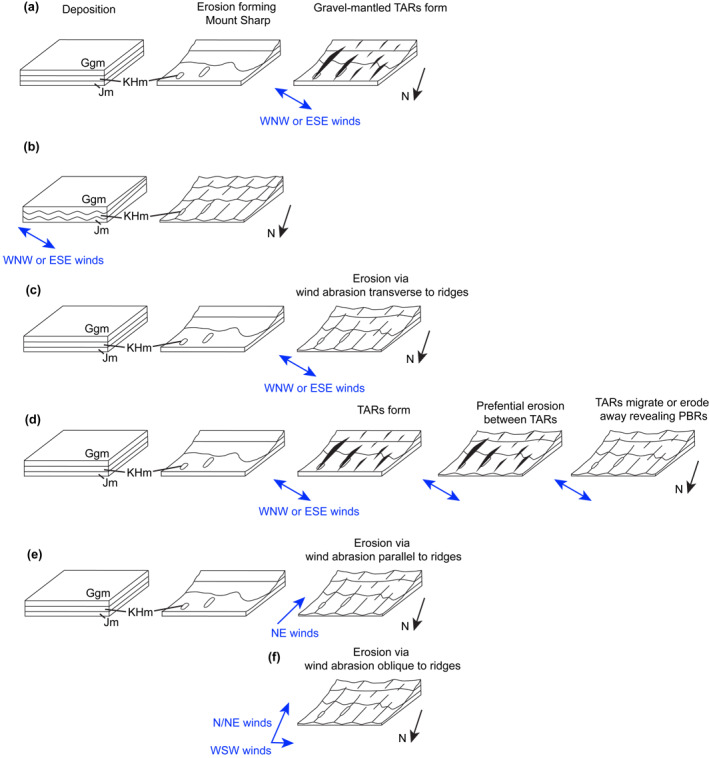
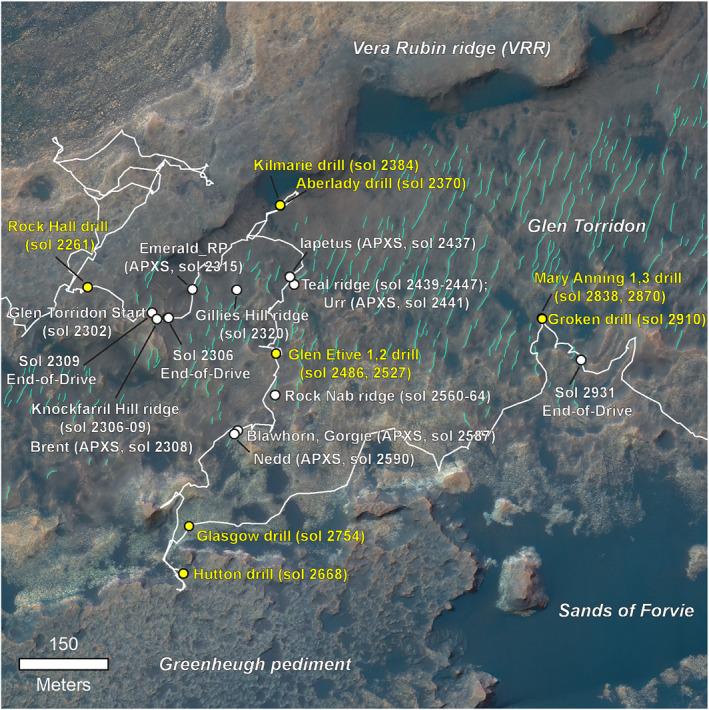
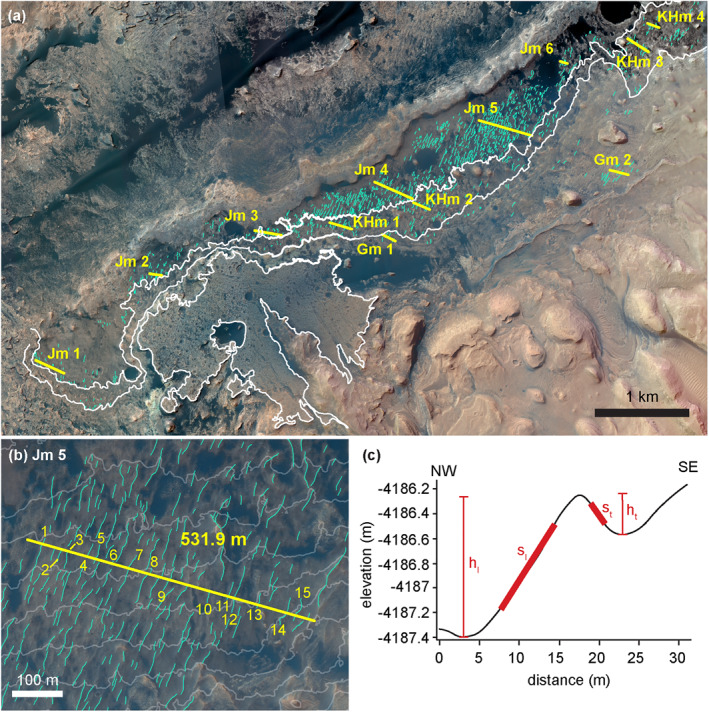
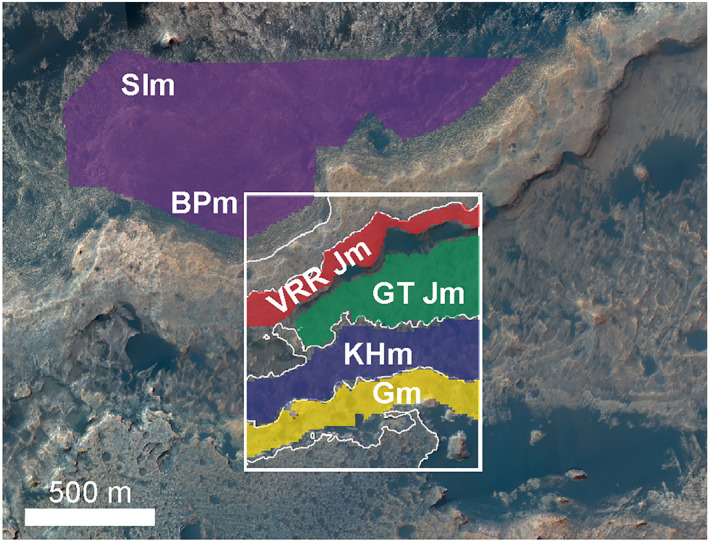
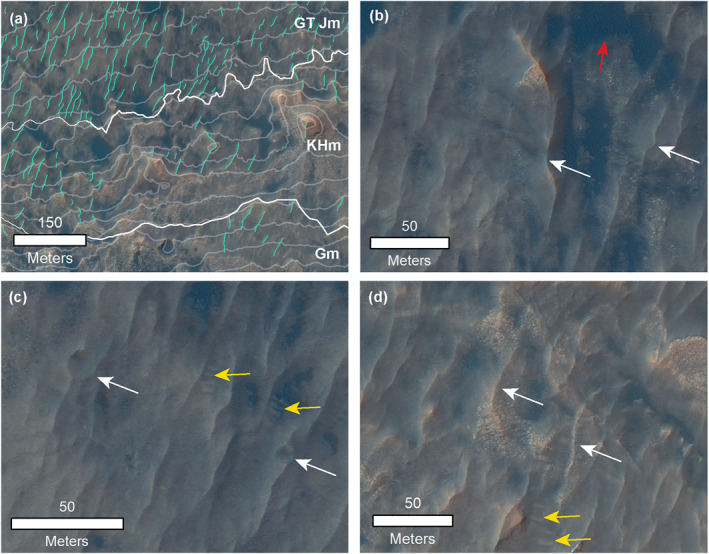
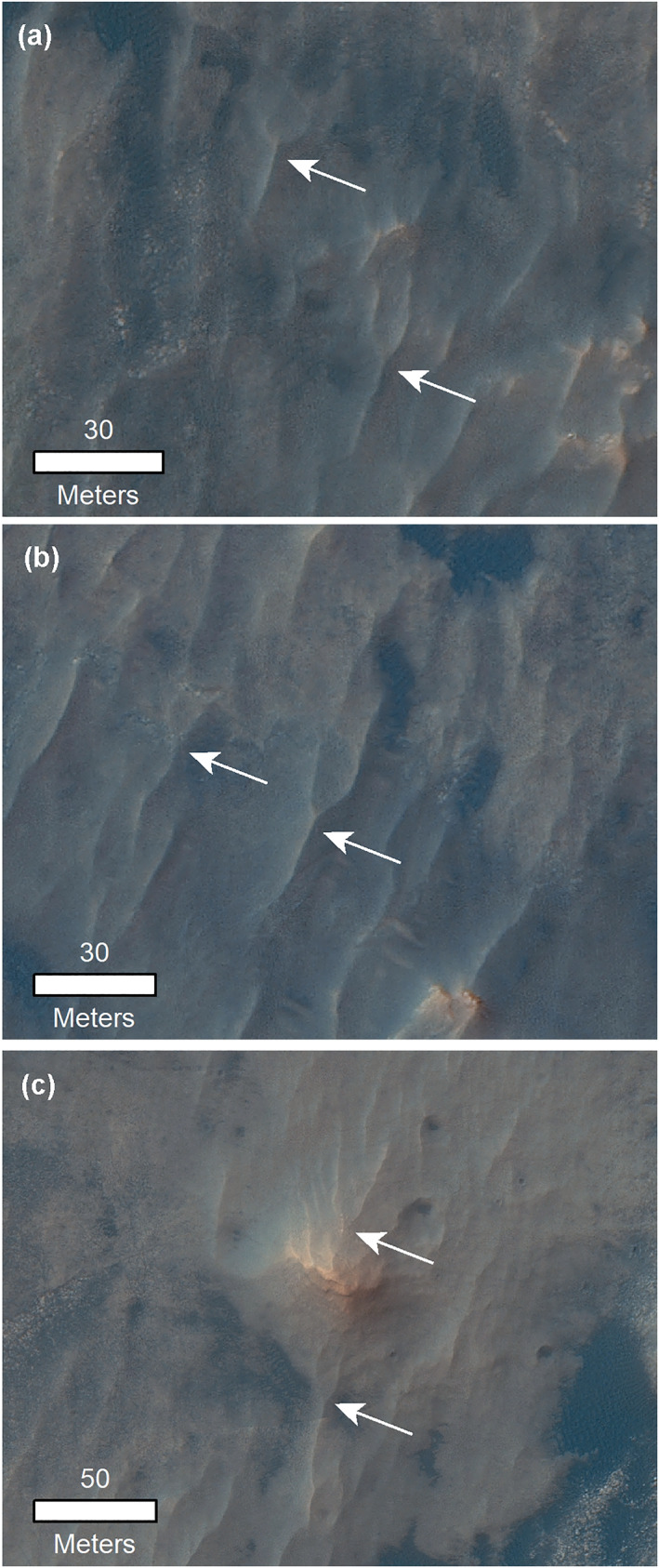
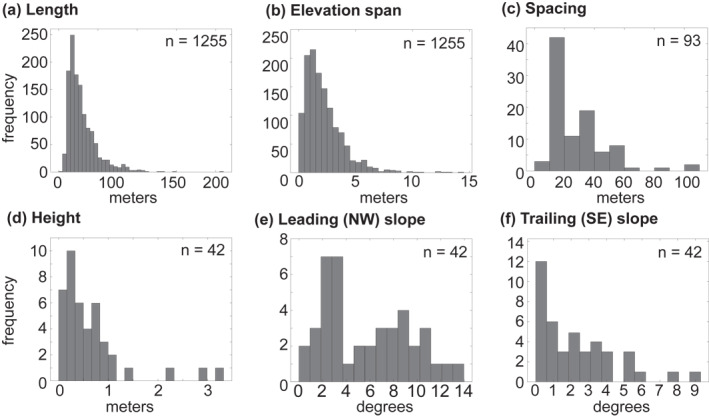
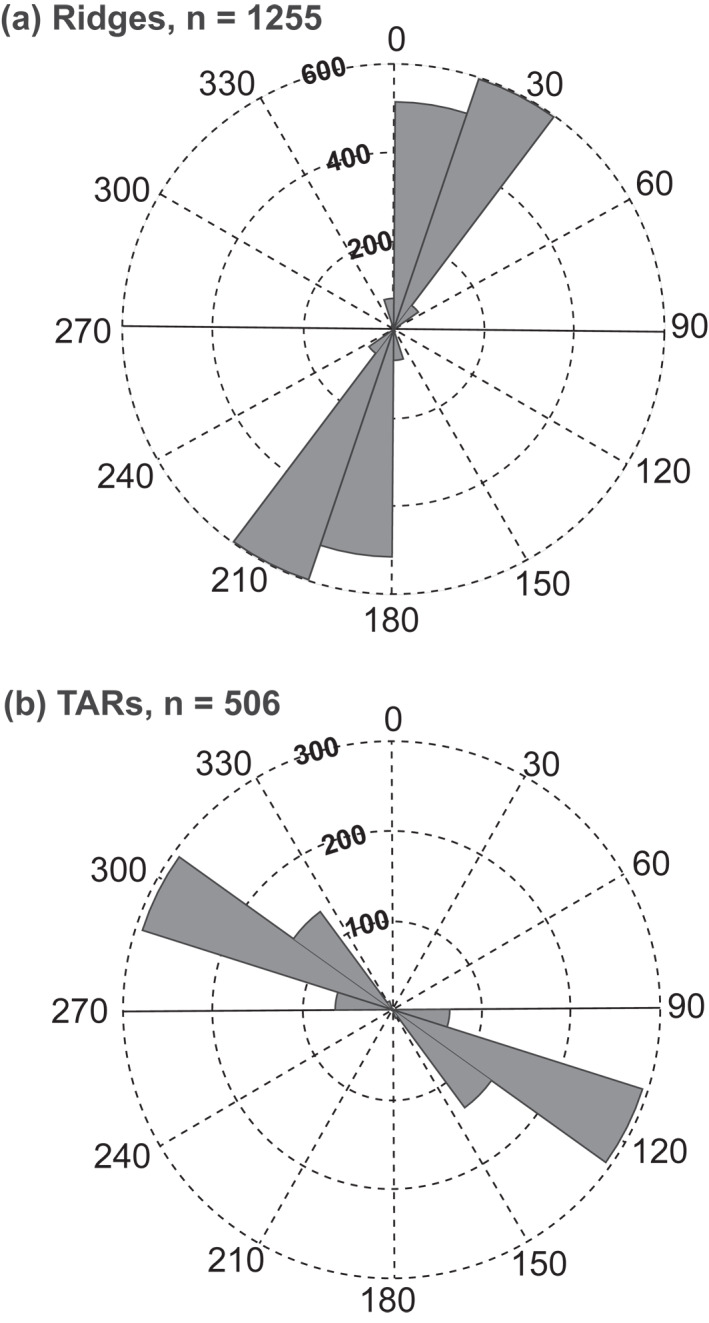
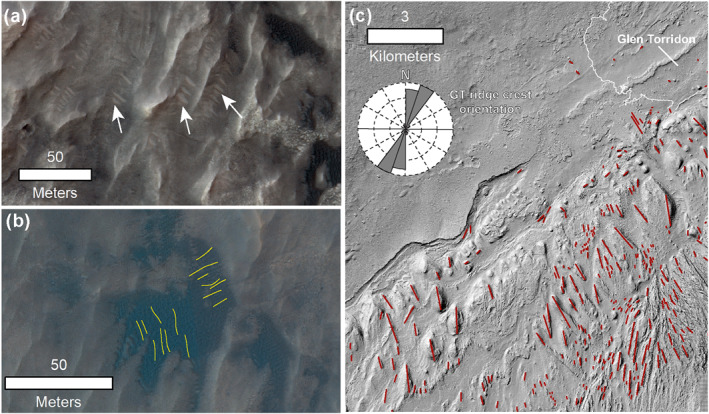
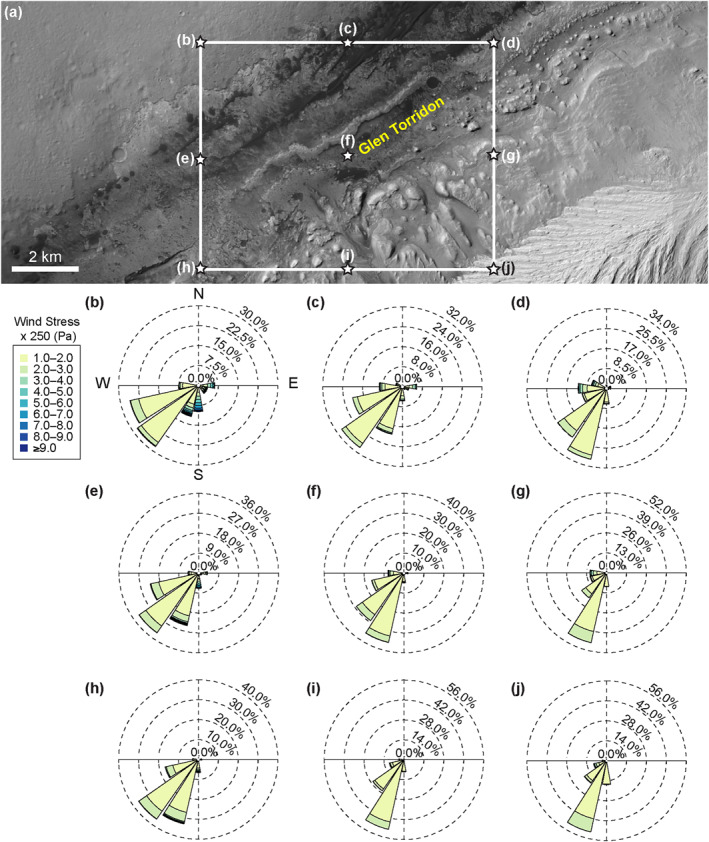
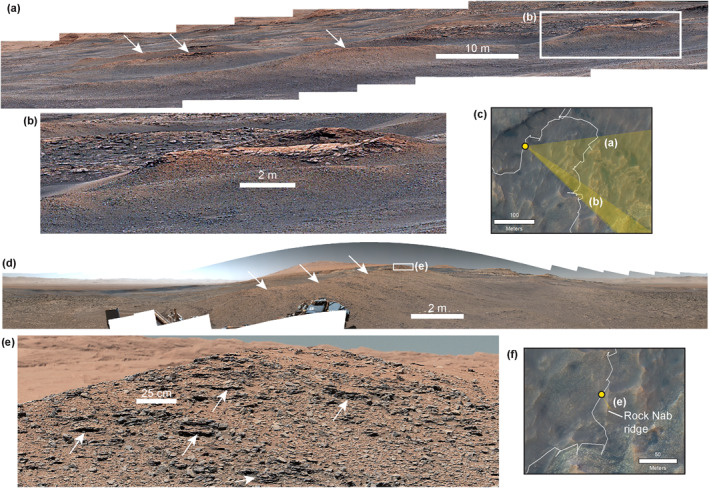
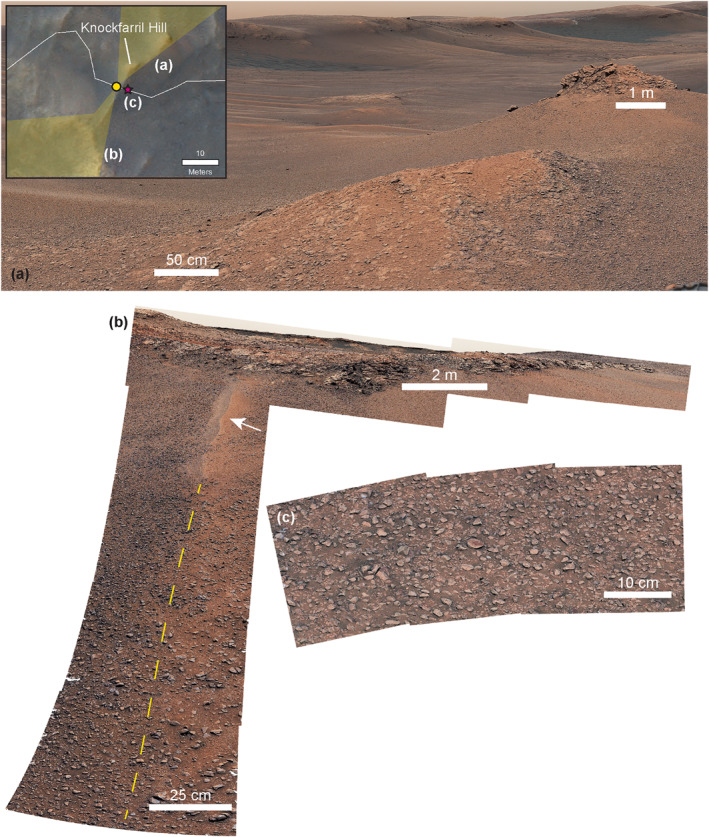
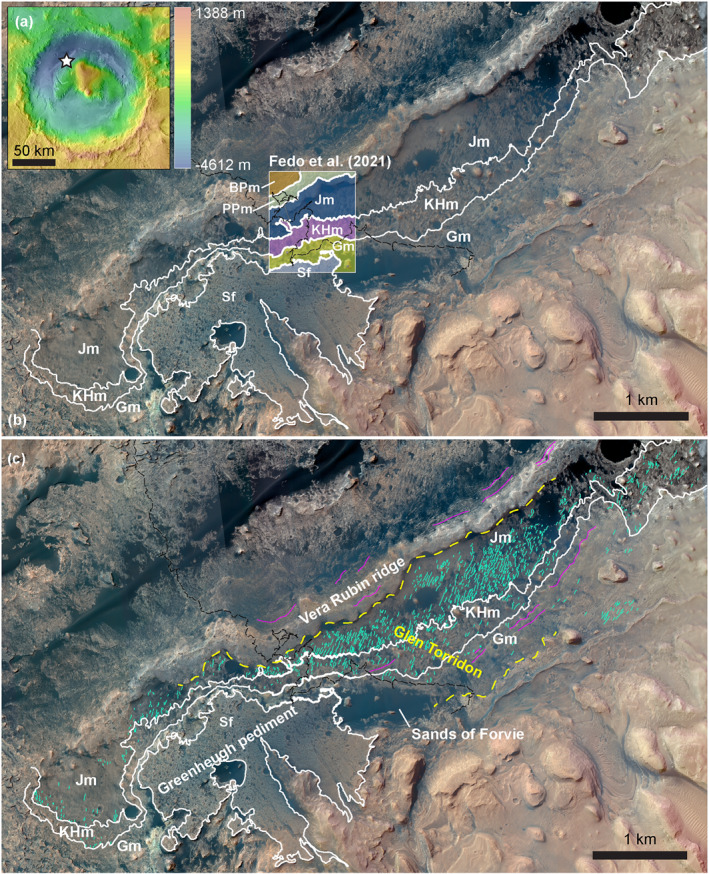
Gale crater, the field site for NASA's Mars Science Laboratory Curiosity rover, contains a diverse and extensive record of aeolian deposition and erosion. This study focuses on a series of regularly spaced, curvilinear, and sometimes branching bedrock ridges that occur within the Glen Torridon region on the lower northwest flank of Aeolis Mons, the central mound within Gale crater. During Curiosity's exploration of Glen Torridon between sols ∼2300-3080, the rover drove through this field of ridges, providing the opportunity for in situ observation of these features. This study uses orbiter and rover data to characterize ridge morphology, spatial distribution, compositional and material properties, and association with other aeolian features in the area. Based on these observations, we find that the Glen Torridon ridges are consistent with an origin as wind-eroded bedrock ridges, carved during the exhumation of Mount Sharp. Erosional features like the Glen Torridon ridges observed elsewhere on Mars, termed periodic bedrock ridges (PBRs), have been interpreted to form transverse to the dominant wind direction. The size and morphology of the Glen Torridon PBRs are consistent with transverse formative winds, but the orientation of nearby aeolian bedforms and bedrock erosional features raise the possibility of PBR formation by a net northeasterly wind regime. Although several formation models for the Glen Torridon PBRs are still under consideration, and questions persist about the nature of PBR-forming paleowinds, the presence of PBRs at this site provides important constraints on the depositional and erosional history of Gale crater.

摘要

盖尔陨石坑是美国国家航空航天局“好奇号”火星科学实验室探测器的实地探测地点,保存着丰富多样的风成沉积与侵蚀记录。本研究聚焦于一系列规则分布、呈曲线状且有时分支的基岩脊,它们位于盖尔陨石坑中央山丘埃奥利斯山(Aeolis Mons)西北侧下部的格伦托里登(Glen Torridon)地区。在“好奇号”于第2300个火星日至3080个火星日期间对格伦托里登地区进行探测时,探测器驶过这片基岩脊区域,为实地观测这些地貌特征提供了契机。本研究利用轨道器和探测器数据,对基岩脊的形态、空间分布、成分和物质属性以及与该地区其他风成地貌的关联进行了表征。基于这些观测结果,我们发现格伦托里登基岩脊与夏普山(Mount Sharp)隆升过程中风蚀基岩脊的成因相符。在火星其他地方观测到的类似格伦托里登基岩脊的侵蚀地貌,被称为周期性基岩脊(PBRs),被解释为与主导风向垂直形成。格伦托里登周期性基岩脊的大小和形态与横向形成风一致,但附近风成床形和基岩侵蚀地貌的方向增加了由东北向净风况形成周期性基岩脊的可能性。尽管格伦托里登周期性基岩脊的几种形成模型仍在探讨之中,关于形成周期性基岩脊的古风向的性质也仍存在疑问,但该地点周期性基岩脊的存在为盖尔陨石坑的沉积和侵蚀历史提供了重要限制。
https://cdn.ncbi.nlm.nih.gov/pmc/blobs/c0d3/9286800/15e0f3054a52/JGRE-127-0-g008.jpg
https://cdn.ncbi.nlm.nih.gov/pmc/blobs/c0d3/9286800/85310bdfcd24/JGRE-127-0-g014.jpg
https://cdn.ncbi.nlm.nih.gov/pmc/blobs/c0d3/9286800/b11fa2432b3b/JGRE-127-0-g017.jpg
https://cdn.ncbi.nlm.nih.gov/pmc/blobs/c0d3/9286800/117a3080bd61/JGRE-127-0-g015.jpg
https://cdn.ncbi.nlm.nih.gov/pmc/blobs/c0d3/9286800/b8afa5243962/JGRE-127-0-g006.jpg
https://cdn.ncbi.nlm.nih.gov/pmc/blobs/c0d3/9286800/c30c455942cc/JGRE-127-0-g002.jpg
https://cdn.ncbi.nlm.nih.gov/pmc/blobs/c0d3/9286800/2e98fd96bd69/JGRE-127-0-g013.jpg
https://cdn.ncbi.nlm.nih.gov/pmc/blobs/c0d3/9286800/d751103fb714/JGRE-127-0-g011.jpg
https://cdn.ncbi.nlm.nih.gov/pmc/blobs/c0d3/9286800/1ba1b2ee7a0e/JGRE-127-0-g001.jpg
https://cdn.ncbi.nlm.nih.gov/pmc/blobs/c0d3/9286800/546da992104b/JGRE-127-0-g005.jpg
https://cdn.ncbi.nlm.nih.gov/pmc/blobs/c0d3/9286800/5411e0a4f85f/JGRE-127-0-g009.jpg
https://cdn.ncbi.nlm.nih.gov/pmc/blobs/c0d3/9286800/784d13d85840/JGRE-127-0-g007.jpg
https://cdn.ncbi.nlm.nih.gov/pmc/blobs/c0d3/9286800/a8ee901b597d/JGRE-127-0-g010.jpg
https://cdn.ncbi.nlm.nih.gov/pmc/blobs/c0d3/9286800/a8f8aed8542d/JGRE-127-0-g012.jpg
https://cdn.ncbi.nlm.nih.gov/pmc/blobs/c0d3/9286800/b8b71cfa940d/JGRE-127-0-g003.jpg
https://cdn.ncbi.nlm.nih.gov/pmc/blobs/c0d3/9286800/02e2e2804c62/JGRE-127-0-g004.jpg
https://cdn.ncbi.nlm.nih.gov/pmc/blobs/c0d3/9286800/3af23776ab38/JGRE-127-0-g016.jpg
https://cdn.ncbi.nlm.nih.gov/pmc/blobs/c0d3/9286800/3911ce05084e/JGRE-127-0-g018.jpg
https://cdn.ncbi.nlm.nih.gov/pmc/blobs/c0d3/9286800/15e0f3054a52/JGRE-127-0-g008.jpg
https://cdn.ncbi.nlm.nih.gov/pmc/blobs/c0d3/9286800/85310bdfcd24/JGRE-127-0-g014.jpg
https://cdn.ncbi.nlm.nih.gov/pmc/blobs/c0d3/9286800/b11fa2432b3b/JGRE-127-0-g017.jpg
https://cdn.ncbi.nlm.nih.gov/pmc/blobs/c0d3/9286800/117a3080bd61/JGRE-127-0-g015.jpg
https://cdn.ncbi.nlm.nih.gov/pmc/blobs/c0d3/9286800/b8afa5243962/JGRE-127-0-g006.jpg
https://cdn.ncbi.nlm.nih.gov/pmc/blobs/c0d3/9286800/c30c455942cc/JGRE-127-0-g002.jpg
https://cdn.ncbi.nlm.nih.gov/pmc/blobs/c0d3/9286800/2e98fd96bd69/JGRE-127-0-g013.jpg
https://cdn.ncbi.nlm.nih.gov/pmc/blobs/c0d3/9286800/d751103fb714/JGRE-127-0-g011.jpg
https://cdn.ncbi.nlm.nih.gov/pmc/blobs/c0d3/9286800/1ba1b2ee7a0e/JGRE-127-0-g001.jpg
https://cdn.ncbi.nlm.nih.gov/pmc/blobs/c0d3/9286800/546da992104b/JGRE-127-0-g005.jpg
https://cdn.ncbi.nlm.nih.gov/pmc/blobs/c0d3/9286800/5411e0a4f85f/JGRE-127-0-g009.jpg
https://cdn.ncbi.nlm.nih.gov/pmc/blobs/c0d3/9286800/784d13d85840/JGRE-127-0-g007.jpg
https://cdn.ncbi.nlm.nih.gov/pmc/blobs/c0d3/9286800/a8ee901b597d/JGRE-127-0-g010.jpg
https://cdn.ncbi.nlm.nih.gov/pmc/blobs/c0d3/9286800/a8f8aed8542d/JGRE-127-0-g012.jpg
https://cdn.ncbi.nlm.nih.gov/pmc/blobs/c0d3/9286800/b8b71cfa940d/JGRE-127-0-g003.jpg
https://cdn.ncbi.nlm.nih.gov/pmc/blobs/c0d3/9286800/02e2e2804c62/JGRE-127-0-g004.jpg
https://cdn.ncbi.nlm.nih.gov/pmc/blobs/c0d3/9286800/3af23776ab38/JGRE-127-0-g016.jpg
https://cdn.ncbi.nlm.nih.gov/pmc/blobs/c0d3/9286800/3911ce05084e/JGRE-127-0-g018.jpg
https://cdn.ncbi.nlm.nih.gov/pmc/blobs/c0d3/9286800/15e0f3054a52/JGRE-127-0-g008.jpg

相似文献

1
Orbital and In-Situ Investigation of Periodic Bedrock Ridges in Glen Torridon, Gale Crater, Mars.火星盖尔陨石坑托里登峡谷周期性基岩脊的轨道与原位调查
J Geophys Res Planets. 2022 Jun;127(6):e2021JE007096. doi: 10.1029/2021JE007096. Epub 2022 May 26.
2
Characterization of Clasts in the Glen Torridon Region of Gale Crater Observed by the Mars Science Laboratory Curiosity Rover.火星科学实验室“好奇号”探测器对盖尔陨石坑格伦托里登地区碎屑的特征描述
J Geophys Res Planets. 2022 Nov;127(11):e2021JE007095. doi: 10.1029/2021JE007095. Epub 2022 Nov 17.
3
The Curiosity Rover's Exploration of Glen Torridon, Gale Crater, Mars: An Overview of the Campaign and Scientific Results.好奇号火星车对火星盖尔陨石坑格伦托里登的探索:任务概述与科学成果
J Geophys Res Planets. 2023 Jan;128(1):e2022JE007185. doi: 10.1029/2022JE007185. Epub 2022 Dec 30.
4
Periodic Bedrock Ridges at the ExoMars 2022 Landing Site: Evidence for a Changing Wind Regime.ExoMars 2022着陆点的周期性基岩脊:风况变化的证据。
Geophys Res Lett. 2021 Feb 28;48(4):e2020GL091651. doi: 10.1029/2020GL091651. Epub 2021 Feb 22.
5
Brine-driven destruction of clay minerals in Gale crater, Mars.盐水驱动的火星盖尔陨石坑中黏土矿物的破坏。
Science. 2021 Jul 9;373(6551):198-204. doi: 10.1126/science.abg5449.
6
From Lake to River: Documenting an Environmental Transition Across the Jura/Knockfarril Hill Members Boundary in the Glen Torridon Region of Gale Crater (Mars).从湖泊到河流:记录盖尔陨石坑(火星)托里登峡谷地区汝拉/诺克法里尔山成员边界的环境转变
J Geophys Res Planets. 2022 Sep;127(9):e2021JE007093. doi: 10.1029/2021JE007093. Epub 2022 Sep 16.
7
The Geologic Exploration of the Bagnold Dune Field at Gale Crater by the Curiosity Rover.好奇号火星车对盖尔陨石坑巴格诺尔德沙丘区域的地质勘探。
J Geophys Res Planets. 2017 Nov;122(11):2216-2222. doi: 10.1002/2017JE005455. Epub 2017 Nov 1.
8
Deposition, exhumation, and paleoclimate of an ancient lake deposit, Gale crater, Mars.古代湖泊沉积层的沉积、挖掘和古气候研究——火星盖尔陨石坑。
Science. 2015 Oct 9;350(6257):aac7575. doi: 10.1126/science.aac7575.
9
Evidence for a Diagenetic Origin of Vera Rubin Ridge, Gale Crater, Mars: Summary and Synthesis of 's Exploration Campaign.火星盖尔陨石坑维拉·鲁宾岭成岩起源的证据:“好奇号”探测任务总结与综合分析
J Geophys Res Planets. 2020 Dec;125(12):e2020JE006527. doi: 10.1029/2020JE006527. Epub 2020 Dec 23.
10
Origin and composition of three heterolithic boulder- and cobble-bearing deposits overlying the Murray and Stimson formations, Gale Crater, Mars.火星盖尔陨石坑内,位于默里组和斯廷森组之上的三个含巨砾和卵石的混杂沉积层的成因与组成。
Icarus. 2020 Nov 1;350:113897. doi: 10.1016/j.icarus.2020.113897. Epub 2020 Jun 6.

引用本文的文献

1
The Curiosity Rover's Exploration of Glen Torridon, Gale Crater, Mars: An Overview of the Campaign and Scientific Results.好奇号火星车对火星盖尔陨石坑格伦托里登的探索:任务概述与科学成果
J Geophys Res Planets. 2023 Jan;128(1):e2022JE007185. doi: 10.1029/2022JE007185. Epub 2022 Dec 30.
2
Characterization of Clasts in the Glen Torridon Region of Gale Crater Observed by the Mars Science Laboratory Curiosity Rover.火星科学实验室“好奇号”探测器对盖尔陨石坑格伦托里登地区碎屑的特征描述
J Geophys Res Planets. 2022 Nov;127(11):e2021JE007095. doi: 10.1029/2021JE007095. Epub 2022 Nov 17.

本文引用的文献

1
From Lake to River: Documenting an Environmental Transition Across the Jura/Knockfarril Hill Members Boundary in the Glen Torridon Region of Gale Crater (Mars).从湖泊到河流:记录盖尔陨石坑(火星)托里登峡谷地区汝拉/诺克法里尔山成员边界的环境转变
J Geophys Res Planets. 2022 Sep;127(9):e2021JE007093. doi: 10.1029/2021JE007093. Epub 2022 Sep 16.
2
Brine-driven destruction of clay minerals in Gale crater, Mars.盐水驱动的火星盖尔陨石坑中黏土矿物的破坏。
Science. 2021 Jul 9;373(6551):198-204. doi: 10.1126/science.abg5449.
3
Periodic Bedrock Ridges at the ExoMars 2022 Landing Site: Evidence for a Changing Wind Regime.
ExoMars 2022着陆点的周期性基岩脊:风况变化的证据。
Geophys Res Lett. 2021 Feb 28;48(4):e2020GL091651. doi: 10.1029/2020GL091651. Epub 2021 Feb 22.
4
Evidence for a Diagenetic Origin of Vera Rubin Ridge, Gale Crater, Mars: Summary and Synthesis of 's Exploration Campaign.火星盖尔陨石坑维拉·鲁宾岭成岩起源的证据:“好奇号”探测任务总结与综合分析
J Geophys Res Planets. 2020 Dec;125(12):e2020JE006527. doi: 10.1029/2020JE006527. Epub 2020 Dec 23.
5
Winds measured by the Rover Environmental Monitoring Station (REMS) during the Mars Science Laboratory (MSL) rover's Bagnold Dunes Campaign and comparison with numerical modeling using MarsWRF.火星科学实验室(MSL)漫游车在巴格诺尔德沙丘行动期间由漫游车环境监测站(REMS)测量的风速,以及与使用MarsWRF进行的数值模拟的比较。
Icarus. 2017 Jul 15;291:203-231. doi: 10.1016/j.icarus.2016.12.016. Epub 2016 Dec 14.
6
The Mars Science Laboratory (MSL) Mast cameras and Descent imager: Investigation and instrument descriptions.火星科学实验室(MSL)桅杆式摄像机与下降成像仪:调查与仪器描述
Earth Space Sci. 2017 Aug;4(8):506-539. doi: 10.1002/2016EA000252. Epub 2017 Aug 19.
7
The stratigraphy and evolution of lower Mount Sharp from spectral, morphological, and thermophysical orbital data sets.利用光谱、形态和热物理轨道数据集对夏普山下部的地层学与演化进行研究。
J Geophys Res Planets. 2016 Sep;121(9):1713-1736. doi: 10.1002/2016JE005095. Epub 2016 Sep 17.
8
Large wind ripples on Mars: A record of atmospheric evolution.火星上的大型风成波纹:大气演化的记录。
Science. 2016 Jul 1;353(6294):55-8. doi: 10.1126/science.aaf3206.
9
Deposition, exhumation, and paleoclimate of an ancient lake deposit, Gale crater, Mars.古代湖泊沉积层的沉积、挖掘和古气候研究——火星盖尔陨石坑。
Science. 2015 Oct 9;350(6257):aac7575. doi: 10.1126/science.aac7575.
10
A habitable fluvio-lacustrine environment at Yellowknife Bay, Gale crater, Mars.火星盖尔陨石坑耶洛奈夫湾的可居住河湖环境。
Science. 2014 Jan 24;343(6169):1242777. doi: 10.1126/science.1242777. Epub 2013 Dec 9.