Wu Yapei, Fan Shihui, Dong Meng, Li Jinjing, Kong Chuilian, Zhuang Jie, Meng Xiaoting, Lu Shuaimin, Zhao Yibing, Wu Chuanliu
Department of Chemistry, College of Chemistry and Chemical Engineering, The MOE Key Laboratory of Spectrochemical Analysis and Instrumentation, State Key Laboratory of Physical Chemistry of Solid Surfaces, Xiamen University Xiamen 361005 P.R. China
Chem Sci. 2022 May 20;13(26):7780-7789. doi: 10.1039/d2sc00924b. eCollection 2022 Jul 6.
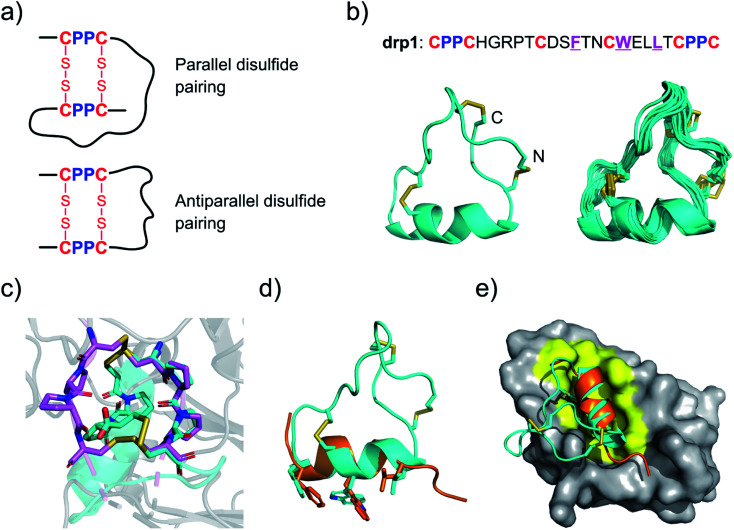
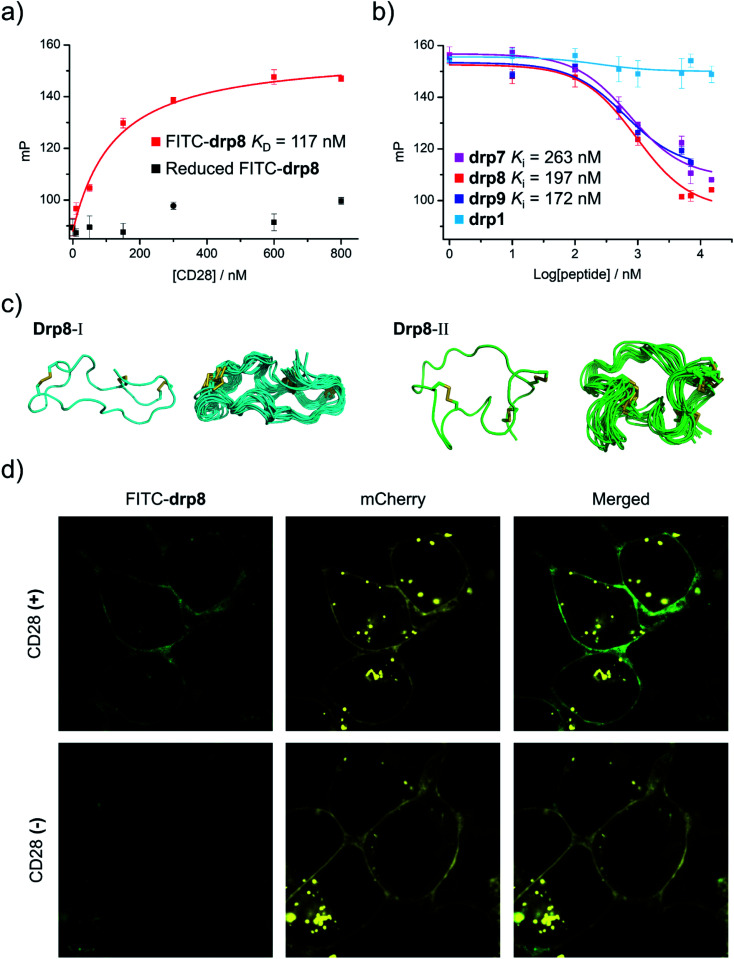
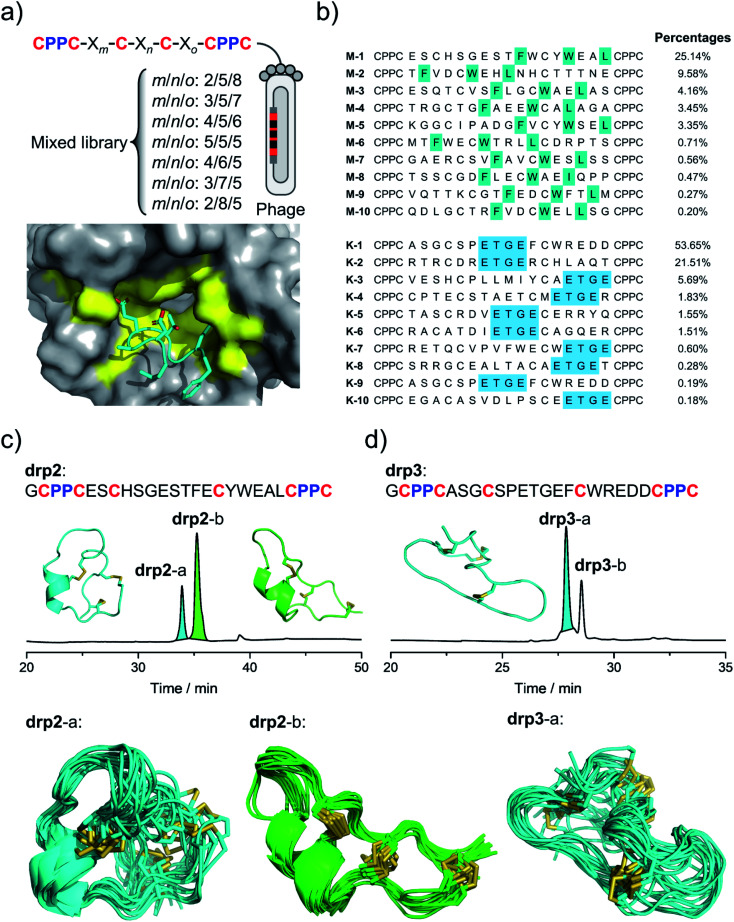
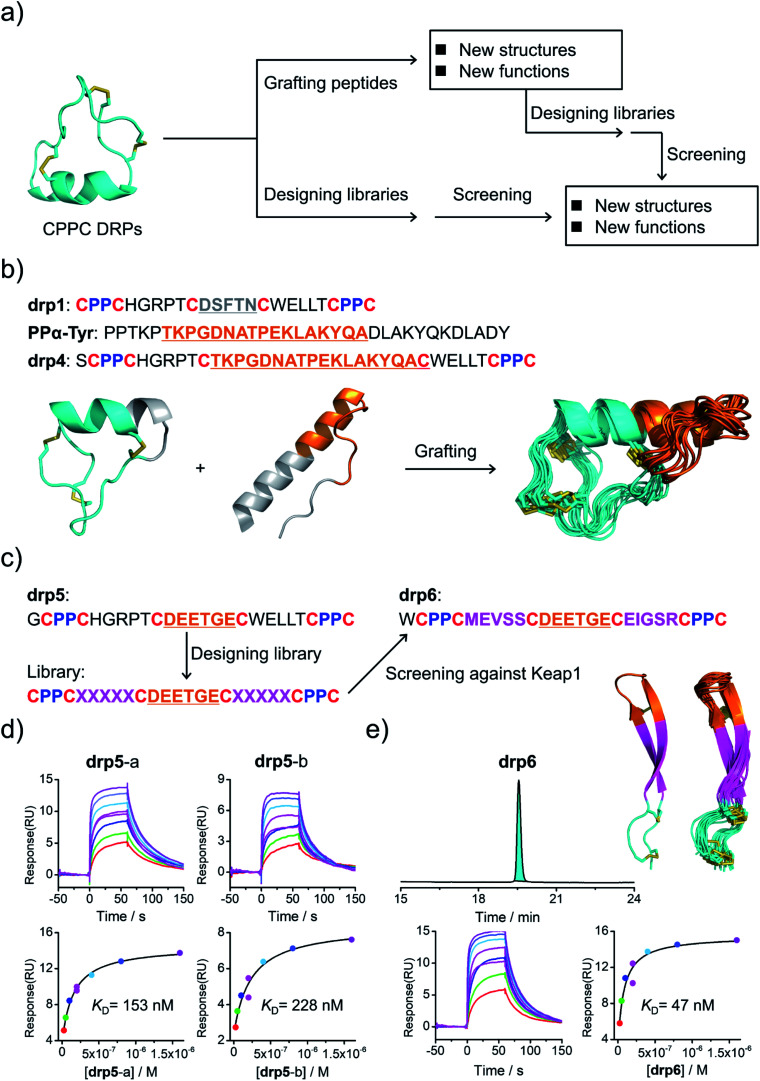
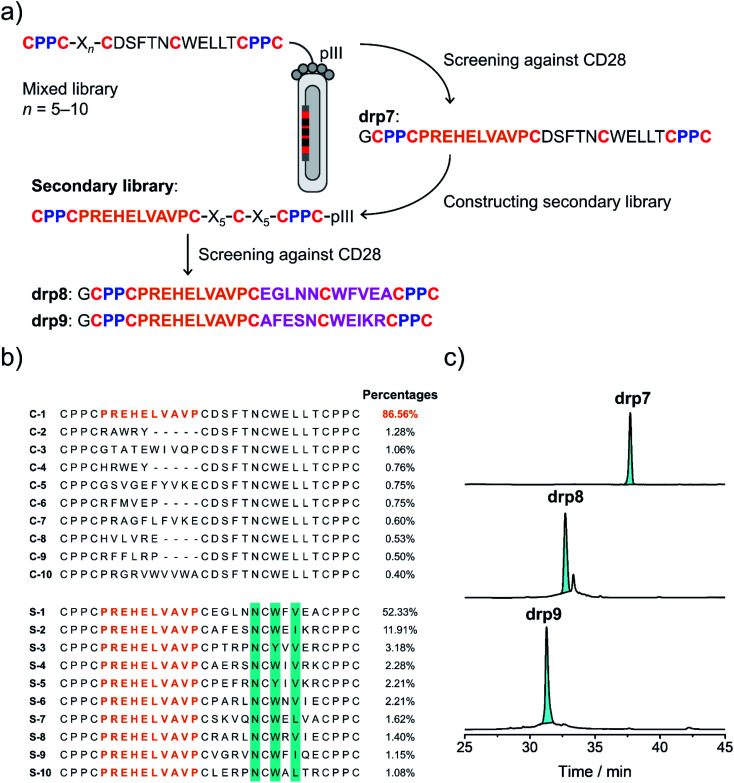
Peptides constrained through multiple disulfides (or disulfide-rich peptides, DRPs) have been an emerging frontier for ligand and drug discovery. Such peptides have the potential to combine the binding capability of biologics with the stability and bioavailability of smaller molecules. However, DRPs with stable three-dimensional (3D) structures are usually of natural origin or engineered from natural ones. Here, we report the discovery and identification of CPPC (cysteine-proline-proline-cysteine) motif-directed DRPs with stable 3D structures (, CPPC-DRPs). A range of new CPPC-DRPs were designed or selected from either random or structure-convergent peptide libraries. Thus, for the first time we revealed that the CPPC-DRPs can maintain diverse 3D structures by taking advantage of constraints from unique dimeric CPPC mini-loops, including irregular structures and regular α-helix and β-sheet folds. New CPPC-DRPs that can specifically bind the receptors (CD28) on the cell surface were also successfully discovered and identified using our DRP-discovery platform. Overall, this study provides the basis for accessing an unconventional peptide structure space previously inaccessible by natural DRPs and computational designs, inspiring the development of new peptide ligands and therapeutics.
通过多个二硫键约束的肽(或富含二硫键的肽,DRP)已成为配体和药物发现的一个新兴前沿领域。这类肽有可能将生物制品的结合能力与小分子的稳定性和生物利用度结合起来。然而,具有稳定三维(3D)结构的DRP通常源于天然或由天然肽改造而来。在此,我们报告了具有稳定3D结构的CPPC(半胱氨酸-脯氨酸-脯氨酸-半胱氨酸)基序导向的DRP(即CPPC-DRP)的发现与鉴定。一系列新的CPPC-DRP是从随机或结构收敛肽库中设计或筛选出来的。因此,我们首次揭示了CPPC-DRP可以通过利用独特的二聚体CPPC微环的约束来维持多种3D结构,包括不规则结构以及规则的α螺旋和β折叠。利用我们的DRP发现平台,还成功发现并鉴定了能够特异性结合细胞表面受体(CD28)的新型CPPC-DRP。总体而言,本研究为进入天然DRP和计算设计之前无法进入的非常规肽结构空间提供了基础,为新型肽配体和治疗药物的开发提供了启发。