Magalhães Pedro, Lashuel Hilal A
Laboratory of Molecular and Chemical Biology of Neurodegeneration, School of Life Sciences, Brain Mind Institute, École Polytechnique Fédérale de Lausanne (EPFL), CH-1015, Lausanne, Switzerland.
NPJ Parkinsons Dis. 2022 Jul 22;8(1):93. doi: 10.1038/s41531-022-00357-0.
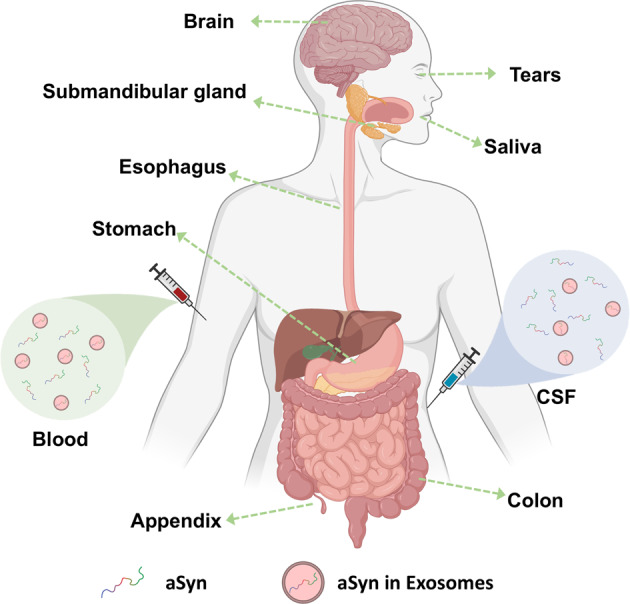
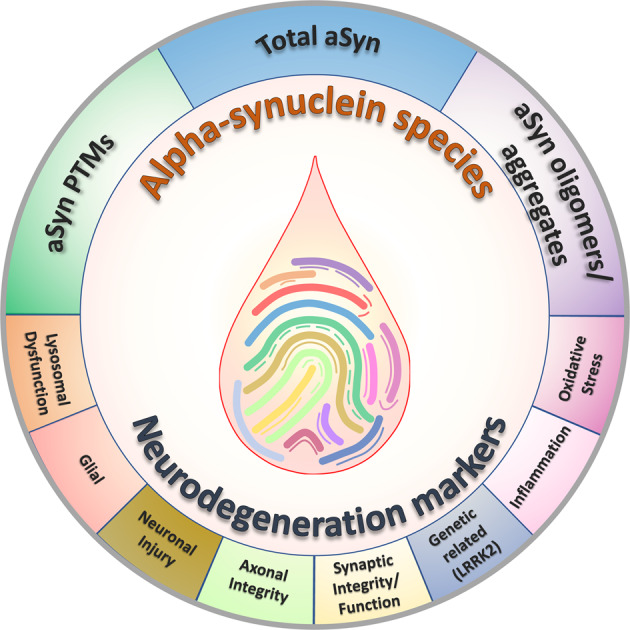
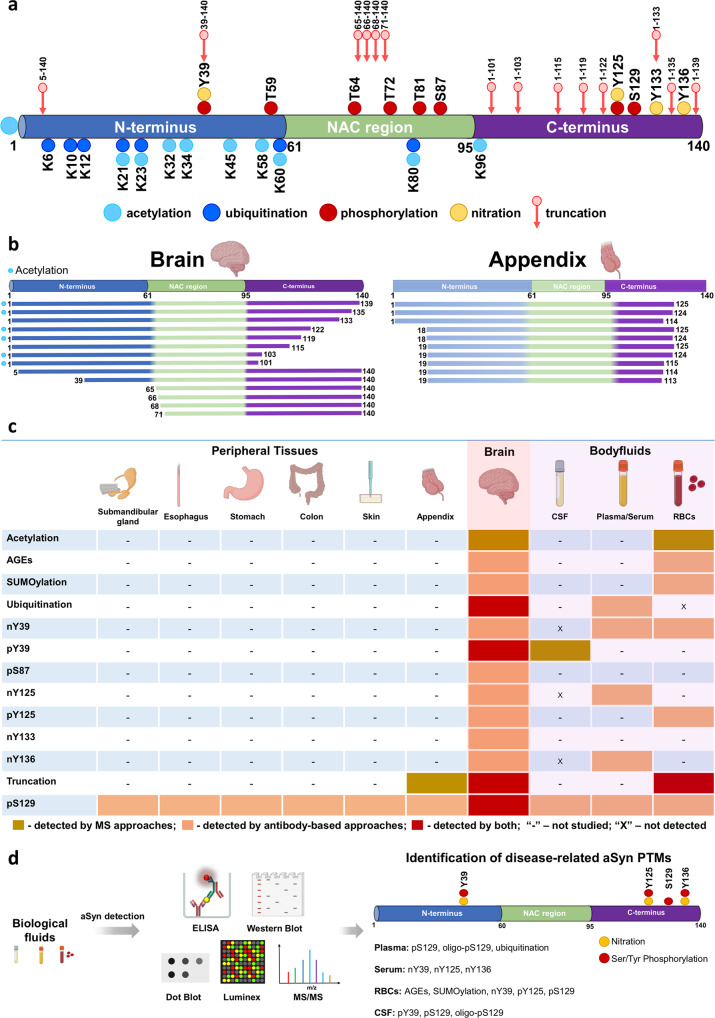
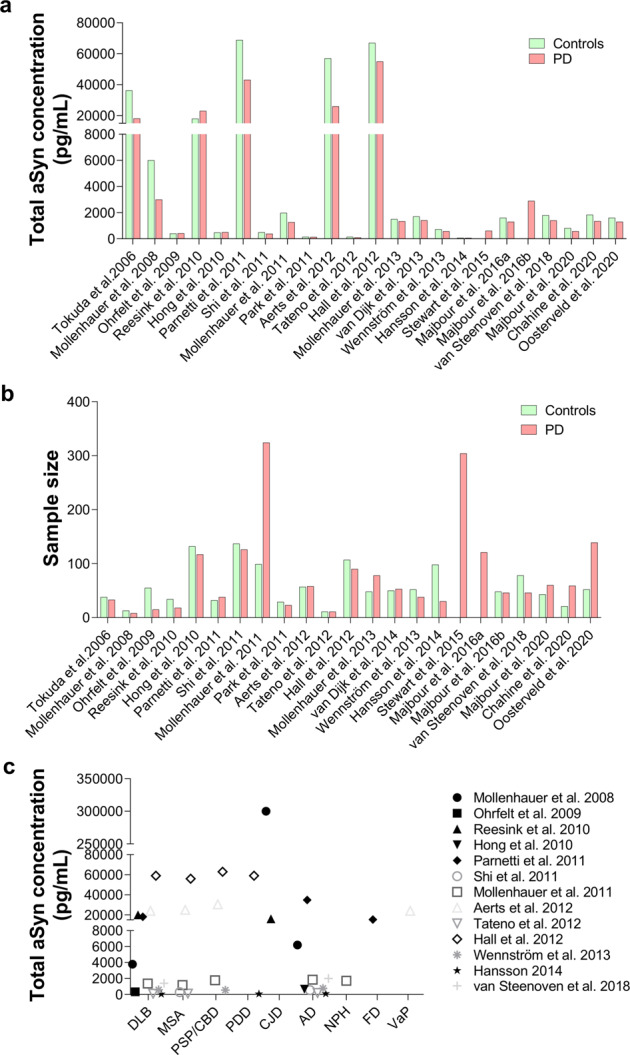
Parkinson's disease (PD), the second most common progressive neurodegenerative disease, develops and progresses for 10-15 years before the clinical diagnostic symptoms of the disease are manifested. Furthermore, several aspects of PD pathology overlap with other neurodegenerative diseases (NDDs) linked to alpha-synuclein (aSyn) aggregation, also called synucleinopathies. Therefore, there is an urgent need to discover and validate early diagnostic and prognostic markers that reflect disease pathophysiology, progression, severity, and potential differences in disease mechanisms between PD and other NDDs. The close association between aSyn and the development of pathology in synucleinopathies, along with the identification of aSyn species in biological fluids, has led to increasing interest in aSyn species as potential biomarkers for early diagnosis of PD and differentiate it from other synucleinopathies. In this review, we (1) provide an overview of the progress toward mapping the distribution of aSyn species in the brain, peripheral tissues, and biological fluids; (2) present comparative and critical analysis of previous studies that measured total aSyn as well as other species such as modified and aggregated forms of aSyn in different biological fluids; and (3) highlight conceptual and technical gaps and challenges that could hinder the development and validation of reliable aSyn biomarkers; and (4) outline a series of recommendations to address these challenges. Finally, we propose a combined biomarker approach based on integrating biochemical, aggregation and structure features of aSyn, in addition to other biomarkers of neurodegeneration. We believe that capturing the diversity of aSyn species is essential to develop robust assays and diagnostics for early detection, patient stratification, monitoring of disease progression, and differentiation between synucleinopathies. This could transform clinical trial design and implementation, accelerate the development of new therapies, and improve clinical decisions and treatment strategies.
帕金森病(PD)是第二常见的进行性神经退行性疾病,在出现该疾病的临床诊断症状之前,其发展和进展过程长达10至15年。此外,PD病理学的几个方面与其他与α-突触核蛋白(aSyn)聚集相关的神经退行性疾病(NDDs)重叠,后者也被称为突触核蛋白病。因此,迫切需要发现和验证能够反映疾病病理生理学、进展、严重程度以及PD与其他NDDs之间疾病机制潜在差异的早期诊断和预后标志物。aSyn与突触核蛋白病病理学发展之间的密切关联,以及在生物体液中鉴定出aSyn种类,使得人们越来越关注aSyn种类作为PD早期诊断及与其他突触核蛋白病鉴别的潜在生物标志物。在本综述中,我们(1)概述了绘制aSyn种类在大脑、外周组织和生物体液中分布的研究进展;(2)对之前在不同生物体液中测量总aSyn以及其他种类(如aSyn的修饰和聚集形式)的研究进行比较和批判性分析;(3)强调可能阻碍可靠aSyn生物标志物开发和验证的概念和技术差距及挑战;(4)概述一系列应对这些挑战的建议。最后,除了神经退行性变的其他生物标志物外,我们还基于整合aSyn的生化、聚集和结构特征提出了一种联合生物标志物方法。我们认为,捕捉aSyn种类的多样性对于开发强大的检测方法和诊断手段以实现早期检测、患者分层、疾病进展监测以及突触核蛋白病之间的鉴别至关重要。这可能会改变临床试验的设计和实施,加速新疗法的开发,并改善临床决策和治疗策略。