School of Public Health, Shenzhen University Health Science Center, 1066 Xueyuan Ave, Shenzhen, 518055, China.
Guangdong Provincial Key Laboratory of Genome Stability and Disease Prevention, International Cancer Center, Shenzhen University Health Science Center, 1066 Xueyuan Ave, Shenzhen, 518055, China.
J Exp Clin Cancer Res. 2022 Jul 22;41(1):229. doi: 10.1186/s13046-022-02437-8.
Airborne fine particulate matter (PM2.5) has been associated with lung cancer development and progression in never smokers. However, the molecular mechanisms underlying PM2.5-induced lung cancer remain largely unknown. The aim of this study was to explore the mechanisms by which PM2.5 regulated the carcinogenesis of non-small cell lung cancer (NSCLC).
Paralleled ribosome sequencing (Ribo-seq) and RNA sequencing (RNA-seq) were performed to identify PM2.5-associated genes for further study. Quantitative real time-PCR (qRT-PCR), Western blot, and immunohistochemistry (IHC) were used to determine mRNA and protein expression levels in tissues and cells. The biological roles of PM2.5 and PM2.5-dysregulated gene were assessed by gain- and loss-of-function experiments, biochemical analyses, and Seahorse XF glycolysis stress assays. Human tissue microarray analysis and F-FDG PET/CT scans in patients with NSCLC were used to verify the experimental findings. Polysome fractionation experiments, chromatin immunoprecipitation (ChIP), and dual-luciferase reporter assay were implemented to explore the molecular mechanisms.
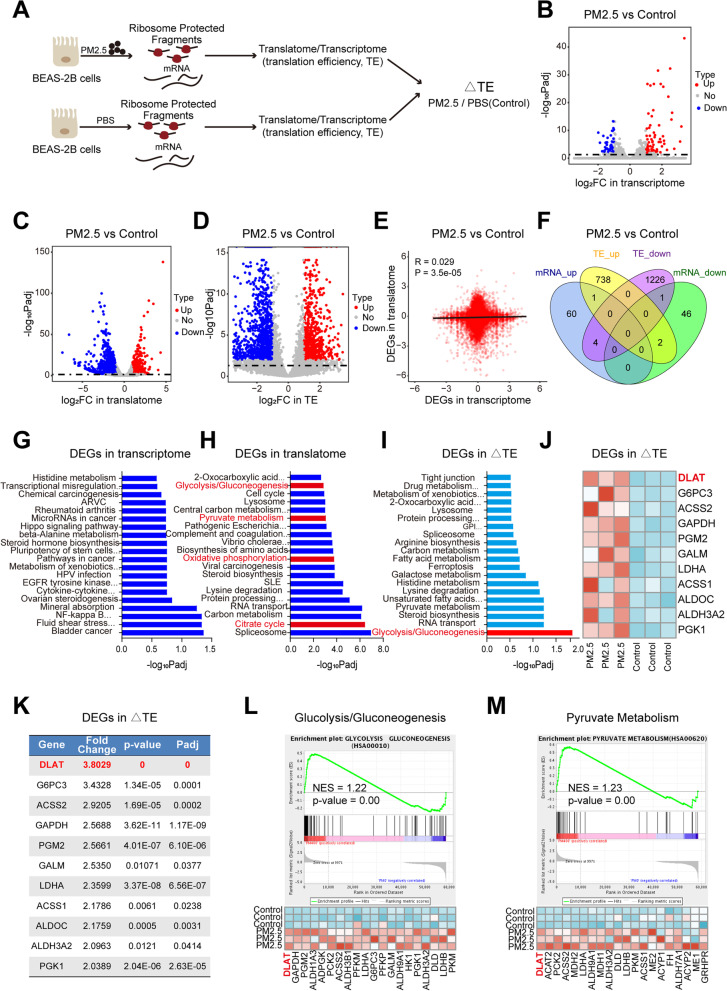
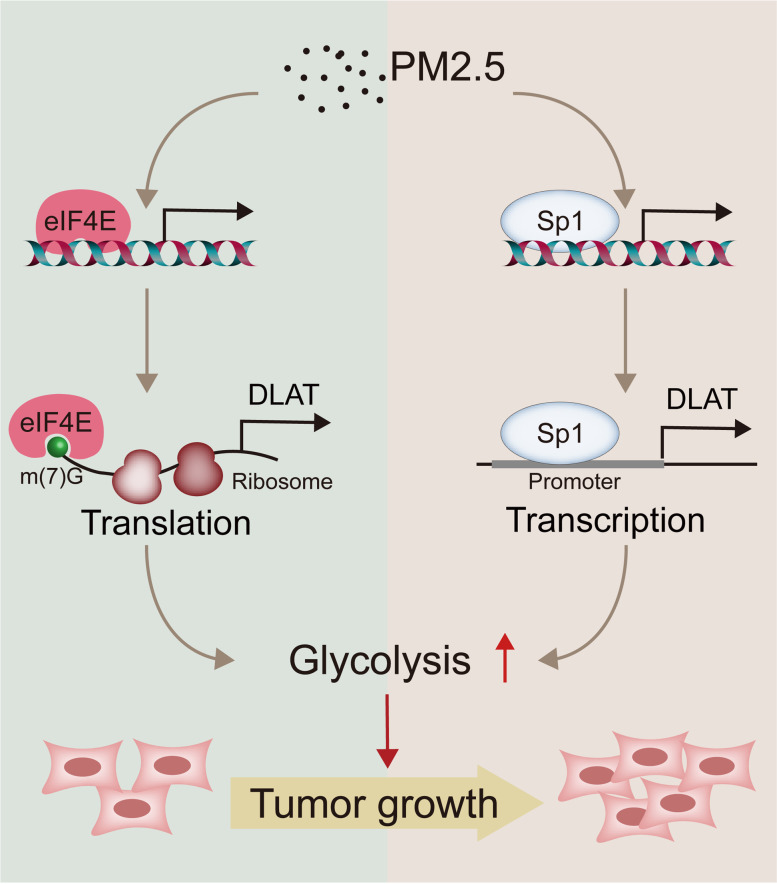
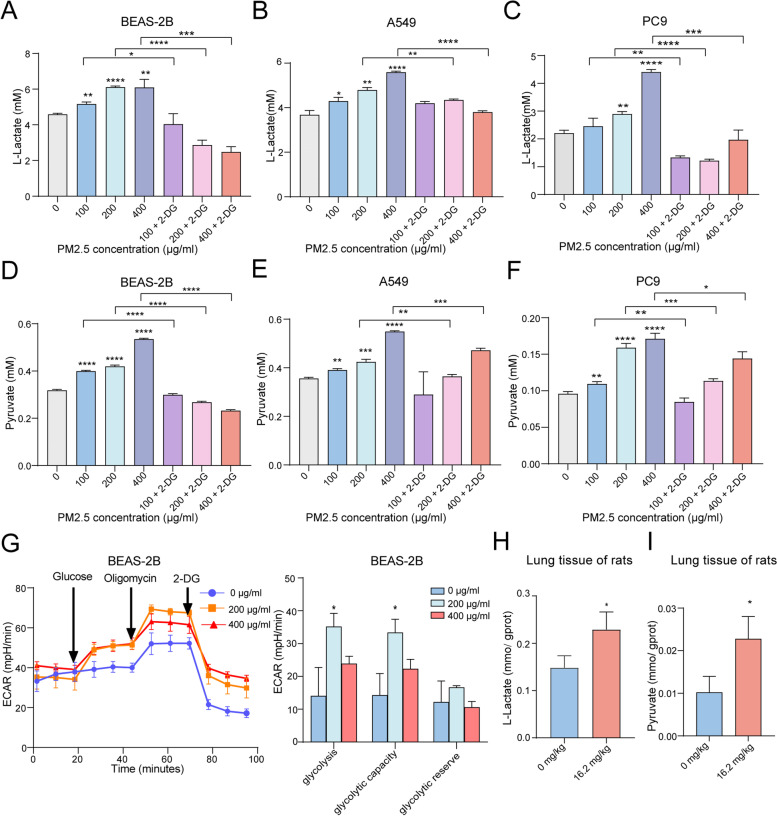
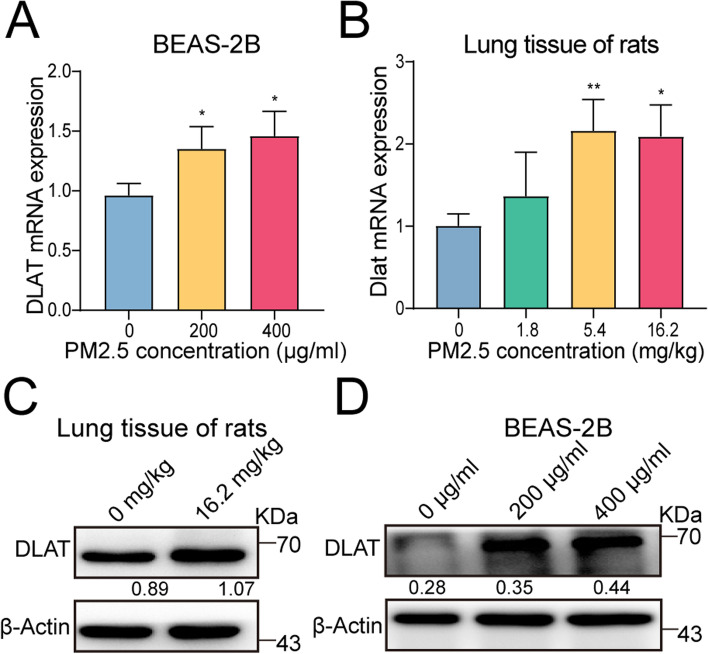
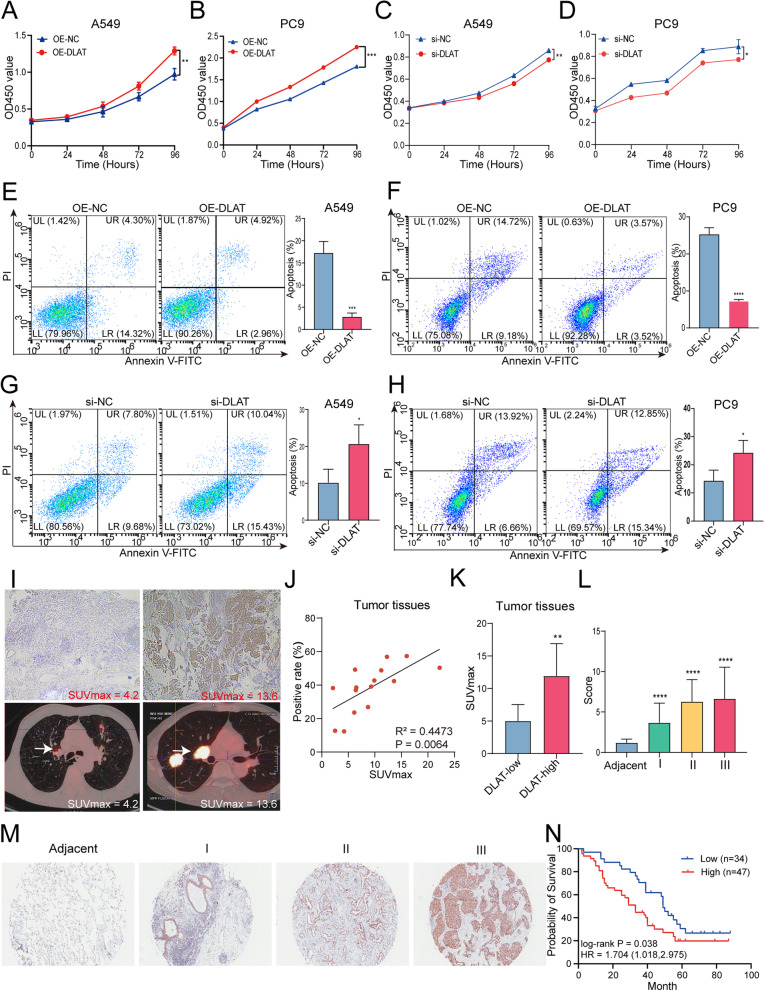
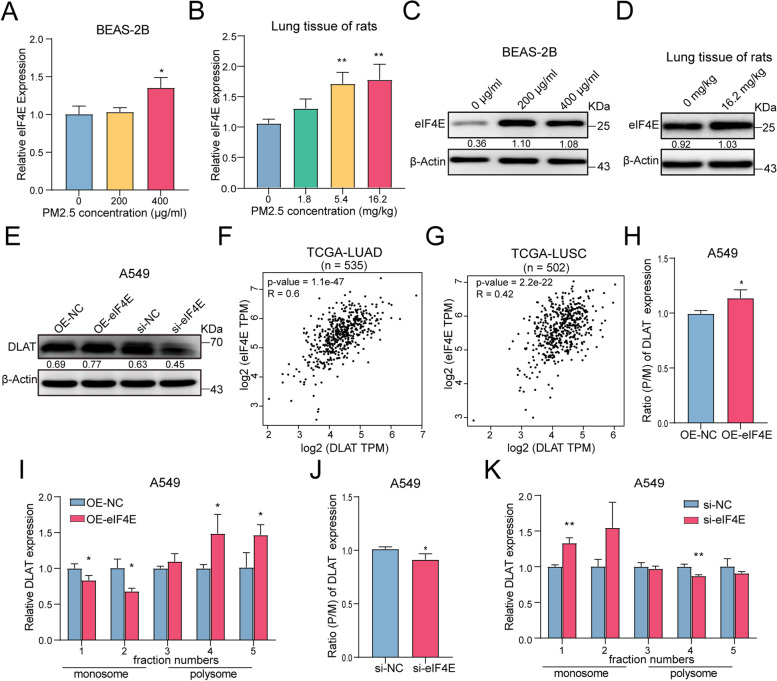
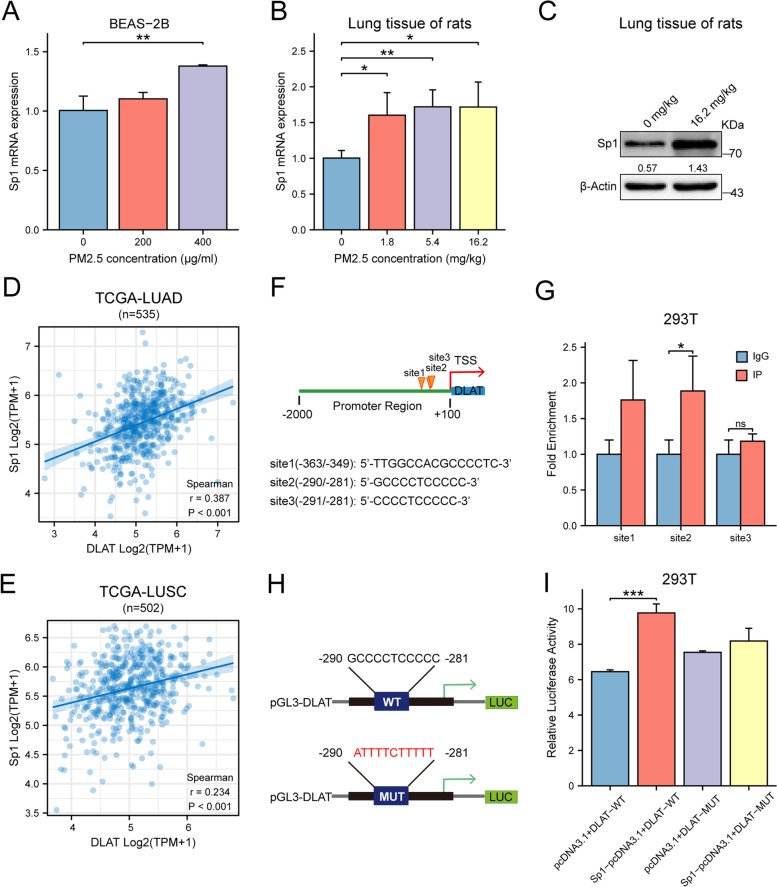
We found that PM2.5 induced a translation shift towards glycolysis pathway genes and increased glycolysis metabolism, as evidenced by increased L-lactate and pyruvate concentrations or higher extracellular acidification rate (ECAR) in vitro and in vivo. Particularly, PM2.5 enhanced the expression of glycolytic gene DLAT, which promoted glycolysis but suppressed acetyl-CoA production and enhanced the malignancy of NSCLC cells. Clinically, high expression of DLAT was positively associated with tumor size, poorer prognosis, and SUVmax values of F-FDG-PET/CT scans in patients with NSCLC. Mechanistically, PM2.5 activated eIF4E, consequently up-regulating the expression level of DLAT in polysomes. PM2.5 also stimulated transcription factor Sp1, which further augmented transcription activity of DLAT promoter.
This study demonstrated that PM2.5-activated overexpression of DLAT and enhancement in glycolysis metabolism contributed to the tumorigenesis of NSCLC, suggesting that DLAT-associated pathway may be a therapeutic target for NSCLC.
空气中的细颗粒物(PM2.5)已被证实与不吸烟人群的肺癌发展和进展有关。然而,PM2.5 诱导肺癌的分子机制在很大程度上仍不清楚。本研究旨在探讨 PM2.5 调节非小细胞肺癌(NSCLC)发生机制。
平行核糖体测序(Ribo-seq)和 RNA 测序(RNA-seq)用于鉴定与 PM2.5 相关的基因进行进一步研究。定量实时 PCR(qRT-PCR)、Western blot 和免疫组织化学(IHC)用于检测组织和细胞中 mRNA 和蛋白表达水平。通过增益和缺失功能实验、生化分析和 Seahorse XF 糖酵解应激测定评估 PM2.5 和 PM2.5 失调基因的生物学作用。对 NSCLC 患者的人体组织微阵列分析和 F-FDG PET/CT 扫描用于验证实验结果。多核糖体分馏实验、染色质免疫沉淀(ChIP)和双荧光素酶报告基因测定用于探索分子机制。
我们发现 PM2.5 诱导向糖酵解途径基因的翻译转移,并增加糖酵解代谢,表现为体外和体内 L-乳酸和丙酮酸浓度增加或细胞外酸化率(ECAR)升高。特别是,PM2.5 增强了糖酵解基因 DLAT 的表达,促进了糖酵解,但抑制了乙酰辅酶 A 的产生,并增强了 NSCLC 细胞的恶性程度。临床上,DLAT 的高表达与 NSCLC 患者的肿瘤大小、预后较差和 F-FDG-PET/CT 扫描的 SUVmax 值呈正相关。机制上,PM2.5 激活 eIF4E,从而上调多核糖体中 DLAT 的表达水平。PM2.5 还刺激转录因子 Sp1,进一步增强了 DLAT 启动子的转录活性。
本研究表明,PM2.5 激活的 DLAT 过表达和糖酵解代谢增强导致 NSCLC 的肿瘤发生,提示 DLAT 相关途径可能是 NSCLC 的治疗靶点。