Department of General Medicine, Joondalup Health Campus, Joondalup, Western Australia, Australia.
Medical School, University of Western Australia, Crawley, Western Australia, Australia.
Am J Case Rep. 2022 Jul 25;23:e936445. doi: 10.12659/AJCR.936445.
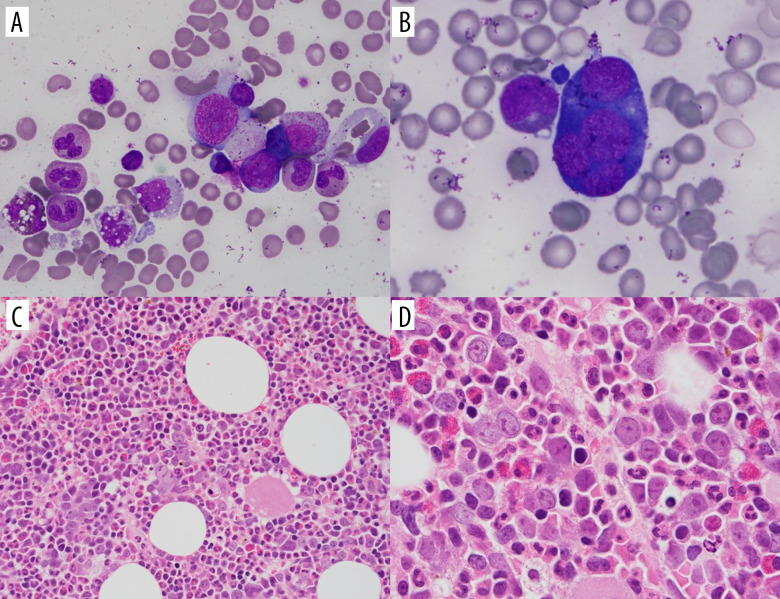
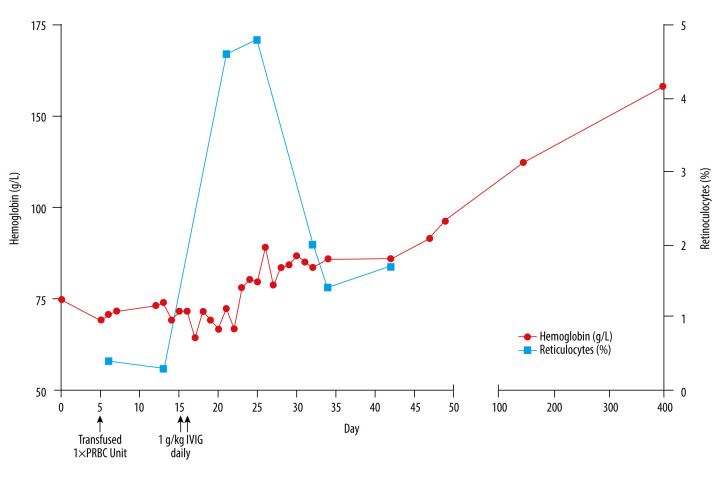
BACKGROUND Pure red cell aplasia (PRCA) is an uncommon syndrome characterized by ineffective erythropoiesis and severe anemia. Among immunodeficient patients, including those with human immunodeficiency virus (HIV)/acquired immunodeficiency syndrome (AIDS), persistent parvovirus-B19 can cause PRCA. We report a rare case of an Australian man with parvovirus-B19 mediated PRCA secondary to a new diagnosis of HIV-1/AIDS. The case highlights the importance of early treatment initiation with anti-retroviral drugs and pooled immunoglobulins to enable marrow recovery and long-term disease remission. CASE REPORT A 64-year-old man residing in rural Indonesia presented with severe anemia. Apart from 8 kg of unintentional weight loss, he denied any occult bleeding, diatheses, or constitutional symptoms. His bloodwork revealed a normocytic, normochromic anemia (Hb 81 g/L) with profound reticulocytopenia (9.5×10⁹/L). Parvovirus-B19 serology and polymerase chain reaction testing confirmed active viremia. Lymphopenia and an undetectable CD4 T-lymphocyte count (<1%) were also noted; HIV-1 was subsequently diagnosed. Bone marrow sampling later confirmed features consistent with parvovirus-B19-driven PRCA secondary to HIV-1/AIDS. The patient received 1 g/kg intravenous immunoglobulin for two days and initiated anti-retroviral HIV therapy. Rapid reticulocytosis with slow incrementation of his hemoglobin were observed over one month. At three years following his diagnosis, he remains in remission. CONCLUSIONS Severe, isolated anemia in immunodeficient patients, particularly those with HIV-1/AIDS, should prompt consideration of parvovirus-B19-mediated PRCA. Depletion of CD4-T-lymphocyte populations enables the establishment of parvovirus-B19 reservoirs within erythroid progenitors, thereby hampering physiological erythropoiesis. Long-term remission can be achieved with the rapid institution of intravenous immunoglobulin and anti-retroviral HIV therapies.
纯红细胞再生障碍性贫血(PRCA)是一种罕见的综合征,其特征为无效红细胞生成和严重贫血。在免疫功能低下的患者中,包括人类免疫缺陷病毒(HIV)/获得性免疫缺陷综合征(AIDS)患者,持续性细小病毒 B19 可引起 PRCA。我们报告了一例澳大利亚人因 HIV-1/AIDS 新诊断而继发细小病毒 B19 介导的 PRCA 的罕见病例。该病例强调了早期开始抗逆转录病毒药物和免疫球蛋白联合治疗以促进骨髓恢复和长期疾病缓解的重要性。
一名 64 岁男子居住在印度尼西亚农村,因严重贫血就诊。除了 8 公斤的非自愿体重减轻外,他否认有任何隐匿性出血、易栓症或全身症状。他的血液检查显示为正细胞正色素性贫血(Hb 81 g/L)伴严重网织红细胞减少症(9.5×10⁹/L)。细小病毒 B19 血清学和聚合酶链反应检测证实存在活跃的病毒血症。还注意到淋巴细胞减少和无法检测到的 CD4 T 淋巴细胞计数(<1%);随后诊断为 HIV-1。骨髓活检后来证实了与 HIV-1/AIDS 继发的细小病毒 B19 驱动的 PRCA 一致的特征。患者接受了 1 g/kg 的静脉免疫球蛋白治疗两天,并开始了抗逆转录病毒 HIV 治疗。一个月内观察到快速网织红细胞生成和血红蛋白缓慢增加。在诊断后三年,他仍处于缓解期。
免疫功能低下的患者,尤其是 HIV-1/AIDS 患者,出现严重孤立性贫血时,应考虑细小病毒 B19 介导的 PRCA。CD4-T 淋巴细胞群的耗竭可使细小病毒 B19 在红系祖细胞内建立储存库,从而阻碍生理红细胞生成。快速启动静脉免疫球蛋白和抗逆转录病毒 HIV 治疗可实现长期缓解。