Department of Neurosurgery, Cangzhou Central Hospital, Cangzhou, China.
Department of Neurosurgery, Tianjin Medical University General Hospital, Tianjin, China.
Biomed Res Int. 2022 Jul 15;2022:3363036. doi: 10.1155/2022/3363036. eCollection 2022.
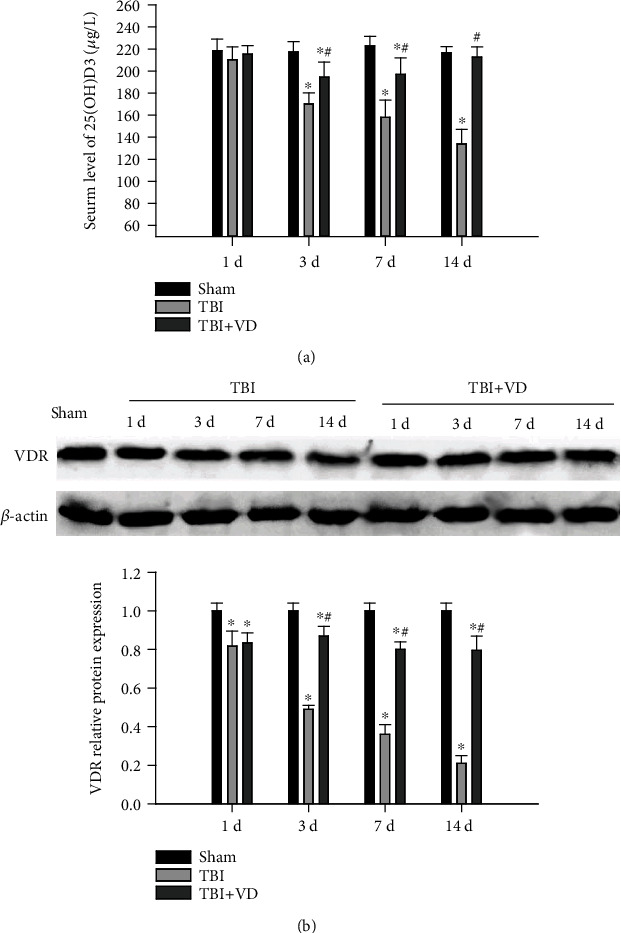
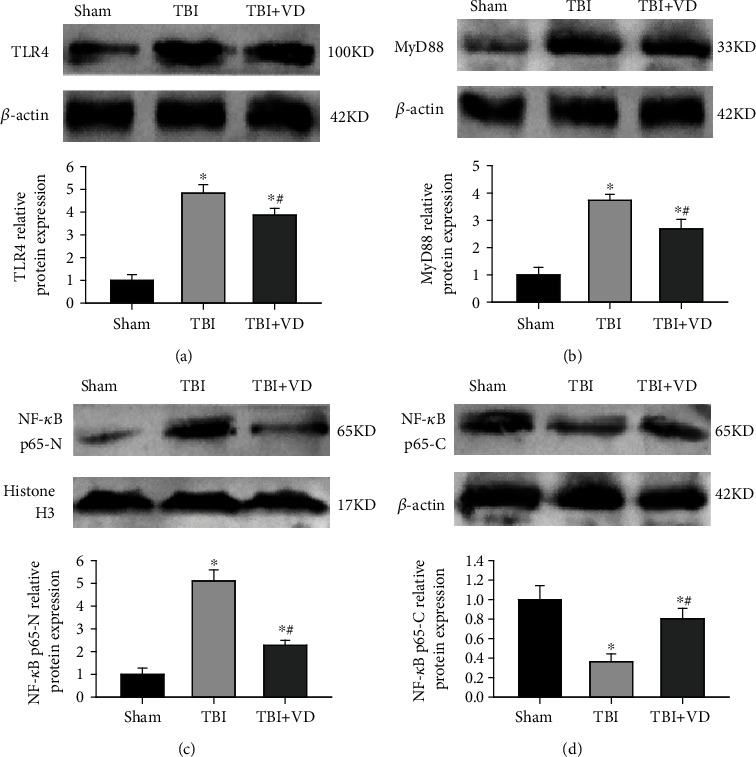
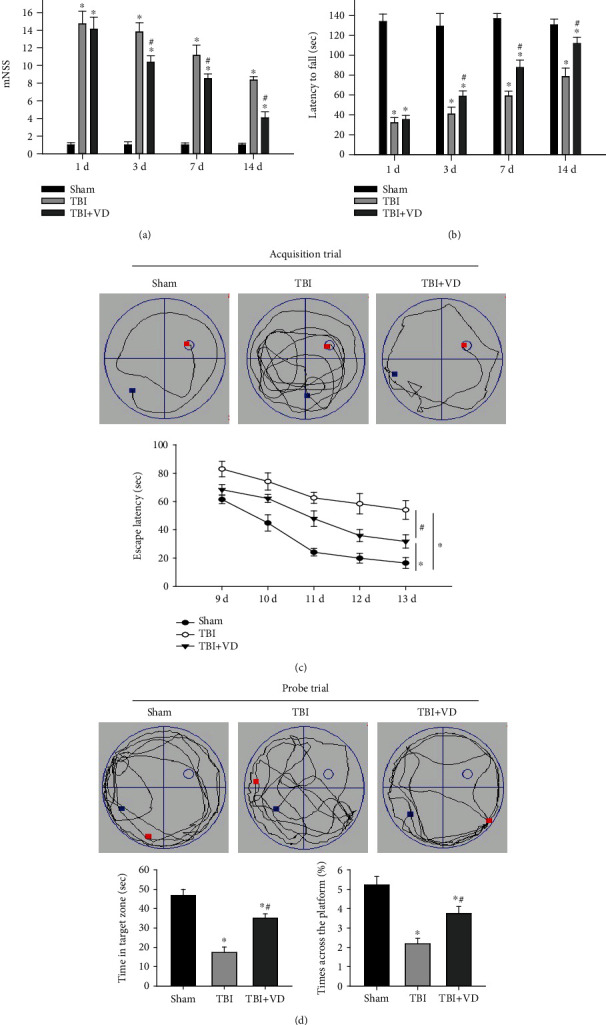
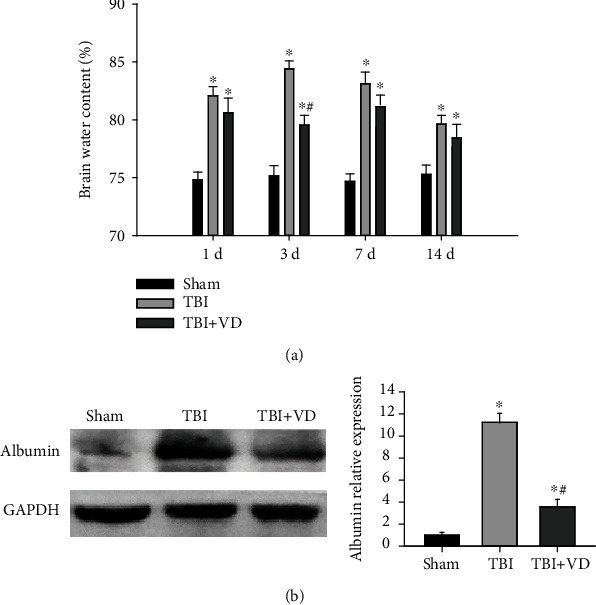
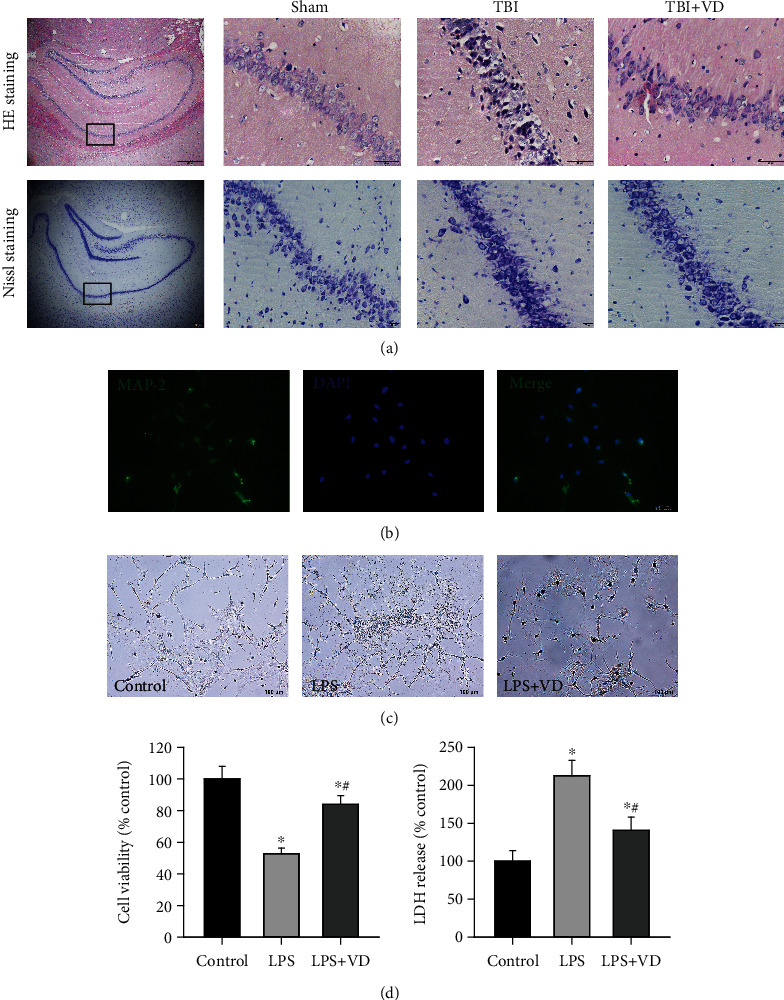
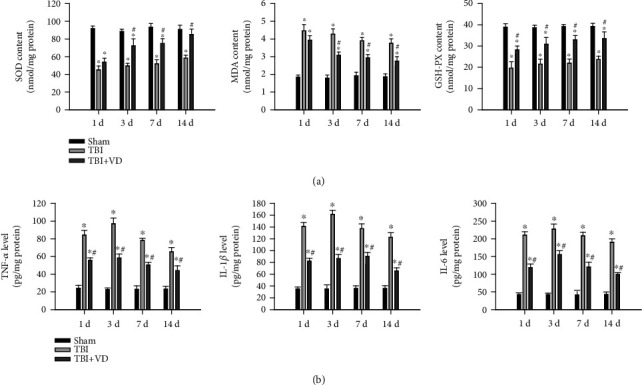
Vitamin D (VD) deficiency is associated with neuroinflammation and neurocognitive deficits in patients with traumatic brain injury (TBI). The present study was aimed at investigating the therapeutic effects of VD and the molecular mechanisms after TBI. After the intraperitoneal injection of VD (1 g/kg), sensorimotor and cognitive function was assessed via a series of behavioral tests in TBI rats. Traumatic outcomes were investigated by brain edema, blood-brain barrier (BBB) disruption, and morphologic staining. In vitro, cellular viability and cytotoxicity in primary hippocampal neurons were detected via the MTT method and LDH release. Hippocampal oxidative stress-related enzymes and proinflammatory mediators and the serum concentration of VD were analyzed by ELISA. The expression of VDR, TLR4, MyD88, and NF-B p65 was measured by Western blot. Furthermore, the levels of M1/M2 microglial markers were quantified using real-time PCR and Western blot. VD treatment significantly increased the serum level of VD and the hippocampal expression of VDR. VD not only effectively alleviated neurocognitive deficits, brain edema, and BBB disruption but also promoted hippocampal neuronal survival in vivo and in vitro. Moreover, VD therapy prevented excessive neuroinflammation and oxidative stress caused by TBI. Mechanically, the hippocampal expression of TLR4, MyD88, and nuclear NF-B p65 was elevated in the TBI group but robustly restrained by VD treatment. Taken together, VD provides an important neuroprotection through modulating hippocampal microglial M2 polarization and neuroinflammation via the TLR4/MyD88/NF-B pathway.
维生素 D(VD)缺乏与创伤性脑损伤(TBI)患者的神经炎症和神经认知缺陷有关。本研究旨在探讨 VD 的治疗作用及其在 TBI 后的分子机制。在 TBI 大鼠中,通过一系列行为测试,腹腔注射 VD(1g/kg)后评估感觉运动和认知功能。通过脑水肿、血脑屏障(BBB)破坏和形态学染色来研究创伤性结果。在体外,通过 MTT 法和 LDH 释放检测原代海马神经元的细胞活力和细胞毒性。通过 ELISA 分析海马氧化应激相关酶和促炎介质以及血清 VD 浓度。通过 Western blot 测量 VDR、TLR4、MyD88 和 NF-B p65 的表达。此外,使用实时 PCR 和 Western blot 定量 M1/M2 小胶质细胞标志物的水平。VD 治疗显著增加了血清 VD 水平和海马 VDR 的表达。VD 不仅有效缓解了神经认知缺陷、脑水肿和 BBB 破坏,而且在体内和体外促进了海马神经元的存活。此外,VD 治疗可预防 TBI 引起的过度神经炎症和氧化应激。从机制上讲,TBI 组海马 TLR4、MyD88 和核 NF-B p65 的表达升高,但 VD 治疗可强烈抑制其表达。综上所述,VD 通过调节 TLR4/MyD88/NF-B 通路促进海马小胶质细胞 M2 极化和神经炎症,从而提供重要的神经保护作用。