Küçükaksu Müge H, Hoekstra Trynke, Jansen Lola, Vermeulen Jentien, Adriaanse Marcel C, van Meijel Berno
Department of Health Sciences and Amsterdam Public Health Research Institute, Vrije Universiteit Amsterdam, Amsterdam, Netherlands.
Department of Psychiatry, Amsterdam University Medical Centre (UMC), University of Amsterdam, Amsterdam, Netherlands.
Front Psychiatry. 2022 Jul 6;13:866779. doi: 10.3389/fpsyt.2022.866779. eCollection 2022.
There is still limited evidence on the effectiveness and implementation of smoking cessation interventions for people with severe mental illness (SMI) in Dutch outpatient psychiatric settings. The present study aimed to establish expert consensus on the core components and strategies to optimise practical implementation of a smoking cessation intervention for people treated by Flexible Assertive Community Treatment (FACT) teams in the Netherlands.
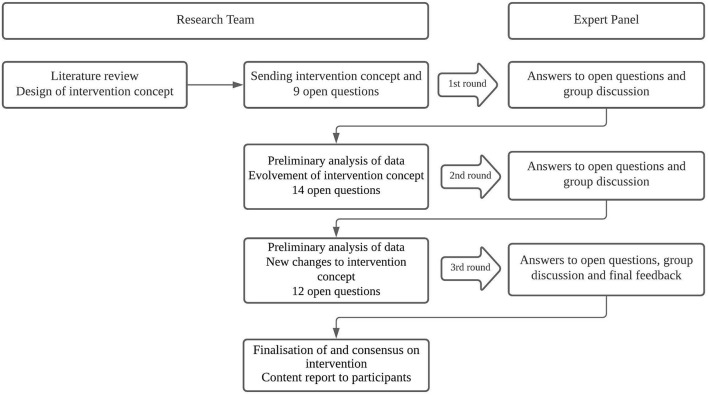
A modified Delphi method was applied to reach consensus on three core components (behavioural counselling, pharmacological treatment and peer support) of the intervention. The Delphi panel comprised five experts with different professional backgrounds. We proposed a first intervention concept. The panel critically examined the evolving concept in three iterative rounds of 90 min each. Responses were recorded, transcribed verbatim and thematically analysed.
Overall, results yielded that behavioural counselling should focus on preparation for smoking cessation, guidance, relapse prevention and normalisation. Pharmacological treatment consisting of nicotine replacement therapy (NRT), Varenicline or Bupropion, under supervision of a psychiatrist, was recommended. The panel agreed on integrating peer support as a regular part of the intervention, thus fostering emotional and practical support among patients. Treatment of a co-morbid cannabis use disorder needs to be integrated into the intervention if indicated. Regarding implementation, staff's motivation to support smoking cessation was considered essential. For each ambulatory team, two mental health care professionals will have a central role in delivering the intervention.
This study provides insight into expert consensus on the core components of a smoking cessation intervention for people with SMI. The results of this study were used for the development of a comprehensive smoking cessation program.
在荷兰门诊精神病学环境中,针对严重精神疾病(SMI)患者的戒烟干预措施的有效性和实施情况,证据仍然有限。本研究旨在就荷兰灵活积极社区治疗(FACT)团队所治疗患者的戒烟干预措施的核心组成部分和策略达成专家共识,以优化其实际实施。
采用改良的德尔菲法就干预措施的三个核心组成部分(行为咨询、药物治疗和同伴支持)达成共识。德尔菲小组由五名具有不同专业背景的专家组成。我们提出了第一个干预概念。该小组在三轮每轮90分钟的迭代中对不断演变的概念进行了严格审查。记录了回复,逐字转录并进行了主题分析。
总体而言,结果表明行为咨询应侧重于戒烟准备、指导、预防复吸和正常化。建议在精神科医生的监督下,采用由尼古丁替代疗法(NRT)、伐尼克兰或安非他酮组成的药物治疗。该小组同意将同伴支持作为干预措施的常规组成部分,从而促进患者之间的情感和实际支持。如有指征,合并大麻使用障碍的治疗需要纳入干预措施。关于实施,工作人员支持戒烟的积极性被认为至关重要。对于每个门诊团队,两名精神卫生保健专业人员将在提供干预措施方面发挥核心作用。
本研究深入了解了针对SMI患者的戒烟干预措施核心组成部分的专家共识。本研究结果被用于制定一项全面的戒烟计划。