Division of Dermatology, Rush University Medical Center, Chicago, IL, United States.
Department of Dermatology, Venereology and Leprology, Postgraduate Institute of Medical Education and Research, Chandigarh, India.
Front Immunol. 2022 Jul 7;13:912876. doi: 10.3389/fimmu.2022.912876. eCollection 2022.
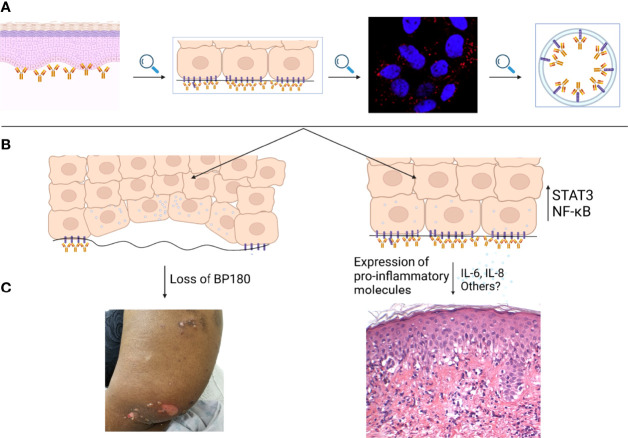
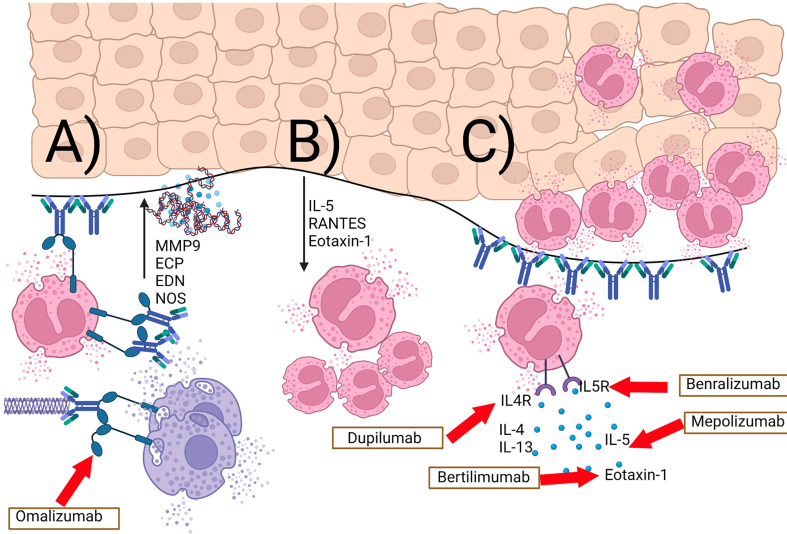
Bullous pemphigoid is an autoimmune blistering disease caused by autoantibodies targeting BP180 and BP230. While deposits of IgG and/or complement along the epidermal basement membrane are typically seen suggesting complement -mediated pathogenesis, several recent lines of evidence point towards complement-independent pathways contributing to tissue damage and subepidermal blister formation. Notable pathways include macropinocytosis of IgG-BP180 complexes resulting in depletion of cellular BP180, direct induction of pro-inflammatory cytokines from keratinocytes, as well as IgE autoantibody- and eosinophil-mediated effects. We review these mechanisms which open new perspectives on novel targeted treatment modalities.
大疱性类天疱疮是一种自身免疫性水疱病,由针对 BP180 和 BP230 的自身抗体引起。虽然通常可见 IgG 和/或补体沿着表皮基底膜沉积,提示补体介导的发病机制,但最近有几条证据表明补体非依赖性途径有助于组织损伤和表皮下水疱形成。值得注意的途径包括 IgG-BP180 复合物的巨胞饮作用导致细胞 BP180 的耗竭,角质形成细胞直接诱导促炎细胞因子,以及 IgE 自身抗体和嗜酸性粒细胞介导的作用。我们综述了这些机制,为新的靶向治疗方式开辟了新的视角。